
What Are Smart Phone Lockers and How Do They Work?
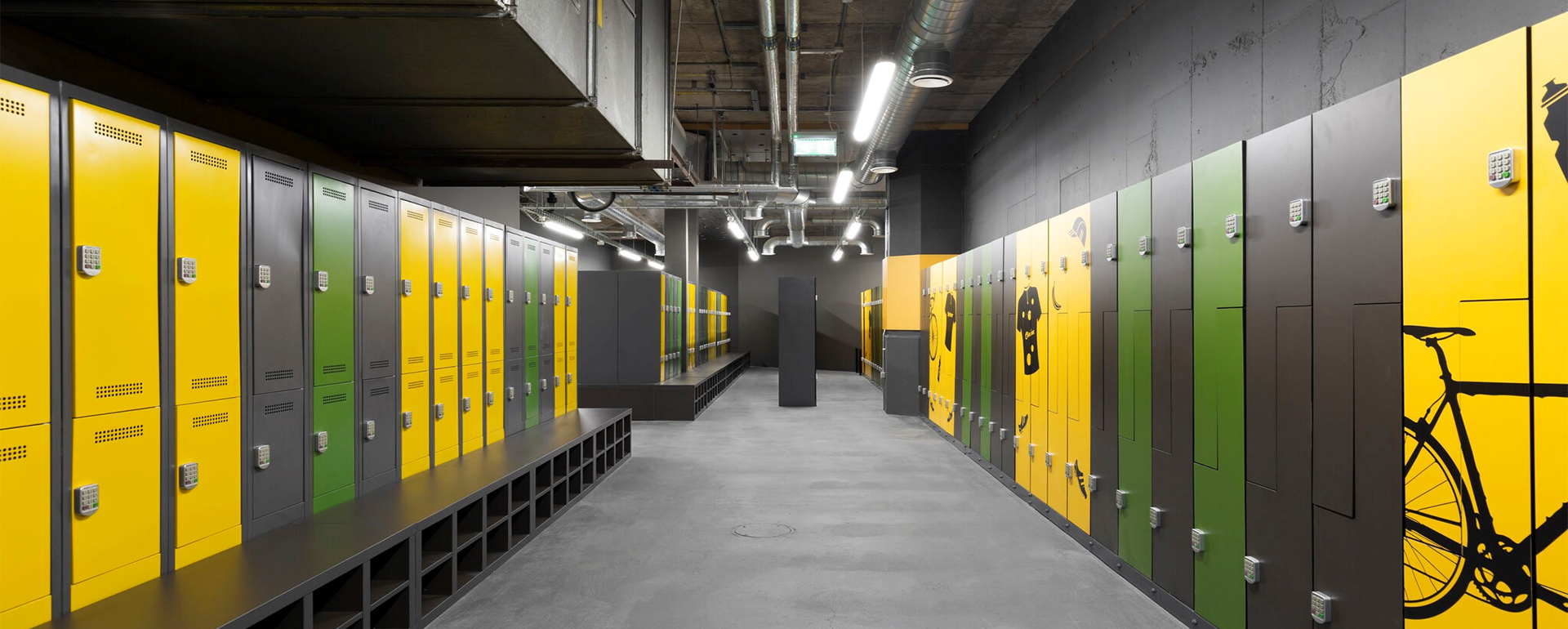
Smart phone lockers are automated, IoT-connected storage systems designed to secure, charge, and manage mobile devices using digital access methods like RFID, PIN codes, or biometrics. Unlike traditional metal boxes, these systems integrate hardware with cloud-based software to provide real-time tracking and an automated audit trail for organizations.
What you will learn in this guide:
- The technical architecture behind IoT locker hardware.
- How different access methods (RFID vs. PIN) compare in 2026.
- The role of integrated USB-C charging and safety standards.
- How to choose a custom configuration for your specific facility.
Defining the Modern Smart Phone Locker
In 2026, the definition of a "locker" has shifted from a passive storage unit to an active asset management system. A smart phone locker is a converged product that combines heavy-duty physical housing with a digital "brain."
While traditional storage relies on physical keys that are easily lost or duplicated, smart lockers use electronic solenoids and a centralized controller. This allows administrators to move from "static storage"—where a door is just a door—to "dynamic management," where every interaction is logged, and locker usage can be optimized across a workforce or student body.
How Do They Work? The 4-Layer Architecture
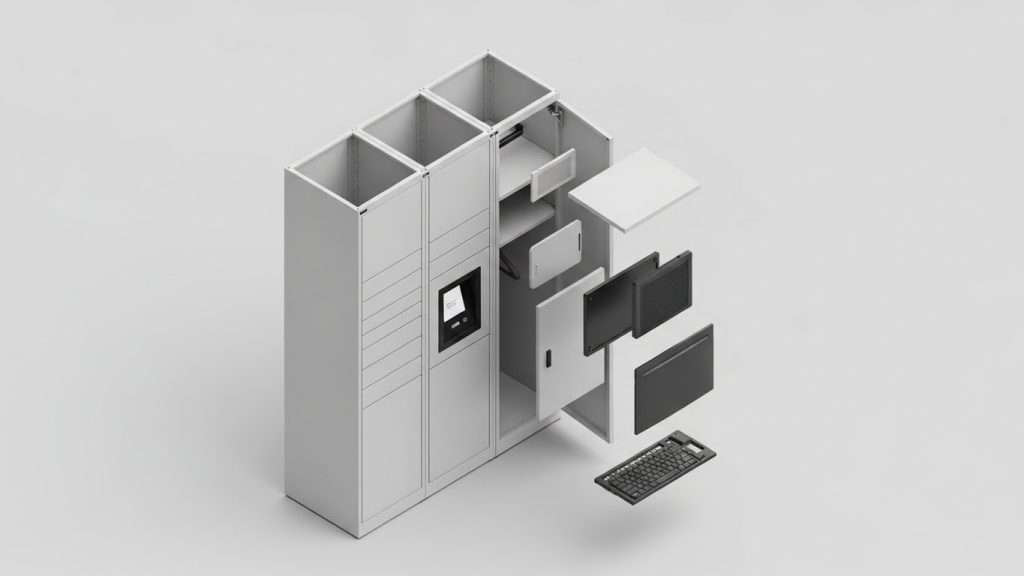
Understanding how these systems function requires looking at them as a stack of four distinct layers working in sync.
1. The Physical Layer (Steel & Security)
The foundation of any high-quality unit is its material integrity. Most professional-grade cell phone lockers are constructed from high-strength, cold-rolled steel. This material is chosen for its high "yield strength," meaning it resists deformation and prying much better than standard aluminum or thin-gauge metal.
2. The Locking Mechanism (Electronic Solenoids)
When you interact with the locker, you aren't turning a physical tumbler. Instead, you are triggering an electronic solenoid. This is an electromagnetic coil that, when energized, pulls a plunger to release the latch. In 2026, these solenoids are rated for hundreds of thousands of cycles, ensuring long-term reliability in high-traffic environments.
3. The Access Layer (RFID, QR, PIN, & Biometrics)
This is the user interface. Users authenticate their identity through several modern methods:
- RFID/NFC: Tapping an existing employee or student ID badge.
- PIN Codes: Entering a unique or temporary code on a touchscreen.
- QR Codes: Scanning a code generated by a mobile app.
- Biometrics: Using fingerprint or facial recognition for high-security areas.
4. The Software Layer (Cloud Management)
The "Smart" in these lockers comes from the software. A central controller connects the locker to the local network or cloud. This allows managers to see which bays are occupied, who accessed them, and for how long. If a student forgets their code or an employee leaves the company, the administrator can remotely release the door from a web-based dashboard.
The Role of Integrated Charging in 2026
Modern phone lockers are no longer just about storage; they are about maintenance. High-performance lockers now feature integrated USB-C Power Delivery (PD) ports in every compartment.
- Smart Charging: The system detects when a device is at 100% and throttles the power to prevent battery degradation.
- Heat Dissipation: Because charging generates heat, 2026 standards require perforated steel panels or active cooling fans to ensure the locker does not become a fire hazard.
- Mistakes to Avoid: Avoid using non-certified "off-the-shelf" power strips inside a metal enclosure. Industrial lockers must use RoHS and CE-certified charging modules to ensure electrical safety.
Why Organizations are Switching (Benefits)
The transition to smart systems is driven by a need for accountability and efficiency.
- Audit Trails: Every time a door opens, it is logged. This significantly reduces "he-said, she-said" theft claims.
- Liability Reduction: Organizations can prove they provided a secure, monitored environment for personal property.
- Enhanced Productivity: By centralizing storage, businesses can implement "digital detox" zones. Many workplaces use phone lockers for employee phone storage to minimize distractions on the manufacturing floor or in high-concentration office environments.
- Increased Focus: (needs verification) Some studies suggest a 30% increase in student focus when phones are stored in secure lockers during instructional time.
Industry Use Cases: More Than Just Schools
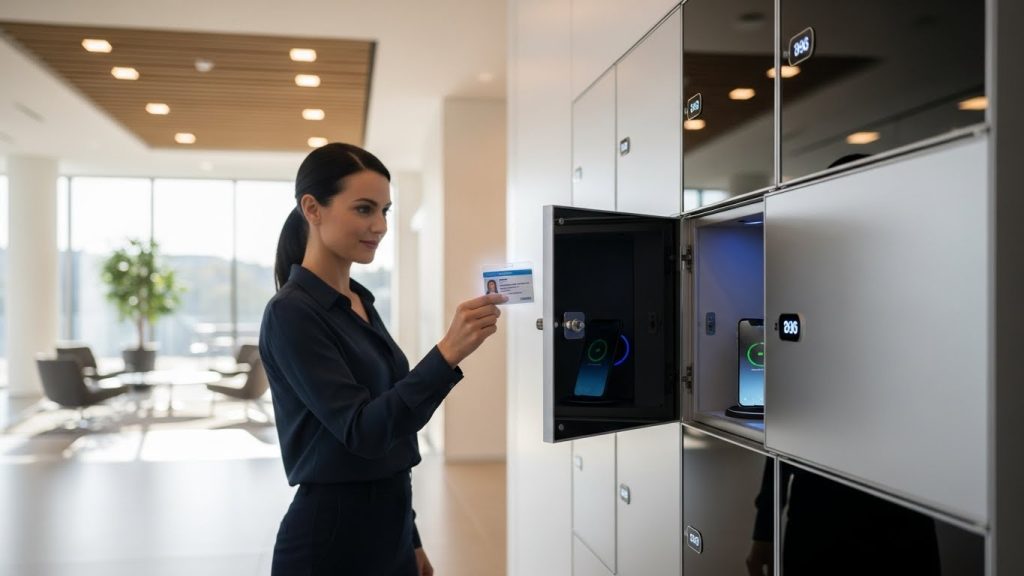
While education remains a primary driver, other sectors are adopting smart storage at a rapid pace.
Corporate & Government
High-security zones, such as SCIFs (Sensitive Compartmented Information Facilities) or R&D labs, require all personal devices to be left at the door. Smart lockers improve data security and compliance by ensuring no unauthorized recording devices enter the perimeter.
Healthcare
In sterile environments, personal phones—which can carry significant bacteria—are restricted. Smart lockers provide a hygienic, organized way for staff to store devices while on shift.
Public Events & Gyms
Venues are moving away from "coin-op" lockers. Finding the best gym phone storage solution often means looking for lockers that allow members to use their existing membership key fobs to secure their phones and smartwatches during a workout.
2026 Trends: The Future of Smart Storage
As we move through 2026, two major trends are dominating the market:
- AI Predictive Maintenance: Systems can now monitor the "latency" of a solenoid. If a lock starts to respond slowly, the software alerts the manufacturer to replace the part before it actually fails.
- Sustainability: There is a growing shift toward using recycled steel and low-energy IoT components that consume minimal power when the lockers are in standby mode.
Frequently Asked Questions (FAQ)
No, most systems offer multiple ways to access, including physical ID cards or on-device PIN pads, though a mobile app can be used for remote reservations.
Yes, smart lockers eliminate the risk of key duplication and provide a digital audit trail that traditional locks cannot offer.
Professional smart lockers include a manual override key or a battery backup (UPS) that allows the doors to be opened during a power failure.
Yes, administrators can access a cloud-based dashboard to view occupancy rates, battery status (if applicable), and access logs from any location.
They typically connect via a standard Ethernet (LAN) cable or a secure Wi-Fi 6 connection to communicate with the central management software.
Most 2026 models support USB-C Power Delivery (PD) up to 20W or 30W per port, allowing for rapid charging of modern smartphones.
As an OEM/ODM manufacturer, systems can be built with anywhere from 10 to 100+ doors in various configurations to fit specific wall spaces.
Yes, industrial-grade lockers use AES-256 encryption for data transmission and secure protocols to prevent unauthorized digital access.
Conclusion
Smart phone lockers have evolved into essential infrastructure for the modern workplace, school, and public venue. By combining the physical strength of cold-rolled steel with the intelligence of IoT software, they provide a level of security and efficiency that traditional lockers simply cannot match.
