
What’s the Best Gym Phone Storage Solution for Members?
The best gym phone storage solution for members in 2026 is a integrated charging mini-locker system located directly on the gym floor or near high-traffic workout zones. Modern facilities are shifting away from large locker rooms toward "point-of-use" storage that combines secure RFID locking with USB-C fast-charging capabilities to match the needs of tech-heavy gymgoers.
By implementing a specialized storage strategy, you can:
- Eliminate the liability of unattended devices on the gym floor.
- Enhance member focus by providing a dedicated "digital detox" space.
- Reduce the risk of theft, which currently affects nearly 1 in 3 smartphone owners (needs verification).
- Modernize your facility’s aesthetic with space-saving, high-tech hardware.
The "Phone Problem" in 2026 Gyms
In 2026, the gym is more than a place to sweat; it is a hub for wearable technology and mobile health tracking. However, with the average smartphone now valued at over $1,000, leaving devices in open cubbies or on the floor next to a squat rack is a major security risk. Statistics indicate that smartphone theft accounts for nearly 25% of overall thefts in major cities (needs verification), and gyms are prime targets for "snatch-and-grab" incidents.
Beyond security, "phone walking"—where members carry their devices between every set—creates a safety hazard and a distraction that lowers the overall energy of the club. By providing cell phone lockers, facility managers can offer a "secure home" for these devices, allowing members to focus on their form while their phones charge safely.
Top 4 Gym Phone Storage Solutions Compared
Choosing the right hardware depends on your facility's size, member demographic, and budget. Here is how the top four solutions rank for 2026.
1. Mini-Locker Units (The Gold Standard)
These are high-density, wall-mounted units designed specifically for small valuables like phones, wallets, and keys. Because they take up minimal square footage, they can be placed in corridors or even within "Creator Zones" for those who only film specific parts of their workout.
- Best for: Boutique studios and high-traffic commercial gyms.
- Common Mistake: Installing units with shallow compartments that cannot fit modern "Pro Max" sized phones with heavy-duty cases.
2. Integrated Charging Lockers (The Value-Add)
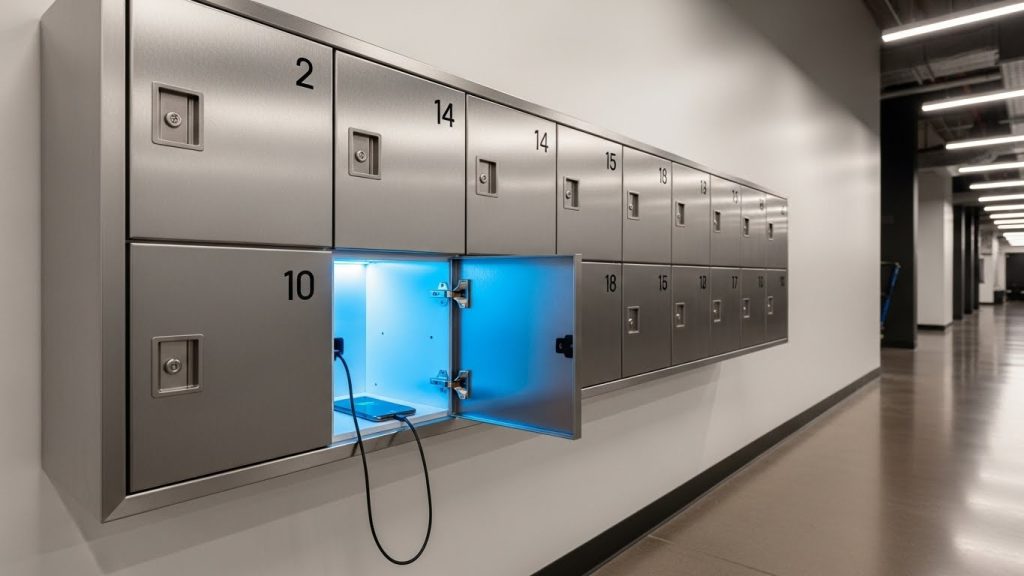
In 2026, a locker that only "locks" is no longer enough. Charging lockers come pre-wired with USB-C and wireless pads. This is a powerful retention tool: a member whose phone is at 5% is more likely to stay for a full hour if they know their device is gaining power while they train.
3. Smart/RFID Lockers (The Modern Choice)
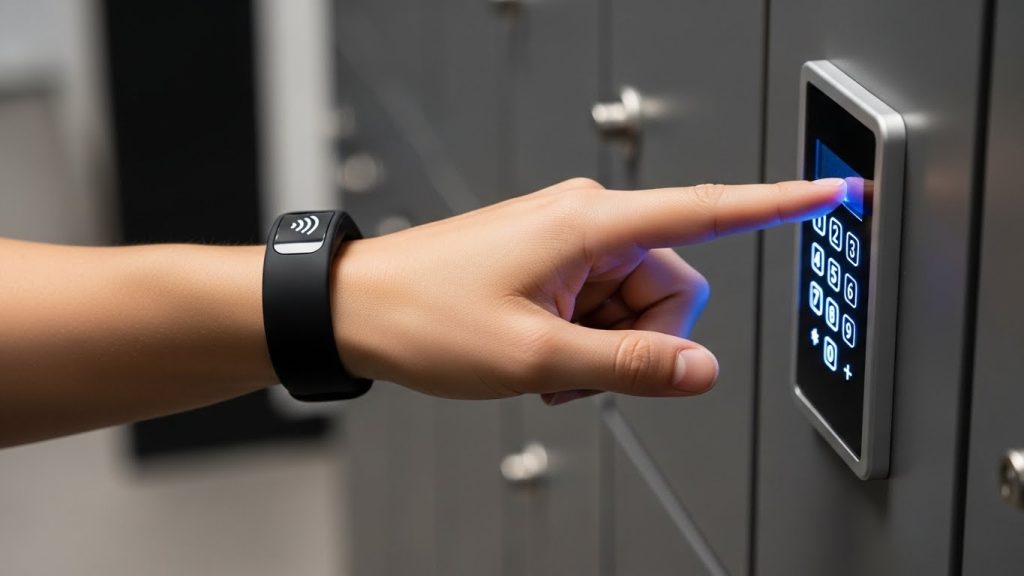
Eliminate the headache of lost keys or forgotten PINs. Smart lockers integrate with your gym's management software (like Mindbody or ABC Fitness). Members simply tap their existing entry fob or gym app to secure a locker. This technology mirrors how many workplaces use phone lockers for employee phone storage to ensure security and ease of access in corporate environments.
4. On-Floor "Point of Use" Stations
These are smaller, decentralized units placed at the end of equipment rows. They allow members to keep their devices within line-of-sight without them being on the dirty floor.
- Pro-Tip: Ensure these units have transparent "see-through" windows so members can see if a unit is occupied at a glance.
Key Features to Look for in a 2026 Solution
When procuring storage, durability and ease of maintenance are paramount. 2026 standards prioritize materials that can withstand heavy chemical cleaning and high humidity.
- Material: 16-gauge steel or phenolic compact laminate. These materials are nearly impossible to dent and resist the moisture common in fitness environments.
- Locking Mechanism: PIN-code locks are excellent for "day-use," while RFID is better for premium clubs looking for a seamless experience.
- Hygiene: Look for UV-C sanitization options or antimicrobial coatings.
- Common Mistake: Buying lockers meant for schools or offices. Gym environments are harsher; residential-grade locks will fail under the constant 24/7 cycle of a fitness center.
Much like how phone lockers help during exams and testing to prevent cheating and distraction through high-security protocols, gym lockers must be robust enough to handle the rapid turnover of different users throughout the day.
Strategic Placement: Lobby vs. Gym Floor
Where you put your lockers is just as important as the lockers themselves.
| Placement | Pros | Cons |
| Lobby/Entrance | High visibility, reduces "phone walking" entirely. | Members may forget to check their trackers/music. |
| Gym Floor | Convenient for "inter-set" charging. | Can cause congestion in weight areas. |
| Locker Rooms | Traditional, keeps lobby clear. | Higher risk of "hidden" theft attempts. |
Recommended Strategy: A hybrid approach. Place primary cell phone lockers in the lobby for long-term storage, and small, non-locking cubbies near the racks for members who use their phones for workout tracking. This mirrors the structured environment of educational settings, similar to how phone lockers are used in classrooms without disrupting class.
ROI of Secure Storage: Why It’s a Business Investment
Adding secure storage isn't just an expense; it’s a member experience upgrade.
- Reduced Front Desk Friction: Staff no longer have to "watch" phones for members.
- Improved Safety: Reduces trip hazards from phones lying on the floor.
- Retention: Members value "peace of mind." A gym that cares for a member's $1,000 asset earns their loyalty.
- Marketing: Use "Secure Charging Stations" as a feature in your gym tours for new prospects.
Frequently Asked Questions (FAQ)
Most members currently leave phones on the floor, in a pocket, or in an open cubby, but 2026 trends show a massive shift toward secure, wall-mounted mini-lockers located within workout zones.
Traditional large lockers are safe but often inconvenient for "phone-only" storage; dedicated cell phone lockers with digital PINs or RFID are significantly more secure and specialized for small electronics.
Price varies by technology, with basic multi-unit metal lockers starting at around $200–$400, while high-end smart RFID units with integrated charging can range from $1,500 to $3,000 per bank (needs verification).
Professional-grade lockers in 2026 are designed with "Max" and "Ultra" dimensions in mind, usually featuring compartments at least 8 inches deep to accommodate large cases and battery packs.
Yes, some facilities use "pay-to-charge" smart lockers or offer secure storage as a "Premium Member" perk to generate additional monthly recurring revenue.
RFID is superior for gyms because it eliminates the cost of replacing lost keys and can be integrated directly into a member's existing gym access fob.
Conclusion: Securing Your Facility’s Future
Providing a dedicated gym phone storage solution is no longer a luxury—it is an operational necessity in 2026. Whether you choose a simple wall-mounted unit or a high-tech RFID charging station, the goal is to reduce member anxiety and improve the focus of your fitness environment.
