
How Are Phone Lockers Used in Classrooms Without Disrupting Class?
To use phone lockers in classrooms without disrupting class, you must implement a "Zero-Minute" transition protocol that shifts the responsibility of storage from the teacher to a structured student workflow. By utilizing numbered lockers, visual audits, and clear entry/exit routines, schools can eliminate the "phone battle" while maintaining 100% of instructional time.
In this guide, you will learn how to:
- Implement a 30-second "Entry Protocol" for students.
- Design a locker policy that minimizes teacher liability.
- Balance emergency parent access with a distraction-free environment.
- Choose the right locker hardware for high-flow classroom zones.
The "Hidden" Cost of Phone Distraction in 2026
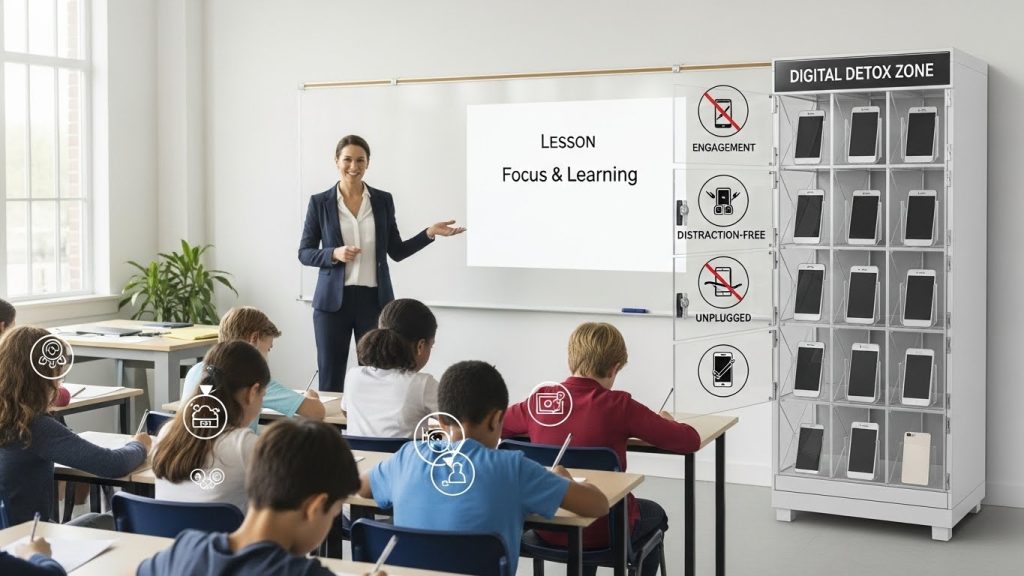
By 2026, the data is undeniable: classroom phone distractions aren't just a nuisance; they are a measurable academic drain. Recent studies from early 2025 (needs verification) show that even having a phone visible on a desk reduces a student’s cognitive capacity by up to 10%, a phenomenon known as "brain drain."
When phones are allowed in pockets or bags, teachers lose an average of 5–8 minutes per period to "micro-management"—asking students to put devices away or dealing with "vibrate" notifications. Moving to physical storage isn't just about discipline; it’s about reclaiming approximately 20% of instructional time that was previously lost to digital switch-tasking.
Common Mistake: Treating phone lockers as a punishment.
The Fix: Frame lockers as "Focus Hubs" designed to help students build the professional skill of deep work.
The Zero-Minute Transition: A Step-By-Step Workflow
The primary fear for educators is that cell phone lockers will become another administrative hurdle. However, a "Zero-Minute" transition ensures the process happens during the natural flow of the bell.
The Entry Protocol (The 30-Second Drop)
Instead of collecting phones, make it a self-service requirement. As students walk through the door, they must:
- Silence their device.
- Place it in their assigned locker slot (matching their seat number).
- Proceed to their desk where the "Bell Ringer" assignment is already waiting.
The Exit Protocol (The Organized Grab)
To avoid a doorway "bottleneck," release students by row or group. Only students who have completed their "Exit Ticket" (the final 2 minutes of class) are permitted to retrieve their devices. This turns the phone into a natural incentive for staying on task until the final bell.
3 Strategies for High-Efficiency Phone Management
Efficiency depends on the hardware and the "buy-in" you create with your students.
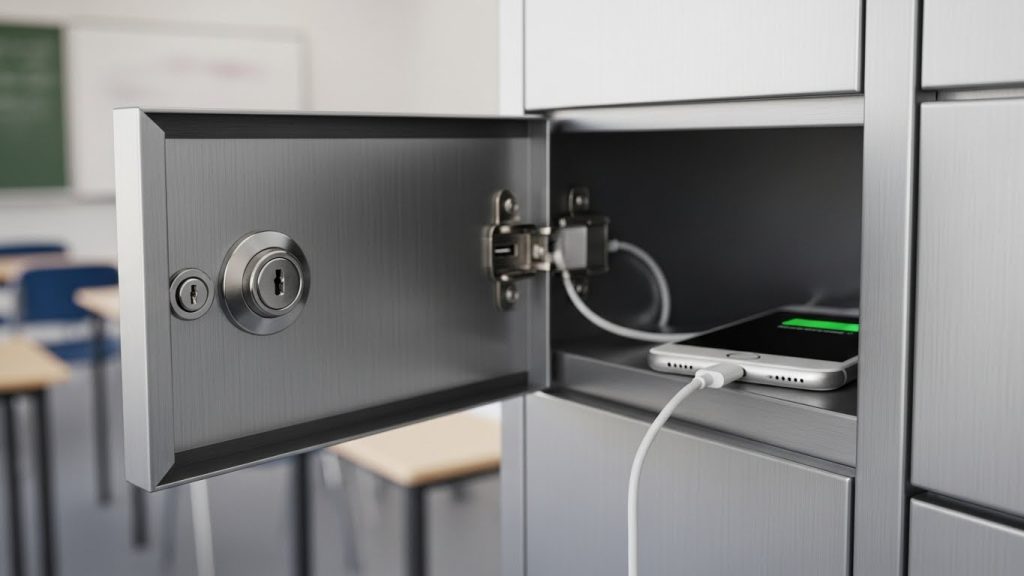
- The "Charging Compromise": If your lockers are equipped with power strips, students are far more likely to lock up their devices willingly. They see it as a service (a free charge) rather than a restriction.
- The "Visual Audit": Use lockers with transparent windows. This allows you to scan the room and verify that every slot is filled without having to open doors or touch student property.
- The Senior Self-Service Model: For older students, allow them to retain their keys. This builds "Digital Citizenship" and prepares them for professional environments where personal items must be secured during work hours.
Common Mistake: Teachers physically handling phones.
The Fix: Students should always be the only ones to touch their devices to eliminate liability for scratches or technical issues.
Addressing the "What-Ifs": Legal, Safety, and Parent Pushback
The biggest barrier to implementing lockers is often parent concern regarding emergency contact.
- Emergency Contact Path: Ensure parents have the direct school office line. In 2026, many schools use automated "Safety Cues" that can send a notification to student laptops if an emergency occurs, rendering the personal phone unnecessary for safety.
- Liability Waivers: Your school's behavior policy should clearly state that the school is responsible for the safekeeping of the locker, but students are responsible for the protection of the device (e.g., using a case).
- Security Decisions: When choosing hardware, the lock type matters. For a deep dive on security, see our guide on Key Lock vs Digital Lock Phone Lockers.
Comparison: Which Locker Type Fits Your Classroom?
Choosing the right physical footprint is essential for classroom flow.
| Locker Type | Best For... | Placement Note |
| Wall-Mounted | Small classrooms; keeping floor space clear. | Near the entrance door at eye level. |
| Floor-Standing | High-capacity (multi-class) use. | Against a "dead wall" away from the exit. |
| Clear-Door | Instant teacher verification. | Anywhere visible from the teacher's desk. |
For a detailed breakdown of space-saving options, check out Wall-Mounted vs Floor-Standing Phone Lockers. Additionally, consider the longevity of your investment by choosing the right materials; read Metal vs Laminate Phone Lockers to see which stands up best to daily student use.
FAQ
Yes, several 2025 pilot studies (needs verification) indicate that "bell-to-bell" phone restrictions lead to a 1-2 percentile increase in test scores, largely due to improved attendance and reduced "switch-tasking" during lessons.
Generally, no. As long as the school provides a secure storage solution and follows a lawful confiscation policy, teachers are usually protected from liability for accidental damage under most district guidelines.
Implement a "No-Device Declaration" system. If a student claims they don't have a phone but is later caught with one, the consequence is an immediate office referral rather than a simple warning.
Transparent lockers are highly recommended for classrooms. They allow teachers to perform a "visual audit" to ensure all students have complied without needing to check individual compartments.
Standard protocols involve keeping a master key or "Manager Code" in the school office. Some schools prefer digital locks to eliminate the risk of lost physical keys entirely.
This depends on district policy. "Bell-to-bell" policies usually require phones to stay in the locker from the first class until the final bell, while others allow retrieval during lunch or transitions.
Conclusion
Using phone lockers in the classroom is not about "policing" students—it is about creating an environment where focus is possible. By moving from a reactive "put that away" stance to a proactive "Zero-Minute" storage routine, you protect your instructional time and reduce daily friction.
