
Wall-Mounted vs Floor-Standing Phone Lockers: Which is Better?
Choosing between wall-mounted and floor-standing phone lockers depends on your facility's floor space, wall structural integrity, and total user capacity. While wall-mounted units excel in saving space and maintaining floor hygiene, floor-standing lockers offer unmatched stability and easier installation for high-volume environments.
In this guide, you will:
- Compare the technical specifications of both mounting styles.
- Identify which configuration meets ADA hallway compliance.
- Learn the installation requirements for different wall types.
- Determine the best ROI based on your specific industry use case.
Quick Comparison: At a Glance
| Feature | Wall-Mounted Lockers | Floor-Standing Lockers |
| Space Efficiency | High (Uses vertical space) | Moderate (Requires floor footprint) |
| Installation | Technical (Anchoring/Recessing) | Simple (Bolting to floor/Stand) |
| Mobility | Permanent | Semi-Portable (with stands) |
| Cleaning | Easy (Floors are clear) | Moderate (Dust under base) |
| Ideal For | Narrow hallways, small offices | Gyms, warehouses, high-traffic lobbies |
Pro Tip: If you are unsure of your wall's load-bearing capacity, a floor-standing unit with a pedestal stand is the safer, more versatile choice.
Wall-Mounted Phone Lockers: The Space-Savers
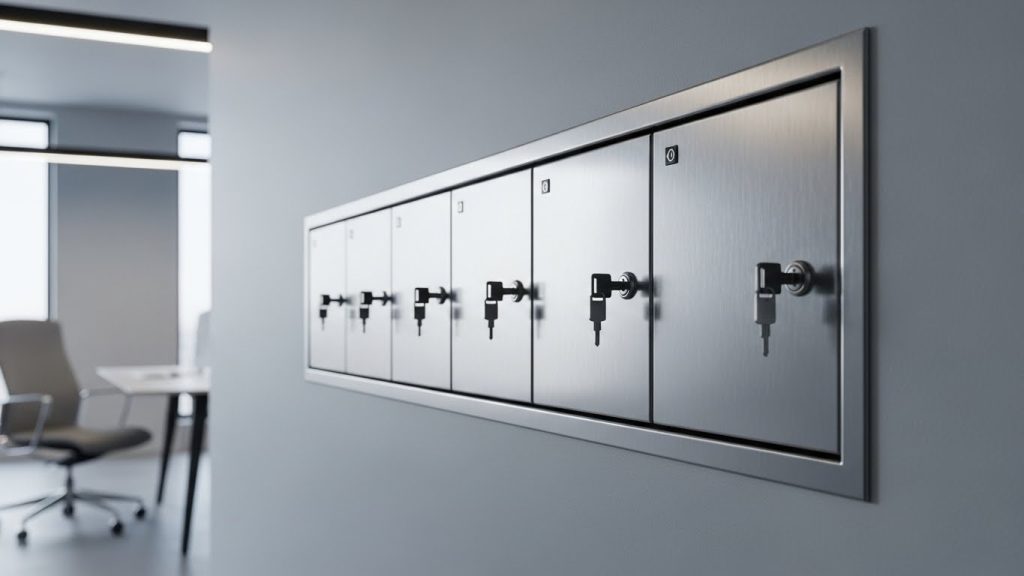
Wall-mounted units are the gold standard for facilities where every square foot of floor space is precious. These units are typically installed in two ways: surface-mounted, where the box sits on the wall, or recessed, where the unit is built into the wall cavity for a flush, high-end finish.
Because they leave the floor unobstructed, they are a favorite for school administrators and hospital facility managers who need to ensure janitorial teams can mop or vacuum efficiently without moving furniture.
Common Installation Mistakes to Avoid:
- Ignoring Stud Alignment: Mounting a 50lb steel unit into just drywall without hitting studs or using heavy-duty toggles can lead to structural failure.
- Incorrect Height: Mounting units too high or too low makes them inaccessible to shorter users or those in wheelchairs.
Recommended Internal Link: If you are comparing security features for these units, read our guide on Key Lock vs Digital Lock Phone Lockers: Which Is More Secure? to find the right hardware for your mount.
Floor-Standing Phone Lockers: The Heavy-Duty Choice
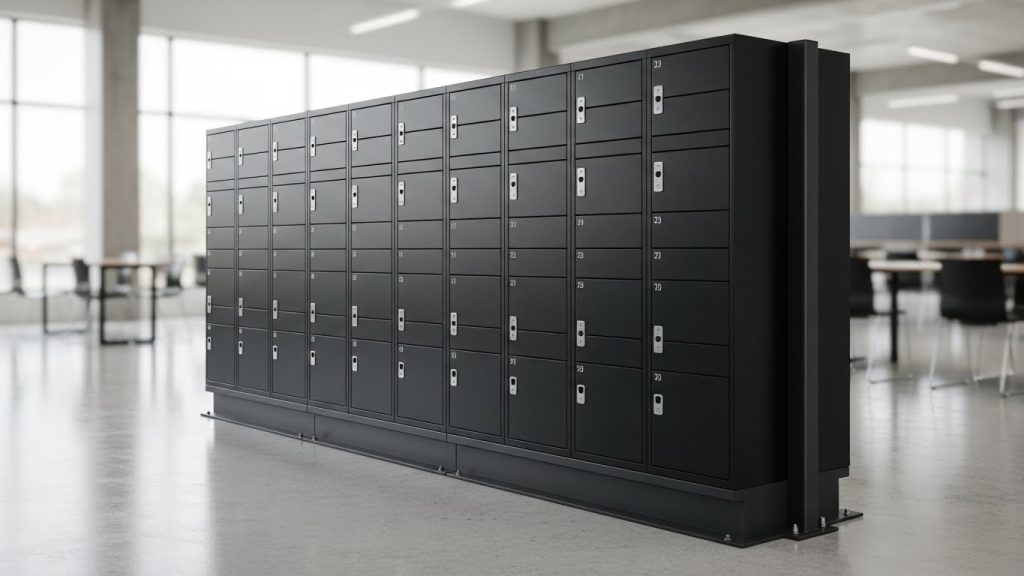
Floor-standing lockers, often supported by a heavy-duty pedestal or integrated base, are designed for high-capacity use and maximum stability. These units don't rely on the structural integrity of your walls, making them the only viable choice for facilities with glass partitions or thin "curtain" walls.
These are particularly effective in industrial settings or large-scale gyms where 100+ lockers might be grouped together. The weight is distributed directly to the floor, significantly reducing the risk of the unit pulling away from the mounting surface over time.
Common Installation Mistakes to Avoid:
- Failure to Anchor: Even "standing" units should be bolted to the floor to prevent tipping if a user pulls on an open door.
- Blocking Traffic: Forgetting to account for the door swing radius in high-traffic corridors.
Key Factors to Consider (The "Decision Matrix")
Space & ADA Compliance
In the United States and many international regions, the Americans with Disabilities Act (ADA) dictates that objects protruding from walls in hallways cannot exceed 4 inches if they are between 27 and 80 inches above the floor. If your hallway is narrow, a recessed wall-mounted locker is mandatory, or you must opt for a floor-standing unit that sits outside the primary path of travel.
Installation & Wall Integrity
Before choosing a wall-mount, verify your wall material.
- Concrete/Brick: Excellent for wall mounting.
- Drywall with Metal Studs: Requires specialized reinforcements.
- Wood Studs: Good for surface mounting if aligned correctly.
Power & Charging
If you plan to offer cell phone lockers with integrated USB-C charging, floor-standing units often provide more "hidden" space in the base or pedestal to route electrical conduit and hide power strips, whereas wall-mounted units usually require professional electrical work to hide wires behind the wall.
Use Case Scenarios: Which Wins Where?
Schools and Universities
- Winner: Wall-Mounted.
- Why: Keeps hallways clear for student traffic and allows for easier floor maintenance in high-debris areas.
Gyms, Warehouses, and Factories
- Winner: Floor-Standing.
- Why: These environments often require larger lockers for tablets or personal bags alongside phones. The durability of a floor-bolted unit handles the "rough use" typical of industrial settings better than wall-anchored versions.
FAQ: Common Questions on Phone Locker Mounting
Most professional-grade steel lockers can hold 20–50 lbs per section when properly anchored into studs or masonry. Always verify the specific load rating for your wall type (needs verification).
Yes. Even if a locker is floor-standing, bolting it to the ground prevents accidental tipping, prevents theft of the entire unit, and ensures the lockers stay aligned in a neat row.
Yes, but they must be anchored into the wooden or metal studs. If studs are unavailable, you must use a load-bearing backing plate or structural toggles rated for the unit's full weight plus the weight of the devices.
Floor-standing units are generally cheaper to install because they require simple floor anchoring. Wall-mounted units, especially recessed ones, require more labor-intensive wall prep and structural verification.
This refers to ADA compliance. If a locker protrudes more than 4 inches from the wall in a hallway, it can be a hazard for visually impaired individuals using canes. Recessed mounting solves this.
Not necessarily. Security depends on the steel gauge and lock type. However, floor-standing units are harder to physically "rip" off the surface compared to poorly installed wall units.
Conclusion
The "better" locker is the one that fits your facility's physical constraints. If you have the wall depth for a recessed install or have a narrow hallway that must stay clear, wall-mounted is your best bet. If you need a high-capacity solution that can be installed quickly on any flat surface, floor-standing is the superior choice.
