
Are Cell Phone Lockers Tamper-Resistant and Vandal-Resistant?
High-quality cell phone lockers are designed to be both tamper-resistant and vandal-resistant through the use of heavy-gauge materials, recessed doors, and advanced locking mechanisms. While no storage solution is 100% "theft-proof" against a determined professional with industrial tools, modern units are engineered to deter unauthorized entry and withstand significant brute-force abuse.
What you will learn in this guide:
- The technical difference between tampering and vandalism.
- Which materials (Steel vs. HDPE) offer the best protection.
- Specific design features that prevent prying and forced entry.
- How to match your security level to your facility’s specific needs.
Tamper-Resistant vs. Vandal-Resistant: Understanding the Difference
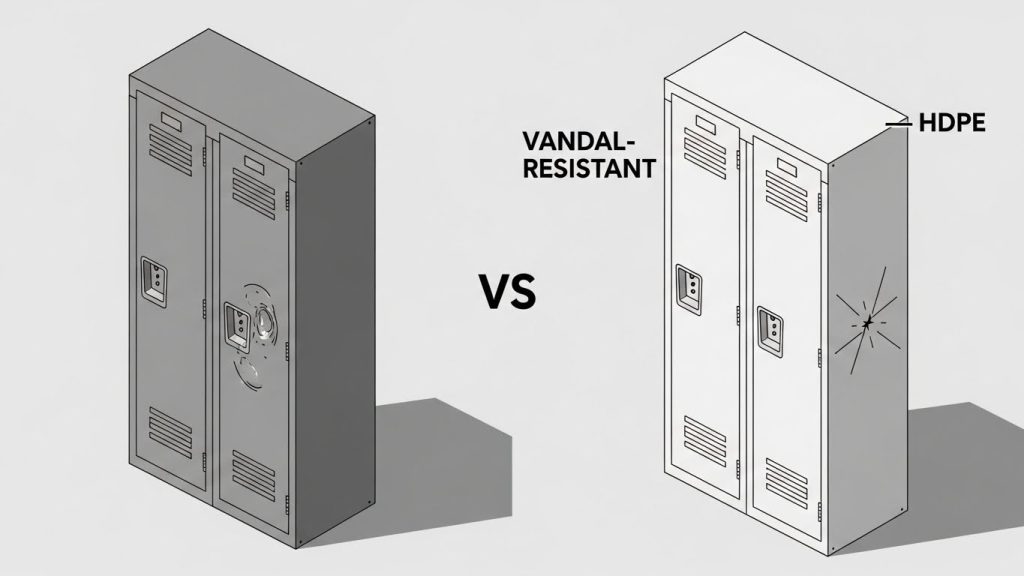
In the security industry, these two terms are often used interchangeably, but they refer to different types of threats. Tamper-resistance focuses on preventing stealthy or unauthorized access—think of a person trying to "pick" a lock, guess a digital code, or use a thin tool to bypass a latch. Vandal-resistance, on the other hand, refers to the locker's ability to withstand brute force or destructive behavior, such as kicking the door, hitting it with a heavy object, or attempting to dent the frame.
For example, a digital lock with a "lockout timer" (which freezes the keypad after three wrong attempts) is a tamper-resistant feature. A 16-gauge reinforced steel frame that won't bend when struck is a vandal-resistant feature. Understanding this distinction helps you prioritize the right specs based on whether your main concern is theft or property damage.
Top 4 Features That Make a Locker "Tamper-Resistant"
To ensure a locker can withstand daily use in public or semi-public spaces, look for these four engineering standards.
Heavy-Duty Materials (16-Gauge Steel vs. HDPE Plastic)
The "gauge" of metal refers to its thickness; the lower the number, the thicker the steel. For high-security environments, 16-gauge cold-rolled steel is the industry baseline. It provides high tensile strength that resists cutting and bending. Alternatively, High-Density Polyethylene (HDPE) is an excellent choice for vandal-resistance because it is naturally "dent-proof" and won't rust, though it may have different prying profiles than steel.
Advanced Locking Systems
The lock is the primary point of failure in low-end storage. Secure cell phone lockers typically utilize:
- Keyed Cam Locks: High-security cylinders that are difficult to pick with standard tools.
- Digital PIN Pads: Eliminates the risk of lost or "bumped" keys.
- RFID Access: Allows for "touchless" entry that is nearly impossible to bypass without a programmed credential.
Anti-Pry Design & Continuous Hinges
Standard hinges have gaps where a screwdriver or pry bar can be inserted. A continuous hinge (also known as a piano hinge) runs the full length of the door, leaving no gap for leverage. Additionally, "flush-mount" doors sit inside the frame rather than over it, making it nearly impossible to get a tool behind the door edge.
Multi-Point Latching Mechanisms
A single-point latch only secures the door at the center. A multi-point system secures the door at the top, middle, and bottom simultaneously. This prevents "door peeling," a common technique where a vandal pulls on the top corner of a door until the metal bends enough to reach inside.
The Reality Check: Can You Actually Break Into a Phone Locker?
The honest answer is that with enough time, industrial power tools, and privacy, any locker can be breached. However, the goal of a professional cell phone locker is deterrence and delay. In a school or office setting, a thief cannot spend five minutes with a power drill without being noticed.
High-quality units mitigate risks by including Admin Overrides. If a student forgets their PIN or loses a key, an administrator can use a master key or code to open the unit. This prevents the need for destructive entry (like drilling out the lock) which would otherwise ruin the locker’s integrity.
Common Mistakes to Avoid:
- Choosing thin 20-24 gauge steel: These are "storage" lockers, not "security" lockers; they can be bent with a simple screwdriver.
- Ignoring the lock's "master" capabilities: Ensure your staff has a non-destructive way to regain access.
Facility Use Cases: Matching Security to the Environment
Not every facility needs a "bank vault" level of security.
- High-Traffic Schools: Focus on vandal-resistance. Students are more likely to kick or lean on doors. HDPE plastic or heavy steel with powder coating is ideal.
- Corporate R&D / Government: Focus on tamper-resistance and audit trails. Digital locks that track who opened which locker and when are vital here.
- Gyms/Public Venues: Focus on ease of use and physical deterrence.
When planning your layout, you should also consider where you should install cell phone lockers for best flow to ensure they are within sight of security cameras or staff.
Pro-Tip: Security is More Than Just the Box (Mounting)
A tamper-resistant locker is only effective if it stays where you put it. A common security oversight is failing to secure the unit to the building structure.
- Surface Mounting: Ensure the unit is bolted into wall studs using heavy-duty lag bolts.
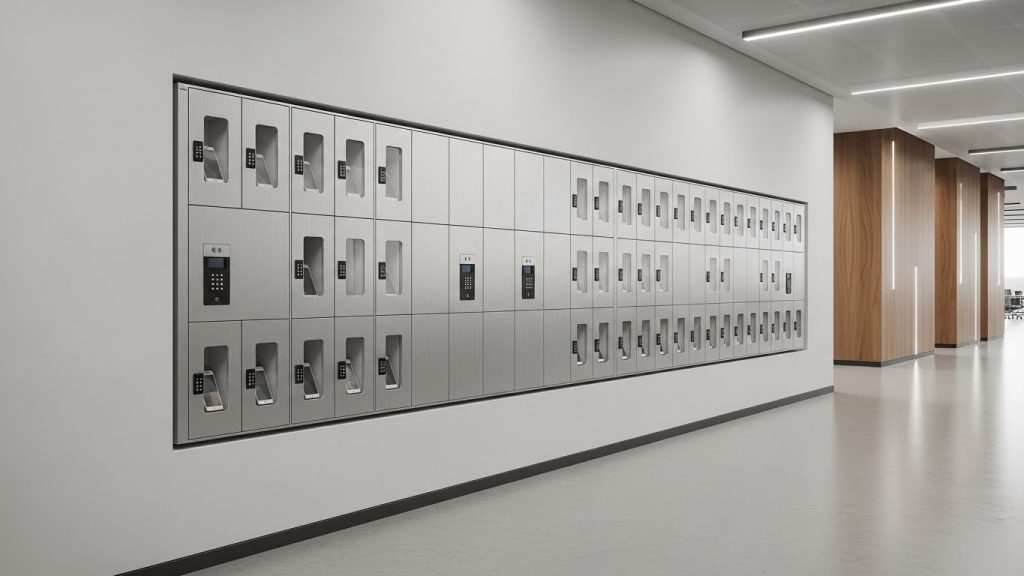
- Recessed Mounting: For maximum security, lockers can be built into the wall, leaving only the faceplate exposed. This eliminates all access to the sides and top of the unit.
Additionally, consider the infrastructure requirements. While high-security mechanical locks work anywhere, you should check if cell phone lockers need power or internet to work before finalizing your mounting location, especially if you plan to use smart RFID systems.
FAQ
No locker is 100% thief-proof, but professional-grade units are highly "theft-deterrent," meaning they require significant noise, tools, and time to breach.
Both can be secure, but for different reasons. 16-gauge steel is better at resisting focused prying and cutting, while HDPE plastic is superior at resisting dents and brute-force impacts (vandalism).
It is extremely difficult. Most digital lockers have "lockout" features that freeze the keypad after multiple failed attempts, preventing "brute force" code guessing.
The unit must be securely bolted to wall studs or a concrete floor. For the highest security, choose a recessed mount that sits inside the wall cavity.
In many cases, yes. You can often replace standard locks with higher-security digital versions. Furthermore, you can add charging to existing phone lockers to increase their utility while maintaining the original shell.
Yes. Most "budget" lockers use 24-gauge steel, which is roughly half as thick. 16-gauge steel is significantly harder to bend or puncture with handheld tools.
Conclusion: Are They Worth the Investment?
When you consider the $1,000+ replacement cost of a modern smartphone, investing in a tamper-resistant locker is a minor expense. By choosing units with heavy-duty steel, anti-pry hinges, and professional-grade locks, you significantly reduce the risk of theft and the cost of repairing vandalized equipment.
