
Bike Locker Comparison Guide: Bike Rack, Bike Cage, Scooter Locker & E-Bike Storage Options Explained
This bike locker comparison guide will help you select the right secure storage for your property. Choosing bike parking involves balancing security, space, cost, and user needs. We will compare the most common options, from high-security individual lockers to simple bike racks, bike cages, and specialized e-bike storage.
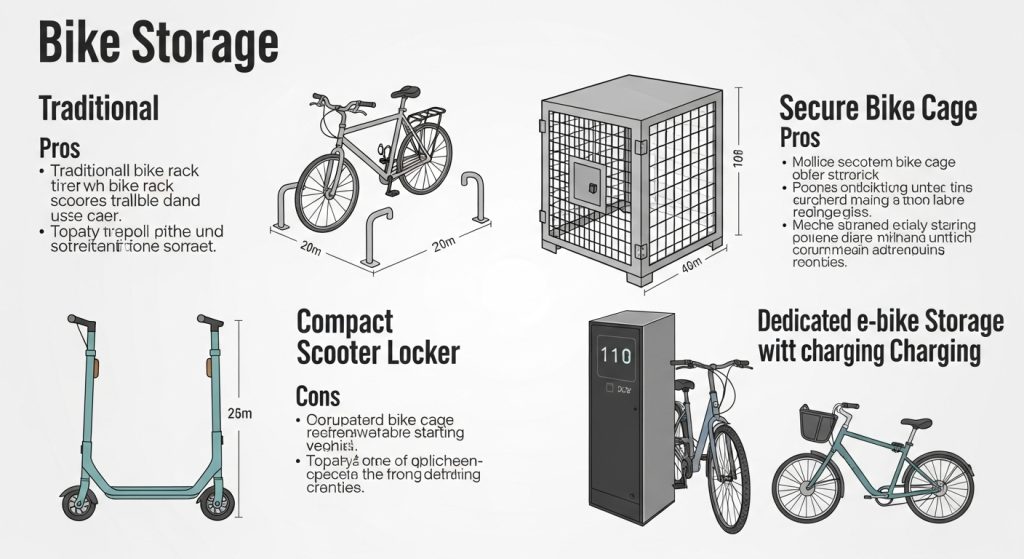
Understanding the differences is key to making a good investment. A bike locker offers the highest level of security. A bike rack provides basic convenience. Bike cage secures multiple bikes at once. This guide breaks down each solution so you can find the perfect fit for your office, apartment building, or public space.
What Is a Bike Locker?
A bicycle locker is a fully enclosed, individual parking box. It secures one bicycle from theft, vandalism, and weather. Users lock the door to the unit, protecting the entire bike and any accessories. This is the top-tier solution for bicycle security.
These lockers are ideal for locations where bikes are left for long periods. Think transit stations, corporate campuses, and residential complexes. They shield expensive bikes from rain, snow, and sun. This complete protection also hides the bike from view, which deters thieves.
Bike Locker vs. Bike Rack: The Security vs. Space Debate
The most common decision is between a locker and a rack. The two serve very different purposes.
What Is a Bike Rack?
A bike rack is a simple frame. It is designed to hold a bike upright by its frame or wheel. The cyclist must provide their own lock, usually a U-lock or chain. The bike remains exposed to the open air and to anyone passing by. Racks are common outside shops, libraries, and parks.
Key Differences: Security and Weather Protection
The main difference is security. A bike locker encloses the entire bicycle. A bike rack only provides a point to which the bike can be locked.
What is the security difference between a bike locker and a rack?
A bike locker protects the entire bike and all its components, like wheels, seats, and lights. A bike rack leaves these components exposed. A thief can still steal parts from a bike that is locked to a rack. Lockers also offer 100% weather protection.
When to Choose Each
The bike locker vs. bike rack choice comes down to length of stay and value.
- Choose a Bike Rack for short-term parking. This includes stops of two hours or less at places like stores or cafes. They are low-cost and handle many users.
- Choose a Bike Locker for long-term parking. This means all-day storage for commuters or overnight storage for residents. They are essential for protecting expensive e-bikes and high-end road bikes.
Bike Locker vs. Bike Cage: Enclosed vs. Group Storage
If you need to secure many bikes, you might compare lockers to a cage.
What Is a Bike Cage?
A bike cage is a secure, fenced-in area. It is a shared space. Users gain access to the cage with a key, fob, or keypad code. Inside the cage, there are usually simple bike racks. Users lock their own bikes to these internal racks. Cages are common in parking garages and apartment basements.
Comparing Access and Density
The bike locker vs. bike cage comparison is about individual versus group security.
- Bike Lockers offer private, individual access. One user has one key to one locker. This is the highest level of personal security.
- Bike Cages offer shared, group access. Everyone with a key can enter the cage. This means users must trust other users. Cages are much more space-efficient. You can fit 20 bikes in a cage that might only fit 8-10 lockers.
Which Is Better for Your Facility?
Choose bike lockers if you want to offer a premium, reserved amenity. They are great for corporate tenants or residents who pay extra for a dedicated spot. Choose a bike cage if your goal is to provide a good level of security for the largest number of users in a limited space.
Bike Locker vs. Bike Shelter: Full Security vs. Rain Cover
A bike shelter is another common option, but it is not a security product.
What Is a Bike Shelter?
A bike shelter is a roof, sometimes with side panels, built over a set of bike racks. Its only purpose is to protect bikes and cyclists from rain and sun. It offers no protection from theft. The bikes are still locked to simple racks in the open.
Security Is the Main Differentiator
Comparing a bike locker vs. bike shelter is a clear choice. If you need theft prevention, a shelter is not the right product. A shelter only provides weather protection. A locker provides both weather protection and high security. Many properties install shelters in low-risk public areas and lockers in high-risk or private areas.
Bike Locker vs. Bike Storage Shed: Dedicated vs. General Use
A bike storage shed is a general-purpose product. It is often found at a home or in a backyard.
What Is a Bike Storage Shed?
A bike shed is a small structure, usually made of wood, thin metal, or plastic. It is designed to store garden tools, boxes, or bikes. These sheds are not purpose-built for bike security. They often use a simple hinge and padlock, which are easy to break.
Durability and Purpose-Built Design
A bike locker vs. bike storage shed decision is about durability. Bike lockers are made from heavy-gauge steel, aluminum, or thick plastic. They have internal, high-security locking mechanisms. Sheds are light-duty. They can be broken into quickly. For public or commercial use, a purpose-built locker is the correct choice.
Horizontal vs. Vertical Racks
Bike racks come in two main layouts: horizontal and vertical.
Understanding Vertical Bike Racks
A vertical bike rack stores the bike vertically, usually hanging from the front wheel. This design saves a lot of floor space. They are very popular for indoor bike rooms. They allow you to fit many bikes along a wall that would not fit on the floor.
Comparing Lockers to Vertical Racks
A bike locker vs. vertical bike rack comparison is about space versus security.
- Vertical Racks are a space solution. They are not a security solution on their own. They are often placed inside a secure bike cage.
- Bike Lockers are a security solution. They take up more floor space per bike but offer complete protection.
The Rise of E-Bikes and Scooters: New Storage Needs
E-bikes and e-scooters have changed the storage market. These devices are expensive, heavy, and contain valuable batteries. They also need charging.
E-Bike Locker vs. E-Bike Rack
Standard bike racks are not ideal for e-bikes. An e-bike battery is the most valuable part and is easy to steal. Leaving a $5,000 e-bike locked to an open rack is a major risk.
An e-bike locker vs. e-bike rack analysis favors the locker. An e-bike locker fully encloses the bike. This protects the frame, battery, and motor from theft and weather. Many e-bike racks are also not built to handle the extra weight.
The Charging Question: Charging Locker vs. Charging Rack
The biggest need for e-bikes is charging. This has created two new products.
- Charging Racks: These are bike racks with a weatherproof power outlet nearby. The user can plug in their bike. The bike is still exposed.
- Charging Lockers: This is the superior solution. A charging locker is a secure bike locker with an integrated, safe power supply inside.
A charging bike locker vs. charging rack decision is simple. A charging locker lets the user safely charge their expensive battery. They are protected from rain and theft while charging. A charging rack leaves the expensive electronics exposed.
What About Scooter Storage? Scooter Locker vs. Scooter Rack
E-scooters have the same problems as e-bikes. They are valuable and need charging.
- Scooter Racks: These are simple stands to hold a scooter upright. They offer almost no security.
- Scooter Lockers: These are smaller, purpose-built lockers. They secure the scooter and often provide an internal charging outlet.
The scooter locker vs. scooter rack issue is growing. As more commuters use scooters, they need a safe place to store and charge them. Lockers are the only high-security option.
Material Comparison: What Are Bike Lockers Made Of?
Bike lockers are made from a few different materials. The choice affects durability, weight, and rust resistance.
Steel vs. Aluminum Bike Lockers
Steel is the traditional choice.
- Steel: Very strong, heavy, and has high impact resistance. It is difficult to cut or break. It must be properly coated (galvanized or powder-coated) to prevent rust.
- Aluminum: Much lighter than steel. It is naturally corrosion-resistant, so it will not rust. This makes it great for coastal areas. It may be easier to dent than heavy-gauge steel.
The steel vs. aluminum bike locker choice depends on your environment. For raw strength, steel is often preferred. For wet or salty-air locations, aluminum is a great choice.
Metal vs. Plastic (HDPE) Bike Lockers
Plastic is a modern, popular option for bike lockers. This is not basic plastic. It is High-Density Polyethylene (HDPE).
- Metal (Steel/Alu): Considered the top choice for security. They are fire-resistant.
- Plastic (HDPE): This material is also very durable. It will never rust, rot, or delaminate. Graffiti is often easier to clean off HDPE. It is also lighter than steel.
When looking at metal vs. plastic (HDPE) bike locker options, plastic is a strong contender. It works well in humid or wet areas. Some models are made from recycled materials.
Sizing and Installation: Single vs. Modular
How the lockers are installed is an important consideration.
Single Bike Lockers
A single bike locker is a standalone unit. It is fully self-contained. These are good if you just need to add one or two lockers to a property. They can be placed anywhere there is a flat surface.
Modular Bike Lockers
Modular lockers are designed to be joined together. They are purchased in starter and add-on units. They often share common walls. This design reduces the total material needed. It also lowers the cost per locker and the total footprint. Modular systems are the best way to create a bank of 10, 20, or more lockers.
The single vs. modular bike locker decision depends on scale. For one or two, choose single. For any large installation, choose modular.
Cost and Price Analysis
The final factor is price. The cost per bike varies greatly between these solutions.
Why do bike lockers cost more than racks?
Bike lockers cost more because they use far more material and have complex parts. A locker is a six-sided box with a door, handle, and locking mechanism. A rack is just a bent metal tube. You are paying for high security and weather protection.
Bike Locker vs. Bike Rack Cost
This is the biggest price gap. A bike rack is the cheapest option per bike. Bike locker is one of the most expensive. A bike locker vs. bike rack cost analysis, however, must include the cost of bike theft. One stolen e-bike can cost more than the locker itself. The locker is an investment in loss prevention.
Bike Locker vs. Bike Cage Price
This comparison is more balanced. A bike cage has a high initial cost for the fence and gate. But the price per bike is low. As you add more bikes, the cost per bike drops. A locker has a high, fixed cost per bike.
For small numbers (1-8 bikes), the bike locker vs. bike cage price may be similar. For large numbers (20+ bikes), a cage is almost always cheaper per bike. But it offers lower, shared security.
How to Choose the Right Solution for You
This bike locker comparison guide shows there is no single best answer. The right choice depends on your specific needs.
Ask these questions to find your solution:
- What is my main goal? If it is high security and weather protection for long-term parking, you need a bike locker.
- What is my budget? If it is very low and you only need short-term parking, you need a bike rack.
- How many bikes? If you need to secure many bikes (15+) in a limited space and on a budget, a bike cage is a good middle ground.
- Do I have e-bikes? If yes, you must consider e-bike lockers or charging lockers. They are the only way to properly protect the battery and provide safe charging.
- What is the environment? If it is near the coast or very wet, look at aluminum or plastic (HDPE) lockers to prevent rust.
