
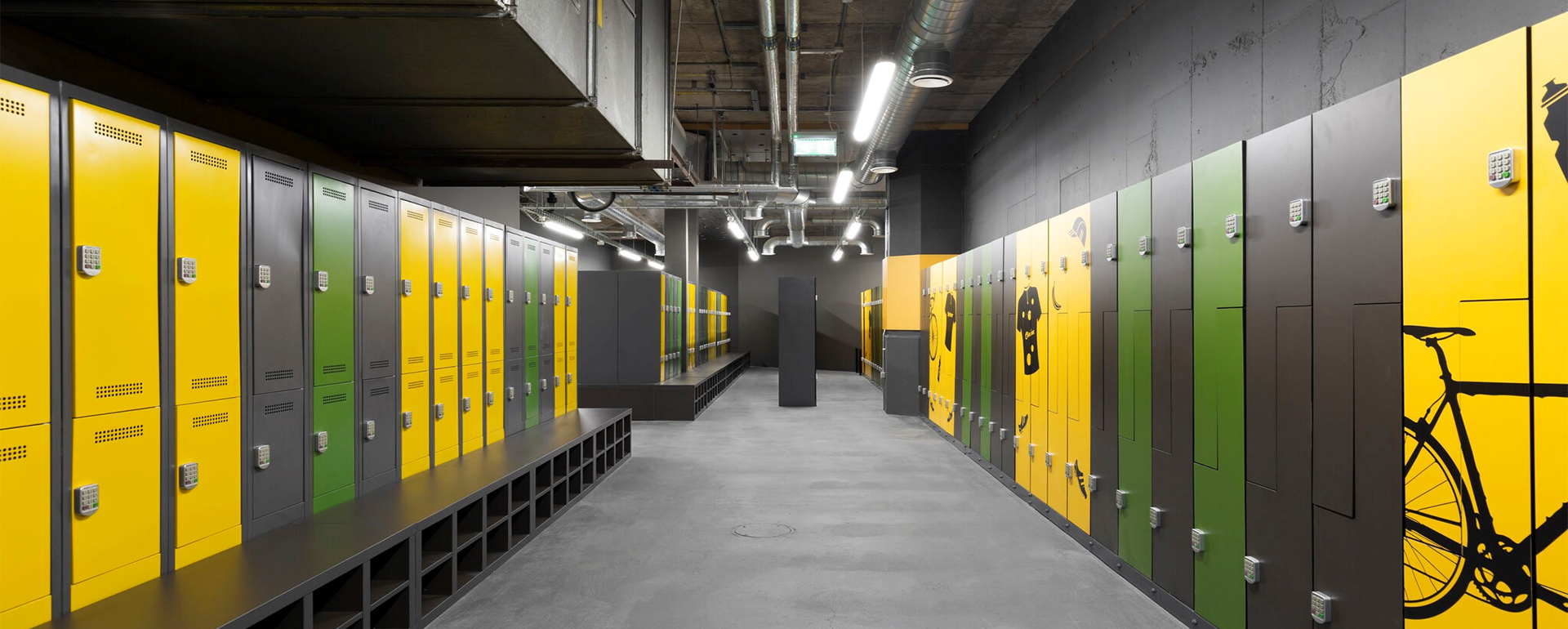
Powder Coated Mesh Lockers: Durable and Aesthetic Storage
Powder coated mesh lockers offer a sophisticated and resilient storage solution that combines the visibility of wire mesh with a high-performance protective finish. These lockers are designed to withstand heavy daily use while maintaining a clean, professional appearance in any facility. By applying a dry powder through an electrostatic process, manufacturers create a bond that is significantly stronger than traditional liquid paint. This ensures your storage units remain resistant to chips, scratches, and corrosion. Whether you are outfitting a high-end fitness center or a rigorous industrial warehouse, choosing a powder-coated finish is a strategic investment in longevity and style.
What are powder coated mesh lockers?
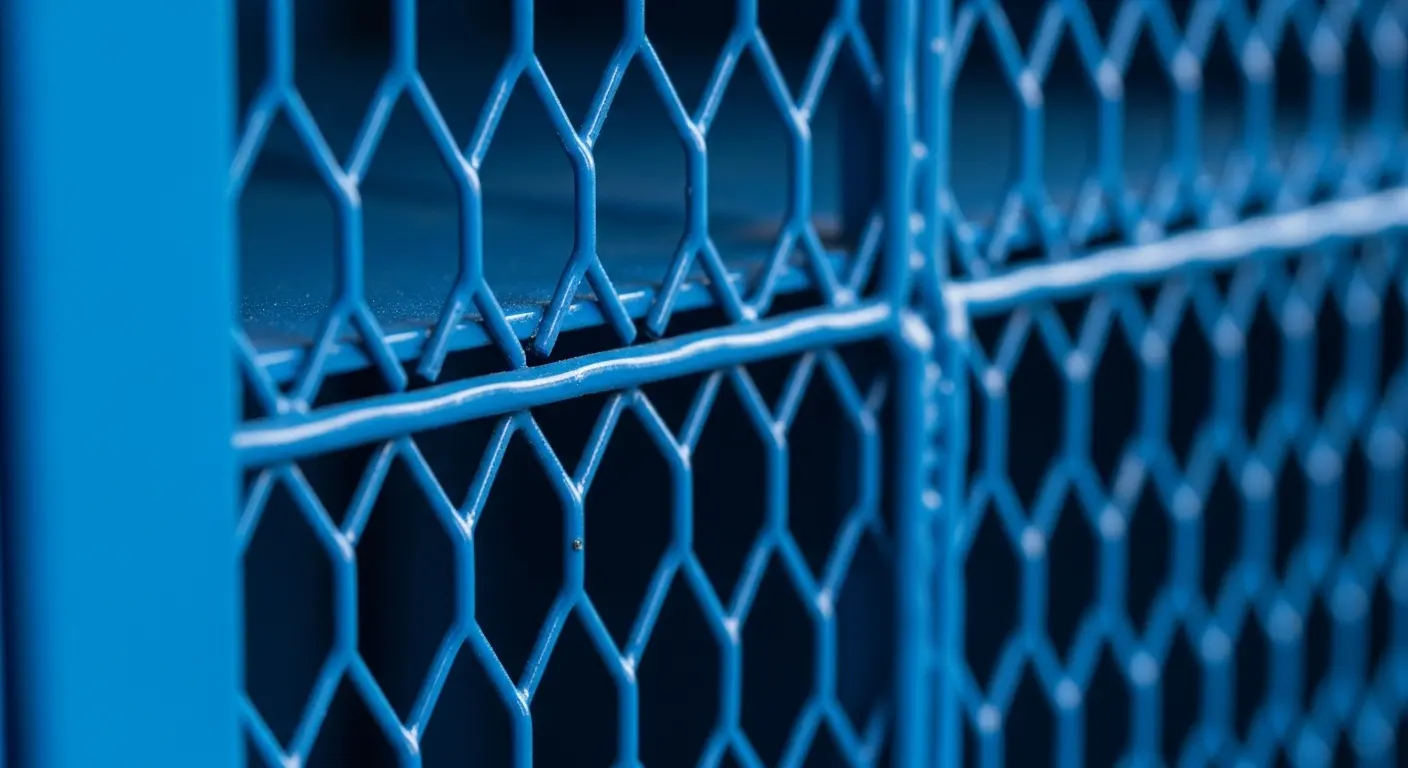
Powder coated mesh lockers are secure storage units made from welded wire mesh that have been finished with a dry powder coating. This coating is applied electrostatically and then cured under heat to create a hard, durable skin. This process provides a uniform finish that protects the steel from environmental damage while offering various color options for facility branding.
When we talk about high-quality storage, the finish is just as important as the frame. I once visited a seaside gym that had installed standard painted lockers. Within six months, the salt air and humidity had caused the paint to bubble and peel. We replaced them with wire mesh lockers that featured a heavy-duty powder coating. Years later, they still look brand new.
The powder coating process involves a mixture of pigment and resin. This mixture is sprayed onto the mesh lockers using a spray gun that applies an electrostatic charge to the powder particles. This causes them to wrap around the entire wire surface, including the hard-to-reach weld points. Once baked in an oven, the powder melts and fuses into a continuous, protective layer. This results in a finish that is much thicker and tougher than liquid paint.
Why is powder coating superior for mesh lockers?
Powder coating is superior because it provides a more durable, impact-resistant, and corrosion-proof finish compared to liquid spray paint. It creates a thicker, more flexible layer that does not crack or peel under stress. Additionally, the process is more environmentally friendly, as it produces negligible volatile organic compounds (VOCs) and allows for the recycling of over-sprayed powder.
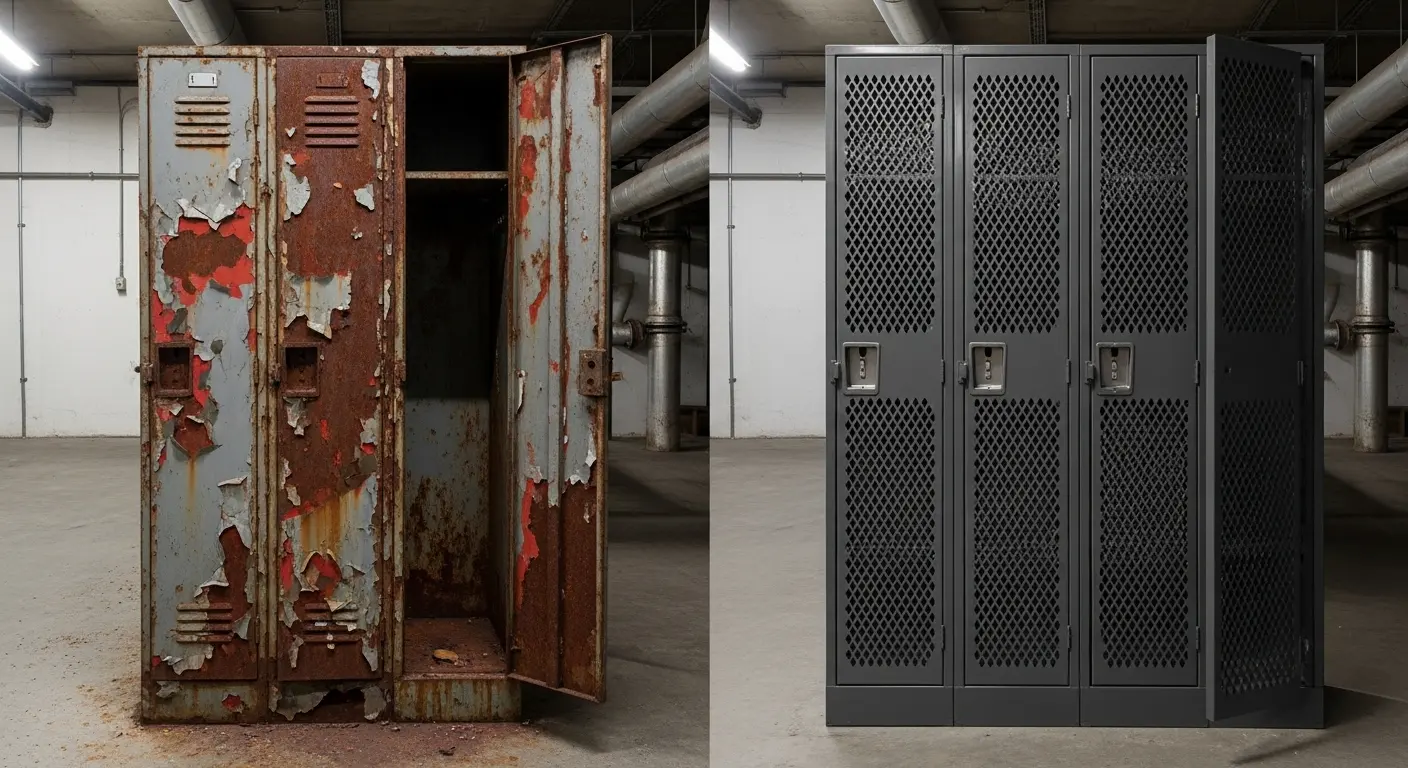
In my experience, the "slam test" is where powder coating really shines. In a busy school or factory, locker doors are treated roughly. Traditional paint chips off upon impact, exposing the raw steel to moisture and rust. Powder coating is actually flexible. It can bend slightly with the metal rather than shattering. This makes it the preferred choice for personal effect mesh locker units where high-frequency use is expected.
| Feature | Liquid Paint | Powder Coating |
| Durability | Moderate | High |
| Rust Resistance | Low | Very High |
| Environmental Impact | High (VOCs) | Low (No Solvents) |
| Finish Uniformity | Can have drips/runs | Perfectly uniform |
| Color Retention | Fades over time | UV Resistant |
Beyond the physical benefits, the environmental aspect is a major selling point for modern corporations. Liquid paints require solvents to stay in liquid form, which evaporate into the air. Powder coating is a dry process. There are no solvents, and any powder that doesn't stick to the locker can be collected and reused. It is a closed-loop system that aligns with green building standards.
Where should you use powder coated mesh lockers?
Powder coated mesh lockers should be used in environments that demand high visibility, constant airflow, and aesthetic appeal. They are ideal for commercial gyms, corporate offices, retail backrooms, and educational institutions. Because the finish can be customized in various colors, they are perfect for facilities that want to maintain a specific brand identity while ensuring secure storage.
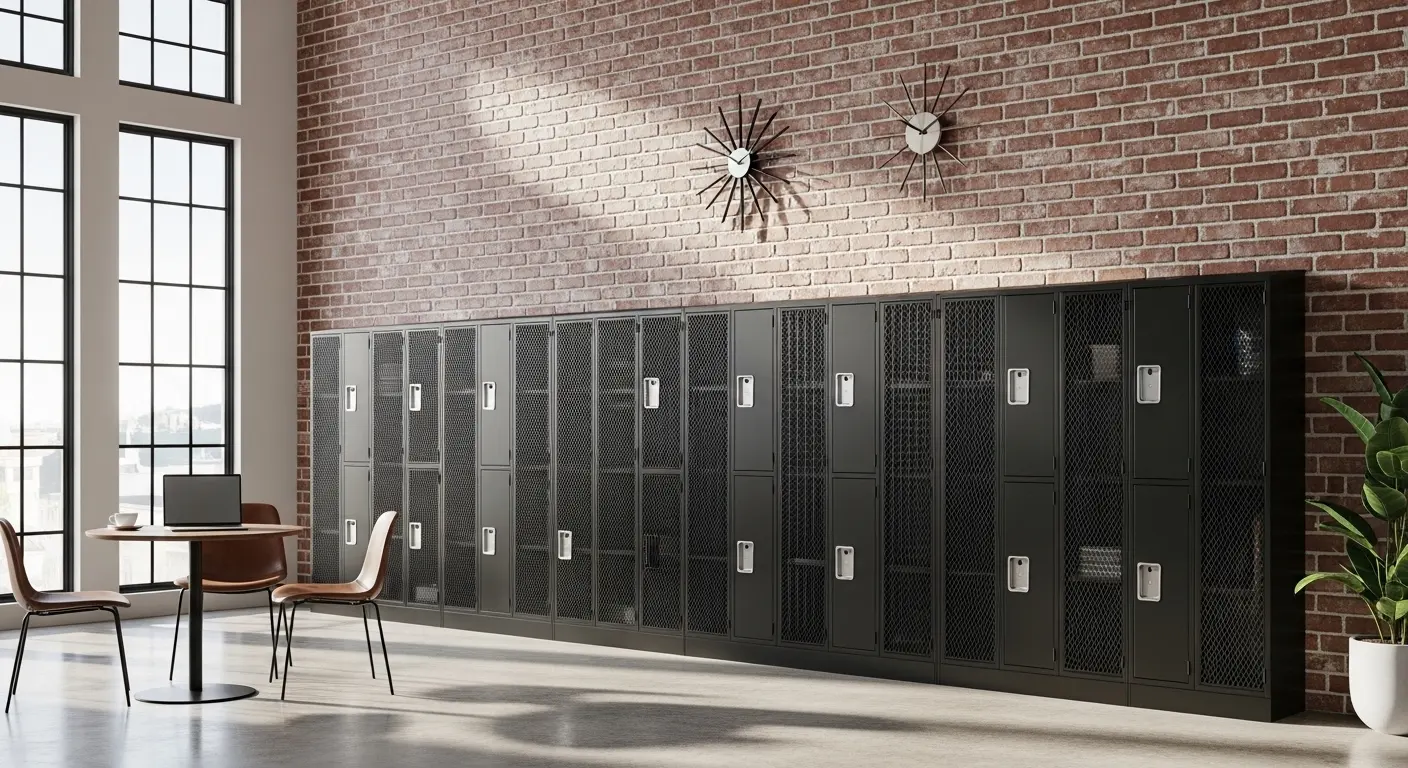
If you are managing a boutique fitness studio, you don't want the industrial look of raw zinc. You want gym mesh lockers that match your brand's aesthetic. I’ve seen facilities use deep blues or sleek blacks to create a premium feel.
- Fitness Centers: For drying sweaty gear and looking great.
- Corporate Offices: To store laptops and bags in a transparent, modern way.
- High-End Retail: For staff storage that looks professional during audits.
- Hospitals: Where a clean, coated surface prevents the accumulation of bacteria.
In these settings, the locker is more than just a box; it is part of the interior design. The ability to choose a "satin" or "matte" finish allows you to control the glare and feel of the room. It’s about creating an environment where staff and members feel their belongings are valued.
How do powder coated lockers compare to phenolic or standard wire mesh?
Powder coated mesh lockers offer better ventilation than phenolic lockers and a more professional aesthetic than standard galvanized wire mesh. While phenolic lockers are virtually indestructible in wet areas, they lack the 100% visibility and airflow of mesh. Powder coating provides the necessary rust protection of galvanization but with a far superior color range and a smoother finish.
I often get asked if mesh is "tough enough." When compared to phenolic, mesh is more about "operational security." You can see what's inside. In a high-security office, that transparency is more valuable than a solid door. Standard galvanized mesh looks very "industrial"—great for a warehouse, but maybe not for a law firm. Powder coating bridges that gap. It gives you industrial strength with an executive finish.
Comparing the "Big Three"
- Standard Galvanized Mesh: Functional, cost-effective, but rough texture and "industrial" look.
- Powder Coated Mesh: Professional look, customizable colors, smooth to the touch, and highly rust-resistant.
- Phenolic/Solid: Maximum privacy and impact resistance, but no airflow and higher cost.
For most modern facilities, the powder-coated option is the "sweet spot." It offers the best return on investment by combining low maintenance with high visual appeal.
What technical specifications matter most?
The most important technical specifications for powder coated mesh lockers are the wire gauge, aperture size, and coating thickness. You should look for a minimum 12-gauge steel wire and a powder coating thickness of at least 60 to 80 microns. These measurements ensure the unit is strong enough to resist prying while the finish is thick enough to prevent corrosion.
When I review specifications for a project, I always check the "curing temperature." A locker that hasn't been cured properly in the oven will have a brittle finish. You want a manufacturer that uses professional-grade ovens to ensure the cross-linking of the polymer is complete. This is why it pays to work with established locker manufacturers in Europe or specialized industrial suppliers.
Tip: If your lockers will be in a coastal area, ask for a "marine-grade" powder coating. This includes a zinc-rich primer underneath the color coat for double the protection.
The aperture size (the size of the holes in the mesh) also impacts the coating. A wire mesh compartment lockers system with smaller holes requires a more precise spray technique to ensure every corner is covered. High-quality manufacturers use automated lines to ensure this consistency.
How do you maintain the finish of powder coated lockers?
Maintaining the finish of powder coated lockers requires regular cleaning with mild soap and water using a soft cloth or sponge. Avoid using abrasive cleaners, steel wool, or harsh chemicals that can scratch the surface and dull the shine. Periodically checking for any deep scratches and touching them up with a matching paint pen will prevent rust from forming on the underlying steel.
Maintenance is surprisingly simple. Because the surface is so smooth, dust doesn't "stick" to it the way it does to raw metal. A quick wipe-down once a month is usually all it takes.
- Dusting: Use a soft-bristle brush or microfiber cloth.
- Washing: Use a solution of warm water and a pH-neutral detergent.
- Rinsing: Always rinse with clean water to remove any soap residue.
- Drying: Air dry or use a clean towel to prevent water spots.
If a locker does get a deep gouge from a heavy tool, don't panic. You can buy touch-up kits that perfectly match the RAL color code of your lockers. Addressing these small spots immediately is the key to making your lockers last for 20 years instead of 10.
How do they improve security and visibility?
Powder coated mesh lockers improve security through "visual deterrence" while maintaining a clean appearance. The open-mesh design allows supervisors to perform visual audits without opening doors, discouraging the storage of prohibited items. The smooth coating prevents the mesh from snagging on bags or clothing, making it easier for staff to store and retrieve items quickly.
Security isn't just about locks; it's about transparency. In many corporate settings, "mystery" lockers become a liability. By using a mesh design, you eliminate the "dark corners" where contraband can be hidden. The powder coating adds to this by making the mesh more visible and distinct, which further helps in surveillance.
The Psychology of Visibility
When people know their storage is visible, they tend to keep it cleaner. I’ve seen facilities reduce their "abandoned locker" rate by 50% simply by switching to mesh. The powder coating makes the unit look intentional and high-quality, which encourages users to respect the equipment.
Are they cost-effective for long-term use?
Yes, powder coated mesh lockers are highly cost-effective because they significantly reduce the need for repairs, repainting, and replacements. While the initial cost may be slightly higher than standard painted units, the lifespan of the finish is doubled. Lower maintenance costs and a longer replacement cycle result in a much lower total cost of ownership (TCO) over the locker's life.
Think of it as an insurance policy for your facility. You might save 10% upfront on liquid-painted units, but you will spend that savings (and more) on maintenance within three years. [Data: Industry benchmarks show that powder-coated finishes retain 90% of their integrity after five years, compared to just 60% for liquid paint.]
Furthermore, the "aesthetic lifespan" is longer. A locker that stays looking new helps maintain the professional image of your facility. This is vital for attracting members to a gym or maintaining morale in a corporate office.
Can I customize the colors of my lockers?
Yes, one of the primary benefits of powder coating is the near-infinite range of color customization. Manufacturers typically offer a standard range of RAL colors, but custom colors can be matched to your specific brand. You can also choose between different textures, such as high-gloss, matte, or even metallic finishes to suit your decor.
Color coding can also be a functional tool. I worked with a large logistics center that used different colored wire mesh lockers for different departments.
- Blue: Logistics Team
- Red: Maintenance Team
- Green: ManagementThis simple visual cue helped organize the massive breakroom and made it easy for employees to find their designated zones.
How does the coating impact airflow?
The powder coating does not negatively impact airflow; in fact, it enhances hygiene by providing a smooth surface that is easier to keep clean. The open apertures of the mesh remain completely clear, allowing for 360-degree ventilation. This is essential for preventing the buildup of stale odors and moisture in high-activity environments like gyms and industrial changing rooms.
Proper airflow is the secret to a fresh-smelling locker room. Solid lockers trap moisture, which leads to the growth of mold and mildew. Powder coated mesh allows air to circulate through the contents constantly. The smooth finish ensures that any moisture that does settle on the frame can evaporate quickly or be wiped away without being absorbed by the surface.
Frequently Asked Questions
Are powder coated lockers safe for food production environments?
Yes, as long as the coating is non-toxic and properly cured. Many powder coatings are formulated to be "food-safe" and resistant to the harsh cleaning chemicals used in food processing plants.
Can powder coating be applied to old lockers?
While possible, it is not always cost-effective. The old paint must be completely stripped via sandblasting first. It is usually more efficient to purchase new lockers with a factory-applied finish.
Does the coating add significant weight to the locker?
No. The coating is very thin (microns thick). It adds a negligible amount of weight but provides a massive increase in structural protection.
How do I know if a locker is truly powder coated?
Check the texture. Powder coating is generally thicker and has a more uniform "orange peel" or "satin" texture than liquid paint. You also won't see any "drip marks" or thin spots at the corners.
What happens if the coating chips?
If a chip occurs, clean the area and apply a matching touch-up paint. Because the coating is a fused layer, the chip shouldn't "spread" like traditional paint does, making the repair much simpler.
Conclusion
Investing in powder coated mesh lockers is about more than just storage; it’s about creating a durable, secure, and professional environment. These units solve the dual problems of rust and dullness, providing a solution that looks as good in year ten as it does on day one. By prioritizing high-quality materials and a superior finish, you are protecting your assets and your facility's reputation.
Whether you are looking for gym mesh lockers to impress your members or wire mesh compartment lockers to secure your staff's valuables, powder coating is the gold standard. Don't settle for "standard" paint that will fail you in a few years. Choose the resilience and style of powder coating and see the difference it makes in your facility's longevity.
