
How Long Does It Take to Order and Install Phone Lockers?
Ordering and installing phone lockers typically takes between 4 to 12 weeks from the initial quote to the final on-site assembly. This timeline varies based on whether you choose standard in-stock units (2–4 weeks total) or custom-engineered systems (8–12+ weeks total).
By understanding the logistics of procurement, you can effectively manage your project timeline and avoid common delays. In this guide, you will learn to control:
- Design Turnaround: Managing CAD and 3D approval stages.
- Manufacturing Windows: Navigating production lead times for different materials.
- Shipping Logistics: Timing ocean vs. ground freight.
- Installation Planning: Coordinating professional assembly schedules.
The 4 Stages of a Phone Locker Project Timeline
Successful locker procurement is rarely a single transaction; it is a phased roadmap. For a standard 30-door stand-alone unit, the process moves relatively quickly, but larger institutional projects require synchronized steps to ensure the units arrive exactly when the facility is ready to receive them.
The timeline is divided into four distinct phases:
- Consultation & Design: Finalizing specifications.
- Manufacturing: Raw material fabrication and finishing.
- Transit: Moving goods from the factory to your door.
- Installation: Securing and testing the units.
Before starting the clock, it is essential to determine how many phone lockers you need for your headcount to ensure the initial quote is accurate and manufacturing volumes are locked in.
Phase 1: Ordering and Design Approvals (3–7 Days)
The first week of your project is dedicated to technical alignment. During this phase, manufacturers provide CAD drawings and 3D simulations to confirm that the locker dimensions fit your specific architectural constraints.
For custom projects, this phase is critical for verifying what security features a phone locker system should include, such as specific digital lock types or charging port configurations.
Common design mistakes to avoid:
- Door Clearance: Failing to account for the swing radius of locker doors in tight hallways.
- Power Access: Not identifying outlet locations before finalizing "charging locker" designs.
- Wall Substrate: Not specifying if the wall is drywall, brick, or concrete, which affects the mounting hardware provided.
Phase 2: Manufacturing Lead Times (2–6 Weeks)

Once the CAD drawings are signed off, production begins. The time required depends heavily on the materials and complexity of the order.
- In-Stock Models (2–5 Days): These are pre-fabricated units kept in a warehouse, requiring only quality checks and packaging.
- Custom Fabricated Units (4–6 Weeks): This involves the full production cycle: laser cutting the steel, CNC bending, welding, and powder coating.
Material choice also impacts speed. Standard cold-rolled steel is usually the fastest to process. However, if you require specialized finishes like high-pressure laminate (HPL) or custom "Delta E" color matching (a standard used to measure the visual difference between two colors to ensure brand consistency), expect an additional 5–10 days for material sourcing and testing.
Phase 3: Shipping & Logistics (1–6 Weeks)
Transit time is the most variable part of the timeline. Because phone lockers are heavy and bulky, shipping methods vary by distance and urgency.
Domestic vs. International Transit
If the manufacturer is local, ground freight typically takes 3–7 days. For international orders (e.g., shipping from a factory in China to a hub in the USA or UK), ocean freight takes 4–6 weeks. While air freight is an option for urgent "fast-track" projects, the cost is often prohibitive for large steel units.
Packaging Format
- Fully Assembled: Faster to set up on-site, but more expensive to ship due to volume.
- Flat-Pack (Knock-Down): Takes up less space (lowering shipping costs) but increases the time required in Phase 4.
Common Logistics Mistake: Failing to confirm "Liftgate" or "Inside Delivery" services. Most freight carriers only provide "Kerbside Delivery," meaning they leave the pallets on the street. You must ensure you have the staff or equipment to move them inside.
Phase 4: On-site Installation (1–3 Days)
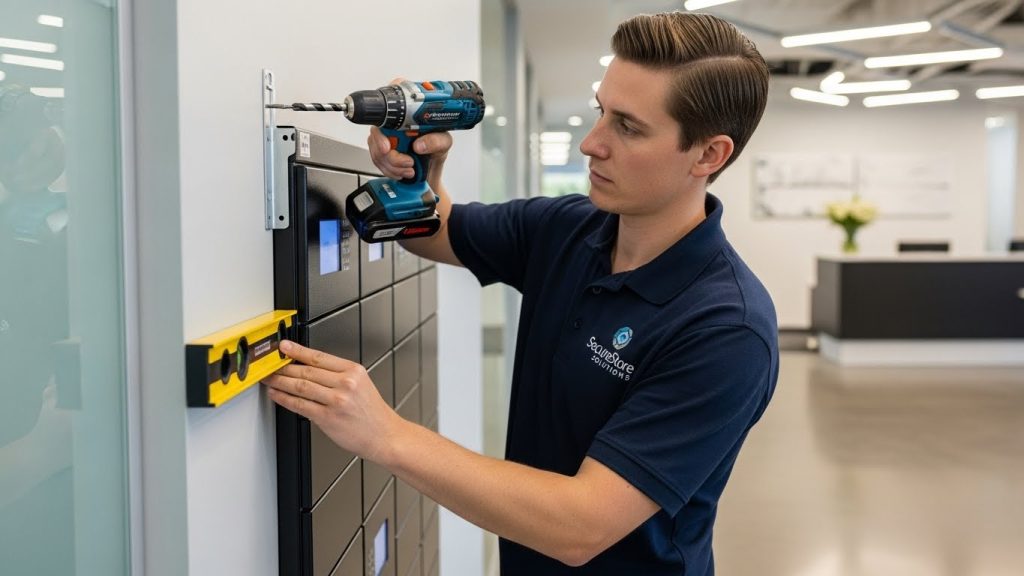
The final step is the physical assembly and mounting of the units. For professional results, you should plan for approximately 60 to 90 minutes of labor per unit.
For high-traffic areas, the best phone locker layout for hallways and entrances should be finalized before the installers arrive. This ensures that the workflow of students or employees isn't disrupted by the installation process.
DIY vs. Professional Installation
If you have a maintenance team, DIY installation is possible with basic tools (drills, levels, and anchors). However, professional installers are recommended for large-scale "banked" lockers to ensure the units are perfectly level and securely anchored to the floor or wall to prevent tip-over accidents.
Comparison: Standard Stock vs. Custom Projects
| Feature | Standard Stock Project | Custom Institutional Project |
| Typical Scale | 1–5 Units | 50–500+ Units |
| Design Time | 24 Hours | 1–2 Weeks |
| Manufacturing | 2–5 Days | 4–8 Weeks |
| Total Timeline | 2–4 Weeks | 8–12+ Weeks |
Frequently Asked Questions
To expedite an order, choose standard colors (like light grey or black) and in-stock mechanical locks. Avoid custom branding or non-standard dimensions, which trigger a full manufacturing cycle.
Yes, custom powder coat colors or integrated charging electronics typically add 2–3 weeks to the production schedule. This accounts for sourcing specific components and performing additional quality control testing.
A single pre-assembled unit can be leveled and anchored in about 45 minutes. If the unit arrives in flat-pack form, assembly adds another 60–90 minutes to the process.
Yes, but you should place your order no later than May or June. This accounts for the high demand during the "Back to School" manufacturing peak and ensures delivery before late August.
The industry average lead time for manufactured-to-order metal lockers is currently 6 to 8 weeks, plus shipping time (needs verification).
Yes, a representative must be present to sign the Bill of Lading and inspect the units for any transit damage before the driver leaves.
Conclusion
Planning a phone locker project requires a minimum lead time of two months to ensure a stress-free rollout. By accounting for the design approval week and the logistics of heavy freight, you can prevent the delays that often plague facility upgrades. Whether you need a quick-ship standard model or a fully customized security system, starting the consultation early is the key to meeting your deadline.
