
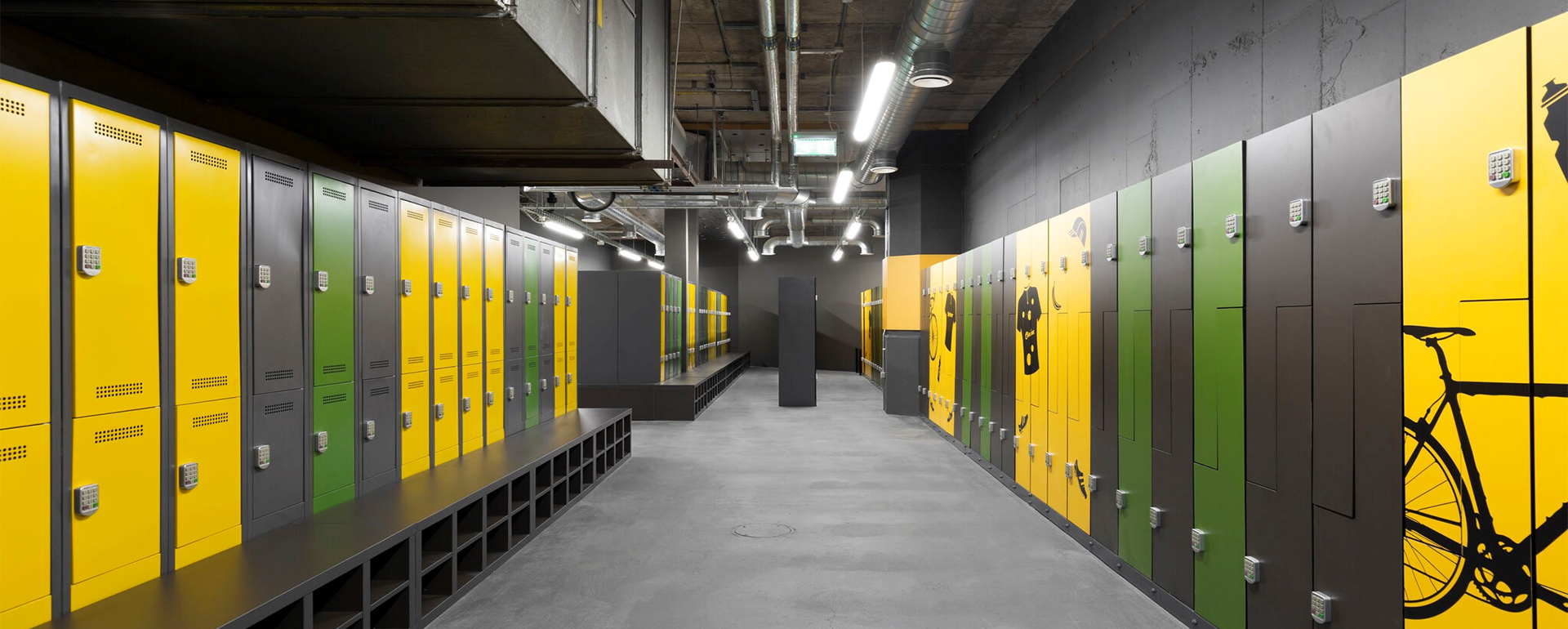
How Many Phone Lockers Do You Need for Your Headcount?
Determining the number of phone lockers you need depends on your total headcount and whether your facility is a school with 1:1 requirements or a hybrid office with shared usage. For schools, a 1:1 ratio plus a 10% buffer is the standard, while offices typically require lockers for only 40% to 70% of their total staff.
In this guide, you will:
- Calculate your specific locker-to-headcount ratio.
- Understand 2026 school compliance requirements.
- Optimize office space for hybrid "hot-desking."
- Determine the balance between charging and static storage.
The Phone Locker Formula: A Quick Calculation
To avoid over-purchasing or facing a storage shortage, you should use a data-driven formula rather than a guess. The most reliable calculation for high-density storage is:
[Total Headcount] x [Utilization Rate] + [10% Buffer] = Total Doors Needed
The "Utilization Rate" varies by industry. In a primary school where phones are banned from the classroom, utilization is 100%. In a corporate office where some employees work remotely, it may drop to 60%. Adding a 10% buffer is critical for managing broken keys, maintenance, or high-traffic visitor days.
Steps to Calculate:
- Identify Peak Attendance: Use your highest recorded attendance day from the last six months.
- Determine Your Policy: Is phone storage mandatory (100% rate) or optional (50% rate)?
- Factor in Growth: Add 10% to your final number to account for new hires or increased enrollment.
Common Mistakes:
- Calculating by average attendance: This leads to shortages on "All-Hands" meeting days or school assembly days.
- Ignoring visitor needs: Always reserve at least one 30-door unit specifically for guests or temporary contractors.
For Schools: The 1:1 "Phone-Free" Standard (2026 Mandates)
By 2026, many regions—including California under AB 3216—have implemented strict "Phone-Free Schools" mandates. These laws often require students to store devices "bell-to-bell," making cell phone lockers a mandatory piece of infrastructure rather than an elective amenity.
For educational environments, the only viable ratio is 1:1. If you have 1,000 students, you need 1,000 doors. Because these units are used daily and heavily, you must also prioritize what security features a phone locker system include to prevent theft and administrative headaches.
School Density Planning:
- Junior High/Middle Schools: Focus on 50-door units to maximize hallway space.
- High Schools: Consider a mix of storage and units that can phone lockers store tablets for 1:1 iPad programs.
- Implementation Tip: Assign lockers by homeroom or "period 1" location to prevent hallway congestion during morning check-ins.
For Offices: The "Hybrid Ratio" (30% to 70%)
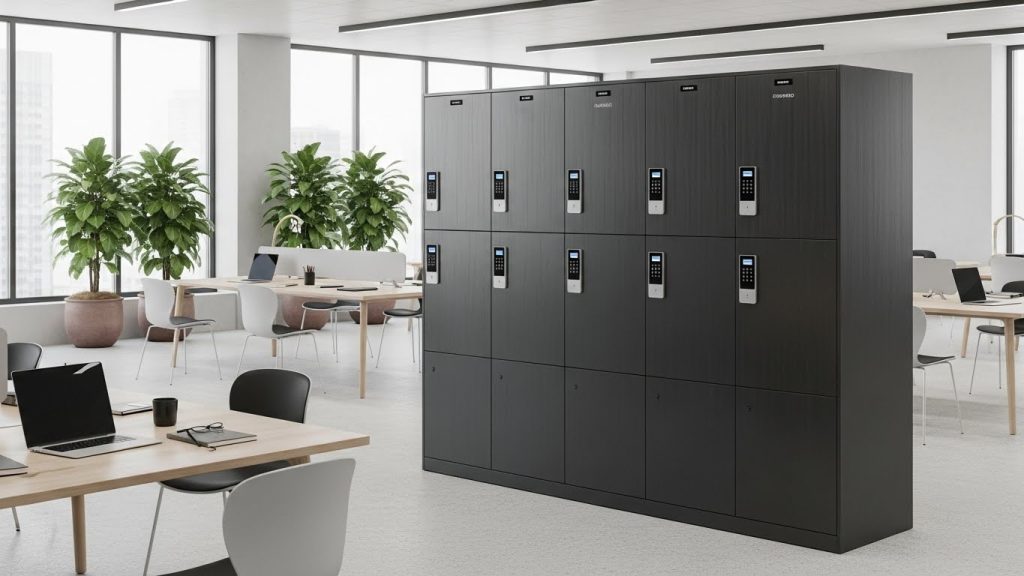
The 1:1 locker ratio is dead in the modern corporate world. With hybrid schedules, a 200-person company rarely has more than 140 people in the building at once. Purchasing a locker for every employee on the payroll is an inefficient use of both budget and square footage.
For hybrid offices, we recommend the 70% Rule. If your office capacity is 100 people, install 70 lockers. This accommodates peak Tuesday-Thursday traffic while saving 30% on your procurement costs.
Occupancy Tiers:
- Fixed Desk Offices: 0.8 lockers per person.
- Hot-Desking/Agile Offices: 0.5 to 0.6 lockers per person.
- Field Staff/Sales Hubs: 0.3 lockers per person.
Common Mistakes:
- Installing lockers at every desk: Centralizing lockers in a high-security lobby or breakroom is more cost-effective and easier to monitor.
- Neglecting size variety: Ensure a portion of your fleet features larger compartments to accommodate oversized smartphones or small power banks.
Space vs. Capacity: How Many Units Will Fit?
Phone lockers are significantly more dense than traditional lockers. While a standard book locker might be 12 inches wide, a professional phone locker door is often only 4 to 6 inches wide. This allows you to fit 50 storage spots in the same footprint previously occupied by two or three gym lockers.
Density Comparison:
- Wall-Mounted Units: Ideal for narrow hallways; can store 30 phones in less than 3 square feet of wall space.
- Floor-Standing Pedestals: Better for high-traffic lobbies where students or staff can access them from both sides.
- Example: Using the GoodLockers SFSMSL-001 model, a school can store 500 phones in approximately 10 to 12 linear feet of hallway.
Charging vs. Static Storage: The Power Headcount
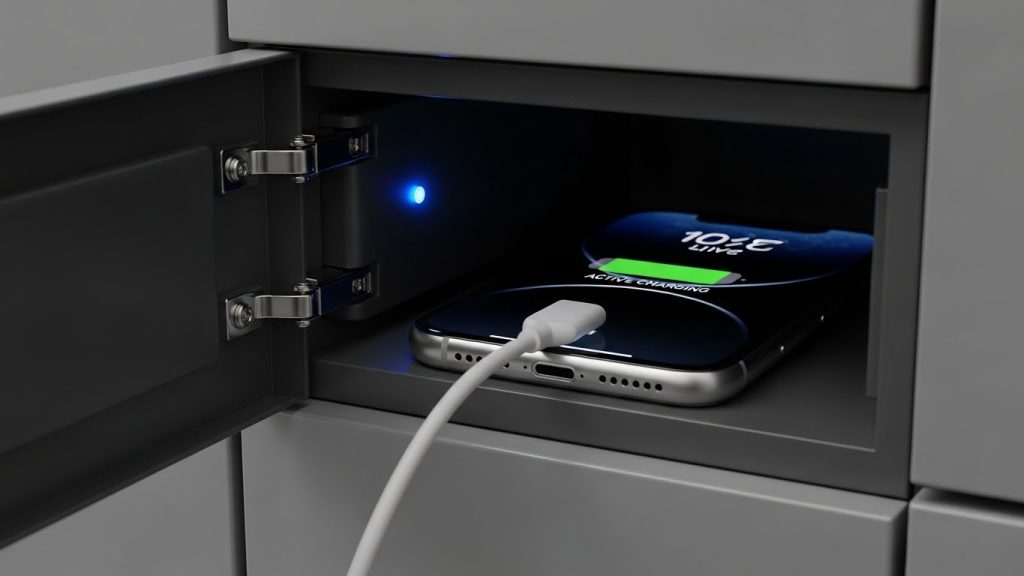
A major decision in your procurement process is whether to include integrated power. While it is tempting to make every locker a charging station, the cost and electrical infrastructure requirements are significantly higher.
In a typical school or office, only about 15-25% of the headcount actually needs to charge their device during the day. We suggest a "Hybrid Fleet" approach:
- 80% Static Storage: Standard lockers for secure, non-powered storage.
- 20% Active Charging: Lockers equipped with USB-C or AC outlets for those at low battery.
When planning for signal interference in these units, it is helpful to understand do phone lockers block cell signal and how that affects battery drain. Metal lockers can sometimes cause phones to "search" for signal, which drains the battery faster—making the 20% charging allocation even more important.
FAQ
The ideal ratio is 1:1 plus a 10% buffer. With new phone-free legislation, every student must have a dedicated, secure spot to store their device during school hours.
No, most hybrid offices operate successfully on a 0.5 to 0.7 ratio. Since not all employees are on-site simultaneously, "day lockers" are a more space-efficient solution than permanent assignments.
You can typically fit between 400 and 500 phone storage doors in 10 linear feet. High-density 50-door units are approximately 2 feet wide each, allowing for five units in a 10-foot run.
Choose 50-door units for maximum density in schools or large warehouses. 30-door units are better for smaller office departments or boutique fitness studios where the headcount is lower.
Yes, a 10% buffer accounts for lockers undergoing maintenance, lost keys, and unexpected visitors. Without a buffer, your system has zero flexibility during peak attendance periods.
Only if you are installing large-scale charging units. Static storage lockers require no power, while charging units typically plug into standard outlets but may require circuit load verification for large clusters.
Conclusion
Right-sizing your phone locker order is the difference between a seamless rollout and a logistics nightmare. For schools, the move toward 1:1 storage is now a regulatory necessity for 2026 compliance. For offices, the key is flexibility and high-density sharing. By using the utilization formulas provided, you can maximize your facility's security without overspending on unused hardware.
