
Mesh Wardrobe Lockers: Buyer's Guide for Facilities and Procurement Teams
Mesh wardrobe lockers are full-height steel storage units built with wire mesh panels for natural airflow, content visibility, and durable personal gear storage. They suit gyms, industrial changing rooms, fire stations, and warehouses. Key buying decisions include steel frame gauge, mesh aperture, door count, lock type, and whether a bench seat is required.
Mesh wardrobe lockers are a practical, ventilated storage solution for facilities where damp gear, high footfall, or security visibility matter. If you're specifying lockers for a gym, changing room, industrial site, or emergency service facility, this guide covers construction specs, use cases, configuration options, and what to confirm before placing an order.
What Are Mesh Wardrobe Lockers?
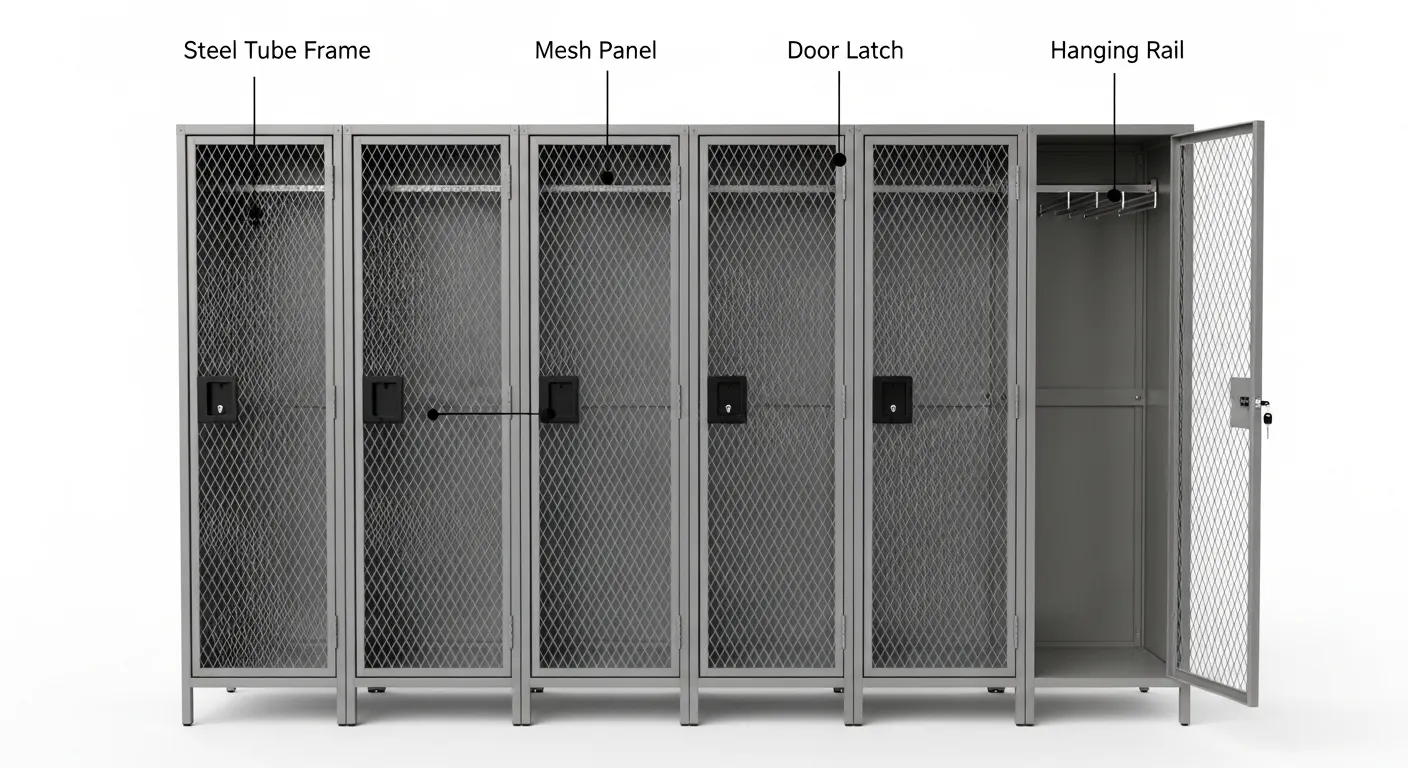
A mesh wardrobe locker is a full-height, single-person storage unit built from a welded steel tube frame and wire mesh panels, designed for clothing, uniforms, and personal gear.
The term "wardrobe" matters here. It distinguishes this product from multi-tier compartment lockers and storage cage lockers. A wardrobe locker is full height — typically around 1,800mm tall — with one or two doors per person. That means enough internal space for a full uniform, coat, or set of workwear.
The mesh panels replace the solid sheet metal used in standard lockers. That open structure is exactly what makes these units suitable for environments where airflow and visual access to contents are operational requirements.
Explore the full mesh lockers range for an overview of available configurations, including wardrobe, personal effect, and warehouse variants.
Why Choose Wire Mesh Construction?
There are practical, operational reasons why facilities choose mesh over solid-panel lockers — not just aesthetic ones.
Natural ventilation. The open mesh allows continuous airflow through stored items. Damp gym kit, wet workwear, or fire gear dries significantly faster than it would in a sealed cabinet. This directly reduces moisture buildup and odor over time.
Visibility without unlocking. Contents are visible at all times. For security-sensitive environments, this is a genuine operational advantage — useful in military facilities, changing rooms with CCTV, and anywhere personnel spot-checks occur.
Corrosion resistance. A powder-coated finish protects the steel frame and mesh panels from rust, making these lockers a solid fit for humid environments like pool areas and industrial facilities.
Structural strength. Welded mesh panels fixed to a rigid steel tube frame maintain integrity under daily heavy use. Mesh construction does not compromise strength when the frame gauge is correct.
According to Simply Lockers' 2025 locker trend analysis, wire mesh and industrial-style lockers are gaining traction across gym, construction site, and manufacturing applications — a trend continuing well into 2026.
Where Are Mesh Wardrobe Lockers Used?
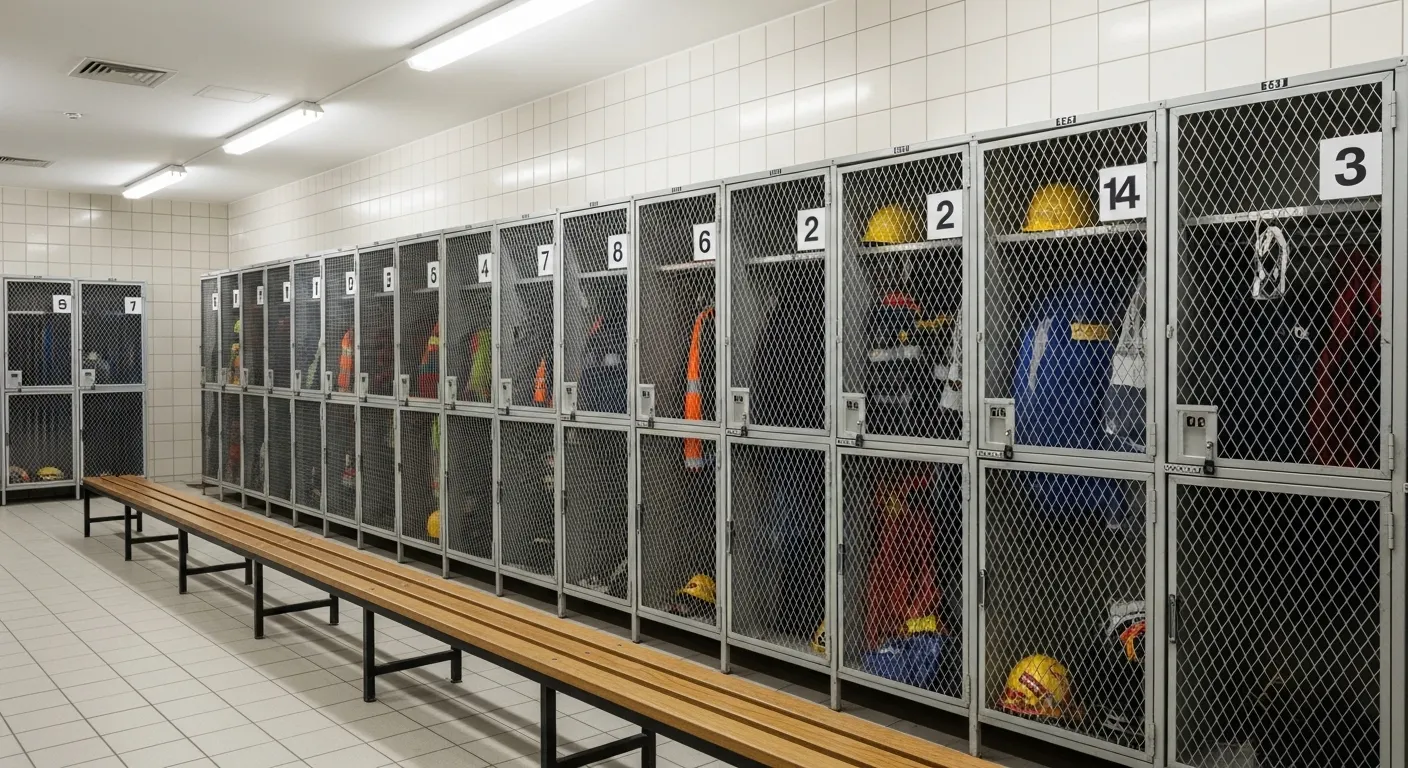
Mesh wardrobe lockers work across a wide range of environments. Here is where they perform best and why.
Gyms, Sports Facilities, and Fitness Centres
Damp sportswear needs airflow. Mesh lockers accelerate drying between sessions and cut down on the persistent odor problems that come with sealed solid-door lockers in high-use changing rooms. Bench seat integration is a standard request in this setting.
Industrial Changing Rooms and Factories
Factory workers need somewhere to store PPE, uniforms, and personal items between shifts. The powder-coated mesh surface handles dusty and humid industrial conditions well. For heavy-duty industrial specifications, see our warehouse mesh lockers range, which covers high-traffic industrial use requirements in detail.
Fire Stations and Emergency Services
Fire gear must dry fully between callouts. Mesh ensures continuous airflow around heavy protective equipment, reducing drying time and preventing moisture damage to expensive kit.
Military Barracks and Security-Sensitive Sites
The visibility that mesh provides is a real security feature. Personnel and security staff can visually confirm locker contents without unlocking units, which supports routine inspection procedures. Padlock compatibility is standard across most configurations.
Warehouses, Logistics Hubs, and Mining Sites
Personal effect storage for shift workers is a standard facility requirement. Lockers can be raised on stand legs to lift units off damp warehouse floors. According to market research from DataIntelo, industrial and logistics sectors are among the primary drivers of global storage locker demand — and that trend is reflected in enquiry patterns across these segments.
How Are Mesh Wardrobe Lockers Built?
Mesh wardrobe lockers use a square steel tube frame, typically 25×25mm at 1.2mm wall thickness, with welded wire mesh panels at 50×50mm aperture and 3.0mm wire diameter. After fabrication, powder coating is applied for corrosion resistance and colour options.
Here are the standard construction specifications:
| Component | Standard Specification |
|---|---|
| Frame material | Square steel tube |
| Frame dimensions | 25×25mm, 1.2mm wall thickness |
| Mesh aperture | 50×50mm (25×25mm available for finer mesh) |
| Wire diameter | 3.0mm |
| Surface finish | Powder coating, multi-colour options |
| Door configuration | Single, double, or multi-door arrays |
| Lock options | Padlock hasp, combination lock, digital keypad lock |
| Optional features | Stand legs, bench seat, internal hanging rail, shelf |
| Standard unit size | W900 × D450 × H1800mm (fully customizable) |
These specs are the commercial starting point. All dimensions can be adjusted to fit specific locker room layouts and user counts.
For facilities with humidity-specific requirements, ventilated mesh lockers with climate-control features provide additional airflow engineering suited to pool areas and high-humidity industrial environments.
Mesh vs. Solid Lockers: Which Is Right for Your Facility?
Mesh suits facilities where ventilation, visibility, and drying speed matter most. Solid-panel lockers are better where privacy is the primary requirement. In most commercial changing room and industrial contexts, mesh outperforms solid for hygiene and long-term odor management.
| Feature | Mesh Wardrobe Locker | Solid-Panel Locker |
|---|---|---|
| Ventilation | Excellent — continuous natural airflow | Limited — depends on built-in vents |
| Content visibility | Full — see through the mesh | None |
| Moisture and odor control | High | Moderate |
| Privacy | Low to moderate | High |
| Damp gear drying speed | Fast | Slow |
| Security transparency | Yes — visual deterrent | No |
| Aesthetics | Industrial, functional | Cleaner visual finish |
| Corrosion resistance | Powder-coated steel | Varies by product |
Choose mesh if your priority is airflow, hygiene, fast gear drying, or visual security checks.
Choose solid panels if privacy is the primary requirement, or if the space is client-facing and a cleaner visual finish matters more than ventilation.
Configuration and Customization Options
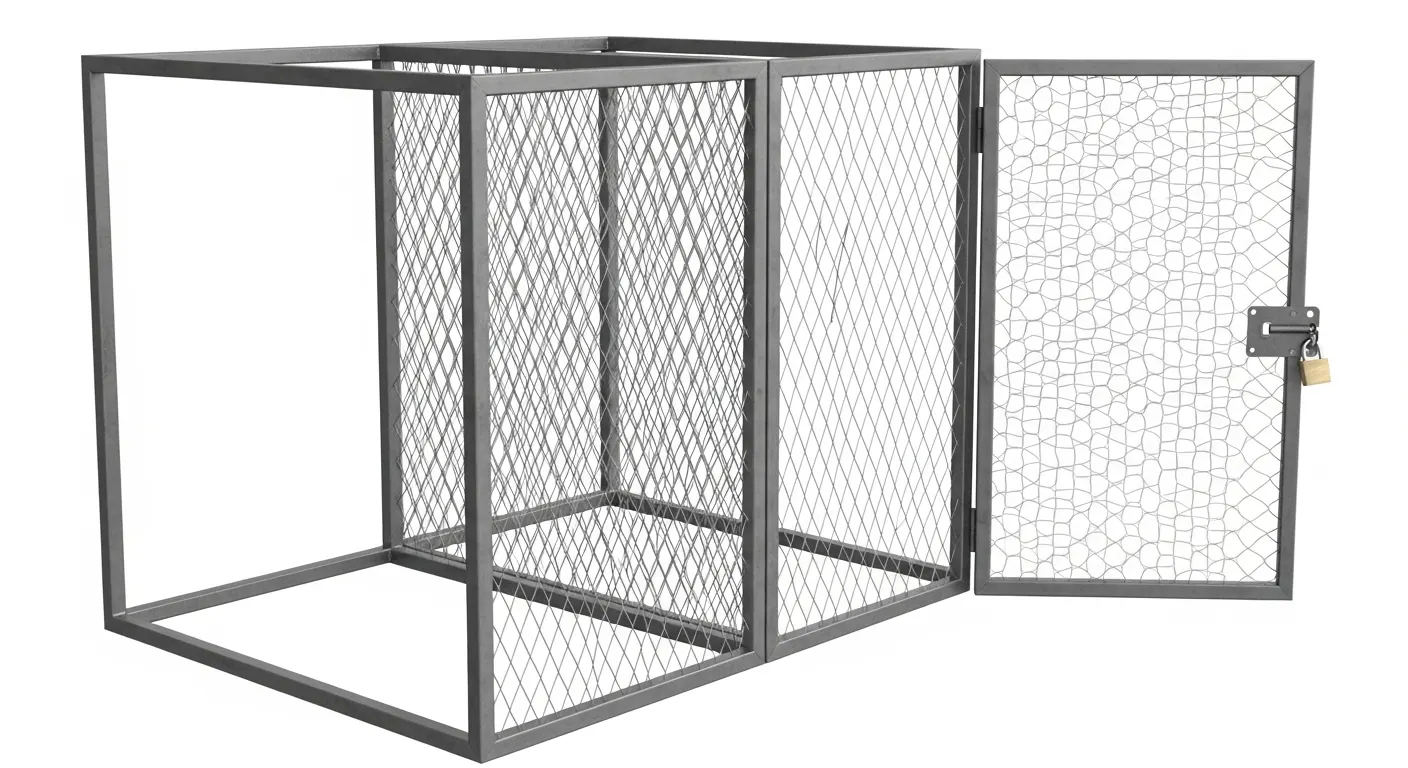
No two locker rooms are identical. Mesh wardrobe lockers can be specified to match exact room dimensions, user counts, and operational needs.
Door and Column Configurations
- Single full-height door per column (one user per column)
- Double-door configuration (two users per column)
- Multi-column arrays: 3, 4, or more columns side by side
- Reduced-height units where ceiling height restricts a full 1,800mm build
Accessories and Internal Fittings
- Bench seat unit — steel tube frame with plastic or wooden slat seat; installs alongside the locker column
- Internal hanging rail — for full-length clothing such as uniforms or coats
- Fixed shelf — for helmets, bags, or folded items
- Stand legs — raises the unit off damp floors; standard in warehouses and covered outdoor areas
Lock Options
- Padlock hasp — user supplies their own padlock; widely used in industrial settings
- Combination lock — no key management required
- Digital keypad lock — PIN access; suits security-conscious or staffed facilities
- Coin-return lock — for public facilities with high locker turnover, such as gyms
Colour Options
Powder coating is available across a wide colour range. Many facilities specify custom colours to match brand guidelines or zone a locker room layout visually.
All standard and custom configurations — including personal effect lockers, wardrobe combinations, and bench-seat pairings — are available through the mesh lockers product range.
What to Check Before Ordering
A quick checklist before you send your enquiry:
- User count — determines total door count and number of columns needed
- Room dimensions — floor area and ceiling height set the size parameters
- Frame gauge — minimum 1.2mm wall thickness on a 25×25mm tube for commercial use
- Mesh aperture — 50×50mm suits most facilities; 25×25mm for tighter security mesh
- Lock type — match to your key management system or user self-service model
- Surface finish — standard powder coat for most; galvanized steel for salt-air or outdoor-adjacent locations
- Accessories — confirm bench seat, hanging rail, and shelf requirements upfront
- Delivery format — flat-pack (knock-down) for freight efficiency; fully assembled for fast on-site installation
Getting these eight points confirmed before enquiry speeds up quote turnaround significantly and prevents costly specification changes mid-order.
Expert Tip: The frame gauge is the first specification to verify. A 1.2mm wall thickness on a 25×25mm steel tube is the commercial minimum for durability under daily heavy use. Thinner frames are common in budget units and show wear quickly in high-traffic environments. At Steel Furniture, mesh wardrobe lockers are fabricated to this baseline specification — with 18+ years of manufacturing experience and over 5,000 completed projects across 20+ countries behind every build.
Frequently Asked Questions
What are mesh wardrobe lockers used for?
They are used for storing clothing, uniforms, personal effects, and work gear in high-use environments. Common applications include gym changing rooms, factory locker rooms, fire stations, military facilities, and warehouse staff areas where ventilation and content visibility are operational priorities.
How do mesh lockers prevent odor and moisture?
The open wire mesh allows continuous airflow through stored items, which accelerates drying and prevents moisture accumulation. This reduces the bacterial growth that causes persistent odor — a common problem in sealed, solid-panel lockers used in high-frequency changing room environments.
What is the standard size of a mesh wardrobe locker?
A standard single-column unit is typically W900mm × D450mm × H1800mm. All dimensions are fully customizable. Frame gauge, mesh aperture, door count, and height can all be adjusted to match your specific locker room layout and capacity requirements.
Can mesh wardrobe lockers handle humid environments?
Yes, with the correct finish. A powder-coated finish suits humid indoor environments such as pool changing rooms and industrial facilities. For outdoor use or salt-air locations, galvanized steel construction provides an additional layer of corrosion resistance.
What lock types are available for mesh wardrobe lockers?
Standard options include padlock hasps, combination locks, digital keypad locks, and coin-return locks. The right choice depends on your facility's security level, whether staff manage a key system, and how users access lockers on a daily basis.
Can mesh wardrobe lockers come with a bench seat?
Yes. A bench seat unit installs alongside the locker column, built from a steel tube frame with a plastic or wooden slat seat surface. It is supplied as a separate assembly and specified at the time of order.
How do I specify the right mesh wardrobe locker for my project?
Confirm your user count, room dimensions, humidity level, lock preference, and accessory requirements. A manufacturer can then produce a dimensioned drawing and quote against those specifications. For complex layouts, a CAD drawing or 3D simulation confirms fit before production begins.
Ready to Specify Your Mesh Wardrobe Lockers?
Every locker room is different. If you're specifying mesh wardrobe lockers for a gym, changing room, industrial facility, or any commercial project, contact the Steel Furniture team to discuss your dimensions, configuration, and environment. We'll build to your exact specification.
