
Anti-Theft Mesh Lockers: A High-Security Guide
Anti-theft mesh lockers represent the front line of modern facility security by combining a rugged physical barrier with total visual transparency. Choosing a storage solution for a high-traffic environment often feels like a trade-off between privacy and safety.
However, security professionals are increasingly moving away from solid metal cabinets. They are choosing wire mesh instead. This shift is driven by the need for "visual audits." In industries like retail, hospitality, and logistics, the ability to see what is stored is a major deterrent. These lockers stop theft before it starts.
This guide will explore the technical specifications, psychological deterrents, and practical applications that make mesh the gold standard for secure storage.
What are anti-theft mesh lockers?
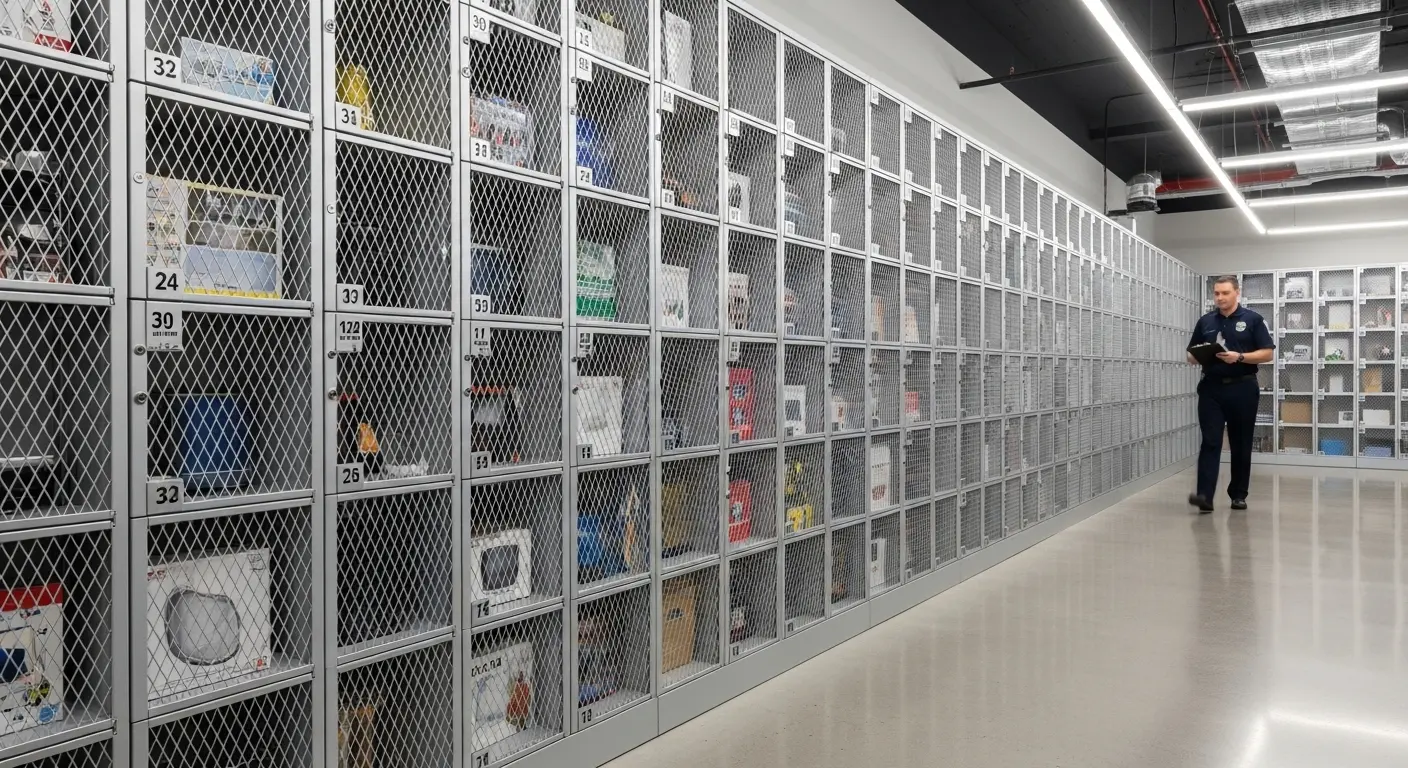
Anti-theft mesh lockers are professional storage units made of high-gauge welded steel wire that prioritize visibility and ventilation to prevent theft. Unlike solid lockers, they allow for constant visual audits, discouraging the concealment of contraband or stolen goods while providing a robust physical barrier. They are specifically designed for high-security and high-accountability environments.
When we talk about security, we usually think about thick walls. But in a workplace, walls provide shadows for thieves. I once worked with a warehouse manager who was losing thousands in small electronics every month. We found that staff were using their private solid lockers to hide inventory until they could sneak it out. We replaced those units with mesh lockers made of 10-gauge steel. The "blind spots" disappeared instantly.
These lockers are typically constructed with a 25mm x 25mm or 50mm x 50mm mesh aperture. This ensures that even small items cannot be easily slipped through the wire. The steel is either zinc-plated or powder-coated. This prevents rust and ensures the unit can handle the daily abuse of an industrial floor. For any facility manager, these are a "set it and forget it" security asset.
How does visual transparency deter theft?
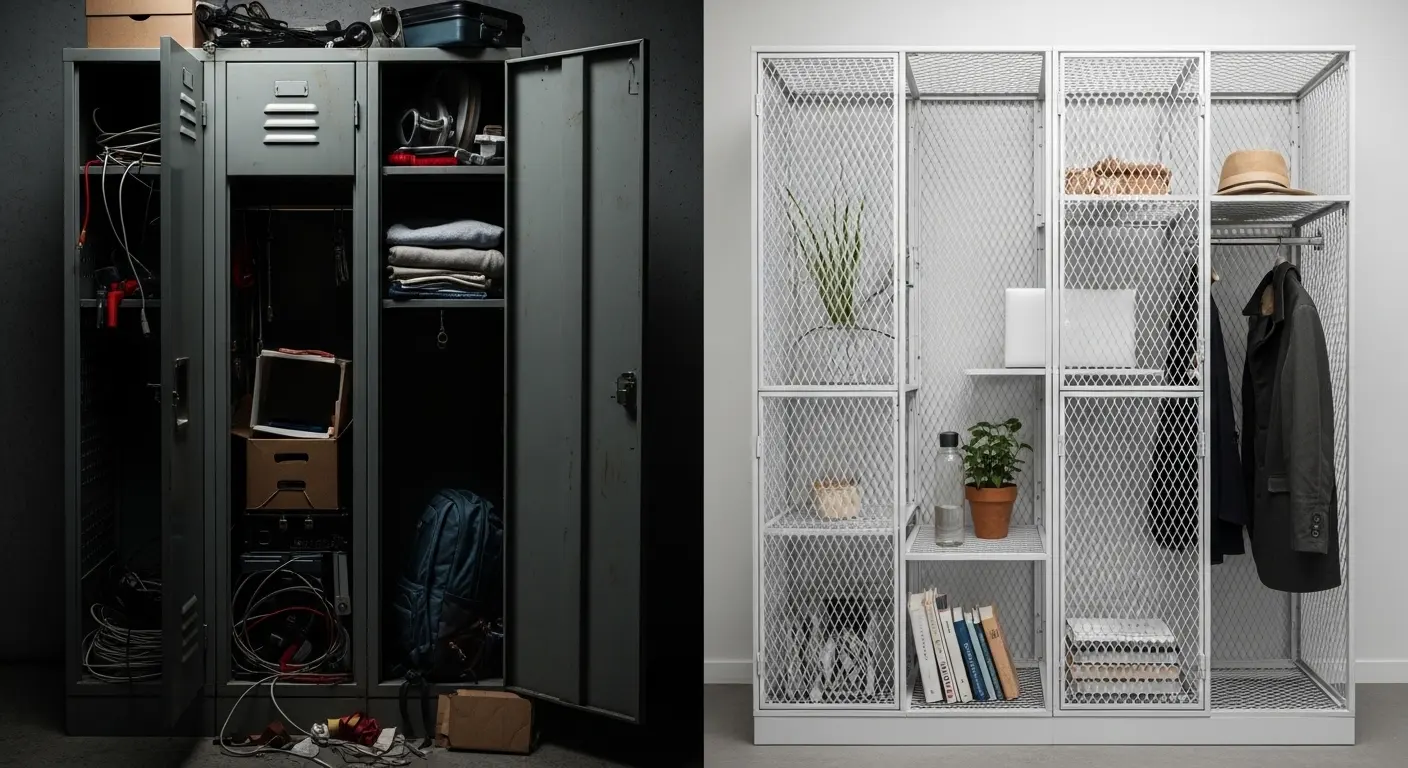
Visual transparency creates a "fishbowl effect," where users know their belongings are visible to peers and supervisors. This psychological deterrent significantly reduces internal shrinkage and the unauthorized storage of company inventory because any out-of-place item is immediately obvious during a simple walkthrough. It eliminates the anonymity that thieves rely on in solid-door storage.
The psychology of theft is simple: people are less likely to steal if they think they are being watched. In a solid locker, a thief can spend five minutes prying a lock in private. With clear view mesh locker manufacturers in Europe leading the design trend, transparency is now a global standard.
Security guards or supervisors don't need to manage thousands of keys to perform a check. They just walk down the aisle. This "passive surveillance" is incredibly effective. I’ve seen retail backrooms reduce loss by over 20% in the first quarter after installing mesh. It changes the culture from one of "private secrets" to one of "shared accountability."
Are mesh lockers physically secure enough for valuable gear?
Yes, high-quality mesh lockers are constructed from 8mm frames and welded wire that is resistant to prying and bolt cutters. When paired with a heavy-duty padlock or digital cam lock, they provide a physical security profile comparable to solid metal but with the added benefit of transparency. They are built to withstand the rigors of heavy industrial use.
Many people assume that wire is "flimsy." This is a misconception based on cheap garden fencing. Professional industrial mesh locker units use industrial-grade welds at every single wire intersection. You would need heavy-duty bolt cutters and a lot of noise to get through a 10-gauge door.
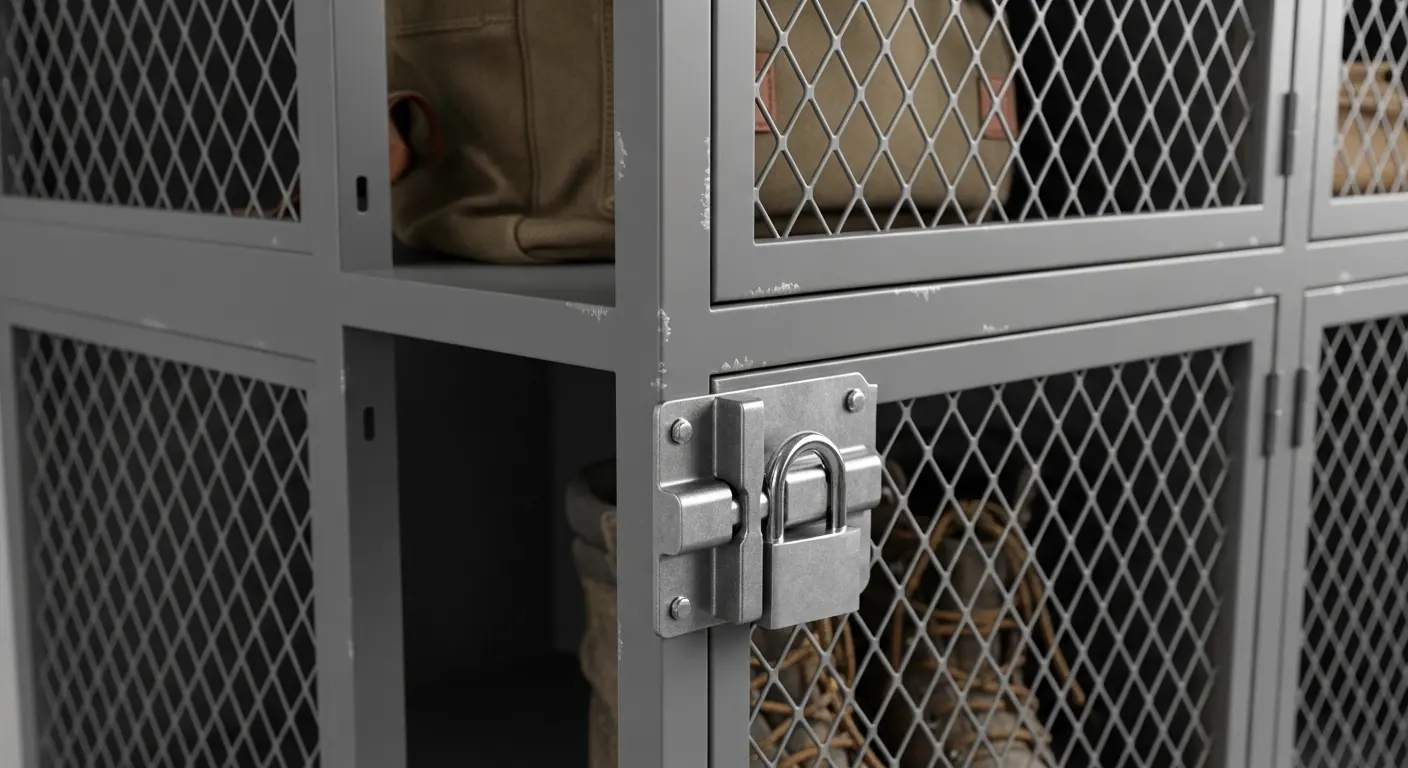
- Welded Intersections: Every cross-point is a structural bond.
- Reinforced Frames: 25mm box sections prevent the locker from being "racked" or twisted.
- Secure Hasps: Designed for high-security padlocks with thick shackles.
- Impact Resistance: Unlike sheet metal, mesh "bounces back" from dents.
In a head-to-head "attack test," a solid metal locker door can often be pried at the corner with a simple screwdriver. A mesh door, supported by a solid rod frame, distributes that force much better. It is a much tougher nut to crack than it looks.
Where are these lockers most effective in a business?
They are best used in high-turnover or high-security sectors like retail backrooms, hotel staff rooms, and industrial warehouses. In these environments, the need to manage internal loss prevention is as critical as providing employee storage, making the scannable nature of mesh an operational necessity. They excel in any area where frequent audits are required.
Retail Backrooms and Distribution Centers
Retailers deal with high volumes of small, high-value items. Commercial locker mesh cabinet systems allow managers to ensure that no merchandise is being "staged" in employee lockers. It is the most cost-effective way to protect the bottom line without installing expensive individual cameras in the locker room.
Hospitality and Hotels
In a busy hotel, staff from various departments share a changing space. Using hotel staff mesh lockers ensures that uniforms stay fresh thanks to the airflow, but also that no sensitive guest property or hotel supplies are being hoarded. It maintains a professional and transparent standard across the house.
Industrial and Construction Sites
On a construction site, gear is heavy and often shared. Mesh lockers allow for the quick identification of tools. If a specific drill is missing, a supervisor can walk the lockers and see exactly where it is. It prevents "tool hoarding" and ensures the team always has the equipment they need.
What technical specs should you look for in anti-theft units?
Look for 10-gauge welded steel wire with 25mm x 25mm apertures to prevent small items from being hooked through the mesh. The frame should be an all-welded box section or solid rod design, and the finish should be a durable zinc plate or high-quality powder coating. These specs ensure the locker remains a formidable barrier for years.
When evaluating a manufacturer, I always check the "mesh density." A 50mm aperture is fine for large bags, but for true anti-theft performance, you want the 25mm version. It is much harder to manipulate items through the smaller holes.
| Feature | Industrial Standard | High-Security Choice |
| Wire Gauge | 12-Gauge (2.6mm) | 10-Gauge (3.2mm) |
| Mesh Aperture | 50mm x 50mm | 25mm x 25mm |
| Frame Type | Angle Iron | 25mm Box Section |
| Locking | Standard Hasp | 3-Point Locking Hasp |
If you are buying for a long-term installation, check out the product/wire-mesh-lockers/ page for more on load-bearing frames. You want a frame that won't sag under the weight of heavy tool bags. A sagging frame leads to door misalignment, which is a major security weakness.
Do anti-theft mesh lockers offer fire safety benefits?
Absolutely. The open-grid design allows water from overhead sprinklers to penetrate the locker during a fire, whereas solid lockers act as umbrellas. This ensures faster fire suppression and compliance with local fire codes, often resulting in lower insurance premiums for large-scale facilities. It allows smoke to rise and trigger sensors instantly.
Fire marshals love mesh. I’ve seen solid lockers fail inspections because they were too close to the ceiling. They created a "dead zone" for the sprinkler system. With product/ventilated-lockers/, that problem is solved. The water goes right through to the fire source.
Tip: If your building has a high fire risk, mesh is often a legal requirement for storage. It prevents a small fire inside a locker from becoming a major blaze by allowing the building's safety systems to work as intended.
How to choose between mesh and solid lockers for security?
Choose mesh if your primary security threat is internal theft or the storage of prohibited items. Choose solid lockers only if total privacy is required for sensitive documents or personal clothing. For most industrial settings, the visual audit capability of mesh makes it the superior security choice. It balances physical toughness with operational transparency.
I always ask clients: "Do you trust what you can't see?" In a secure facility, the answer is usually no.
- Audit Frequency: If you need to check lockers weekly, mesh saves you hours of labor.
- Item Value: High-value stock requires the visual deterrent of mesh.
- Environment: If the room is damp or dark, mesh provides the necessary airflow and light.
- Privacy: If employees are changing in the locker room, consider a hybrid approach with some solid panels.
If you are still undecided, look at the mesh lockers category to see how different tiers can be mixed. You might use 6-compartment mesh units for valuables and larger solid units for coats.
How to maintain your lockers to ensure maximum security?
Maintaining anti-theft mesh lockers involves monthly checks of the locking hasps, door hinges, and anchoring bolts. Ensure the frame is still level and that no wires have been bent or cut. A well-maintained locker is a much more effective deterrent than one that looks neglected. Regularly lubricating hinges prevents door sagging and ensures the lock aligns perfectly every time.
- Check the Hasp: Ensure it hasn't been pried or weakened.
- Inspect the Mesh: Look for any "snips" that might indicate a tampering attempt.
- Tighten Anchors: A locker that can be tipped is not secure. Ensure it is bolted to the floor.
- Wipe Down: Use a damp cloth to keep the finish bright. This helps with visibility during audits.
I recall a case where a thief targeted lockers with rusty hinges. They were easier to pry open quietly. Keeping your lockers looking new tells potential thieves that the facility is actively managed. It’s a small effort for a big security payoff.
Summary: The Future of Secure Storage
Investing in anti-theft mesh lockers is a commitment to a transparent and accountable workplace. You are not just buying a box; you are implementing a security system. By choosing the right gauge and aperture, you create a physical barrier that is both tough and scannable. You improve your fire safety and your loss prevention metrics simultaneously.
Don't let your storage be a blind spot for security. Switch to the strength and visibility of wire mesh and see how it transforms your facility's safety culture. It is the smartest move you can make for your inventory—and your peace of mind.
