
Mesh Lockers vs Solid Lockers: The Ultimate Comparison Guide
Mesh lockers vs solid lockers represents a fundamental choice between visual transparency and total privacy for your facility. Choosing the wrong unit can lead to poor air quality, hidden security risks, or damaged inventory. While solid metal units offer a classic look, mesh systems provide unmatched ventilation and visual audit capabilities. This guide will help you understand the technical and practical differences between these two storage powerhouses. We will break down costs, security profiles, and durability to ensure your investment serves your needs for years. Whether you manage a school, a factory, or a gym, the choice between wire and sheet metal is critical.
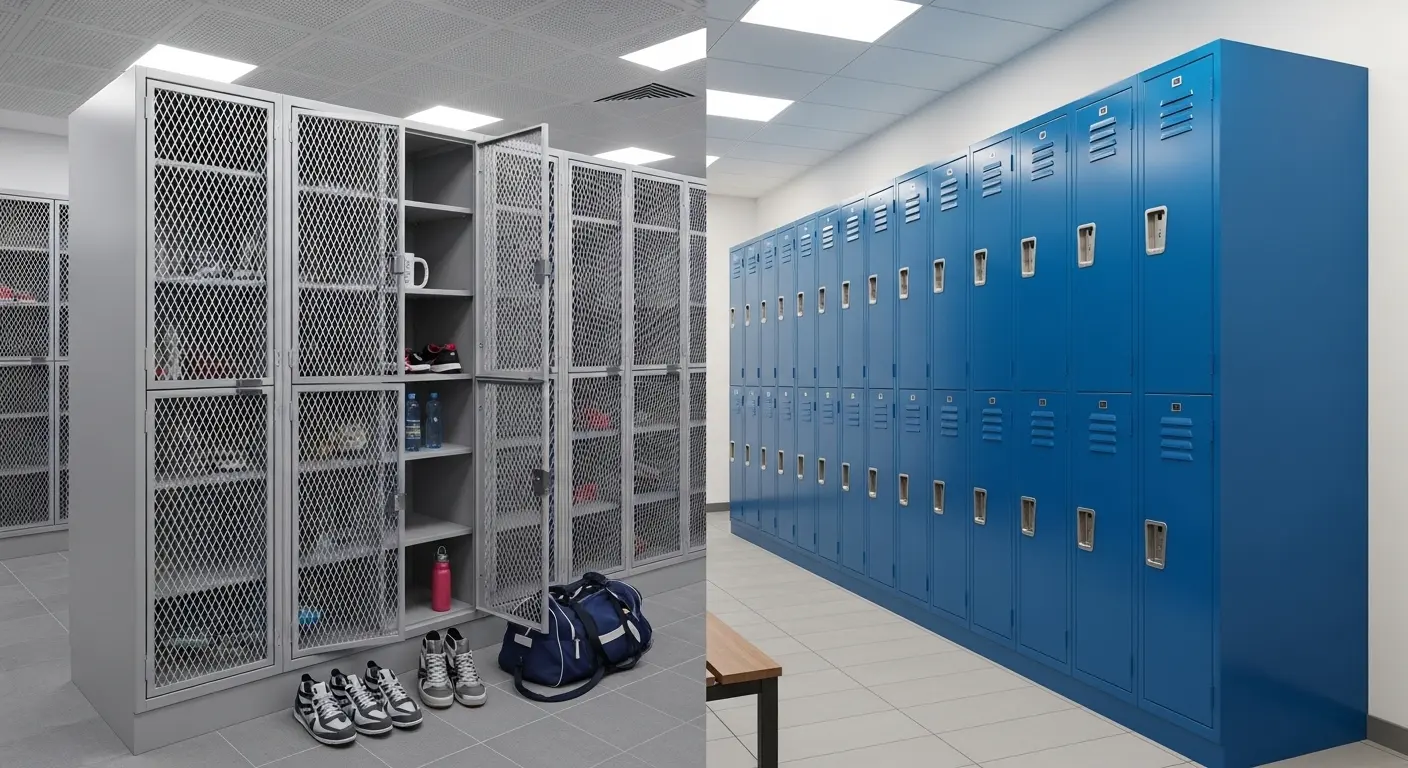
| Feature | Mesh Lockers | Solid Steel Lockers |
| Visibility | 100% (High Transparency) | 0% (Total Privacy) |
| Ventilation | 360-degree Airflow | Minimal (Small Vents) |
| Fire Safety | Sprinkler Compatible | Can Block Sprinklers |
| Security Style | Deterrence via Visibility | Physical Barrier Only |
| Maintenance | Low (Dust falls through) | Moderate (Corners trap dirt) |
| Best Use Case | Industrial, Gyms, High-Security | Schools, Offices, Retail |
| Moisture Control | Excellent (Prevents Mold) | Poor (Traps Humidity) |
What is the main difference between mesh lockers and solid lockers?
The main difference between mesh lockers and solid lockers lies in visibility and airflow. Mesh units feature an open-wire grid that allows full content inspection and maximum ventilation. Solid lockers use continuous metal sheets, offering total privacy and a smoother aesthetic. This fundamental design shift changes how security and hygiene are managed in a facility.
When you walk into a warehouse, you immediately notice the storage style. I once visited a logistics hub that used solid lockers. The air felt stale and heavy. We swapped them for mesh lockers to improve the environment. The change was immediate. The open-wire design doesn't just hold items; it allows the room to breathe.
Mesh is built from welded steel wire. Solid lockers use cold-rolled sheet metal. This material difference impacts how the locker reacts to force. Solid metal can dent and stay dented. Wire mesh is more resilient because the "truss" design of the grid absorbs impacts. This makes them a top choice when looking at the top 4 best lockers to purchase for rugged environments.
Why is ventilation a deciding factor in the mesh vs solid debate?
Ventilation is a deciding factor because it dictates the hygiene and lifespan of stored equipment. Mesh lockers provide 360-degree airflow, allowing damp gear to dry naturally. Solid lockers trap moisture, which leads to mold, bacteria, and foul odors. In industries with wet workwear, mesh is the only choice that prevents equipment degradation.
Airflow is not a luxury. It is a health requirement. I recall a project for a fire station where damp uniforms were rotting inside solid lockers. The fabric became weak and smelled terrible. We replaced them with wire mesh. The gear dried within hours.
- Prevents Mold: Constant air movement stops fungal growth.
- Odor Control: Stale air cannot accumulate in a wire grid.
- Rapid Drying: Essential for ppe workwear wire mesh lockers europe standards.
How does visual security impact the choice of locker?
Visual security impacts the choice by shifting the burden of monitoring from active searching to passive observation. Mesh lockers allow supervisors to perform instant audits without opening doors. This deterring factor prevents the storage of contraband or stolen goods. Solid lockers offer privacy but create "blind spots" where unauthorized items can be hidden.
In high-security zones, transparency is your best friend. I worked with a retail manager who struggled with internal theft. Employees were hiding stock in their private solid lockers. We switched to mesh, and the "Fishbowl Effect" took over. No one wants to hide stolen goods when the whole room can see them.
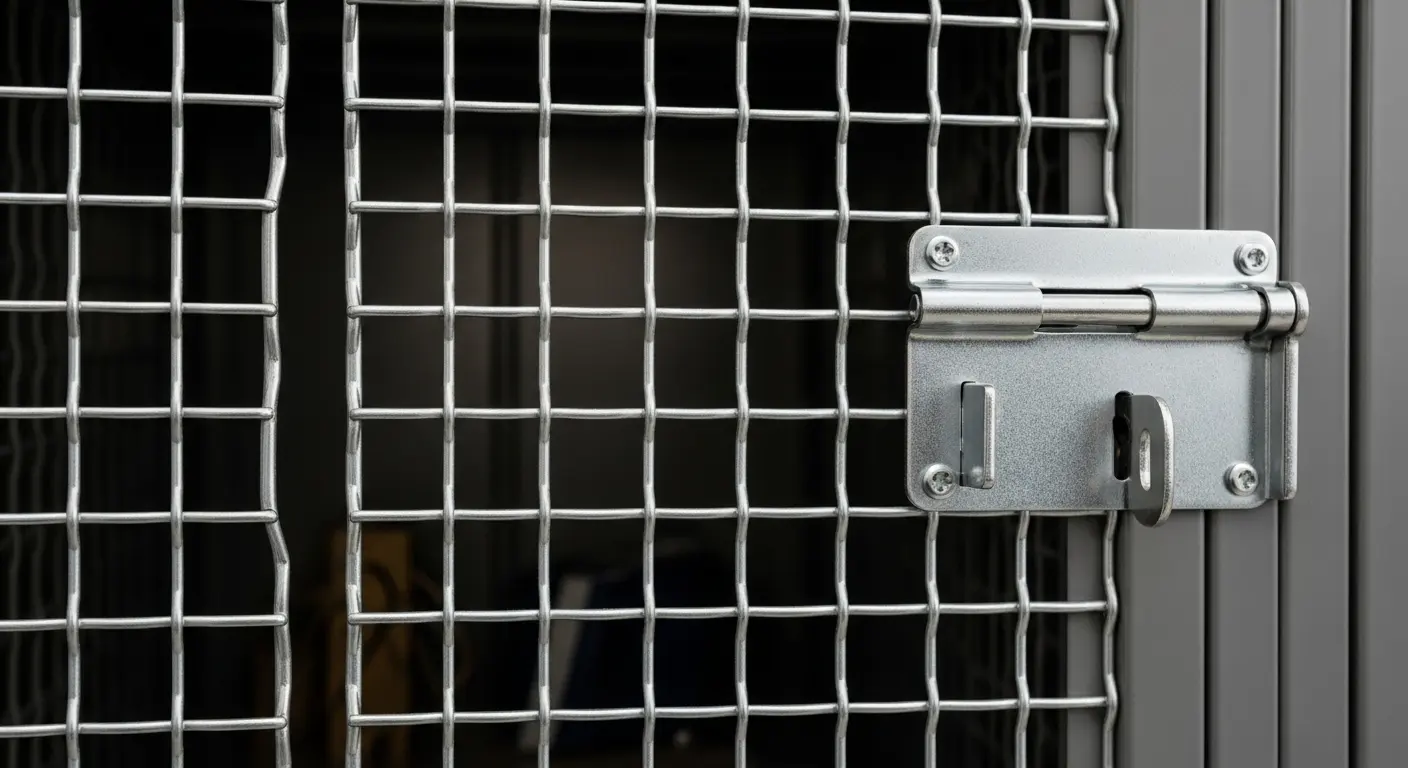
Tip: Visual security builds a culture of accountability. When storage is open, users keep their lockers tidier.
Are mesh lockers more durable than solid steel units?
Mesh lockers are often more durable in high-impact environments because the welded wire grid resists dents better than flat sheet metal. Solid lockers show scratches and dings much more easily. Furthermore, the thick steel rod frames used in mesh units provide superior structural integrity, ensuring the locker does not warp or lean under heavy loads.
Dents in solid lockers are permanent and ugly. If a pallet jack hits a solid locker, it leaves a huge crease. If it hits a heavy-duty mesh unit, the wire usually bounces back.
- Impact Resistance: Welded wire intersections are incredibly strong.
- Rust Prevention: Many mesh units are zinc-plated or galvanized.
- Corrosion Control: For coastal areas, a 316 stainless steel mesh locker is the peak of durability.
I have seen installations of wire mesh lockers vancouver that have lasted twenty years in high humidity. Solid lockers in the same area often rust through at the bottom within five years. The open design prevents water from pooling at the base.
Which locker type is better for fire safety and compliance?
Mesh lockers are superior for fire safety because they allow water from overhead sprinklers to penetrate the storage area. Solid lockers act as umbrellas, shielding a potential fire from being extinguished. Additionally, smoke and heat pass through the mesh instantly. This triggers building alarms faster than if the smoke were trapped inside a metal box.
Fire marshals frequently recommend mesh for high-density storage. If a smolder starts inside a solid locker, the metal insulates the heat. The fire can grow significantly before a sensor is triggered.
- Sprinkler Access: Water goes through the mesh to hit the fire directly.
- Heat Dissipation: Mesh prevents the "oven effect" during a blaze.
- Visual Detection: You can see smoke or flames immediately.
Tip: If you use atopless wire partition mesh locker, you gain even more safety by ensuring no ceiling obstructions exist.
How do maintenance costs compare between mesh and solid storage?
Maintenance costs are lower for mesh lockers because they do not require deep interior cleaning or frequent dent repair. Dust and debris simply fall through the mesh to the floor. Solid lockers accumulate "dust bunnies" and spills in the corners, requiring manual wiping. The robust finish on wire units also resists the "scuffed" look common with painted sheet metal.
Cleaning a locker room is a massive labor cost. I once managed a facility with 500 solid units. The cleaning crew spent eight hours a week just wiping out locker bottoms. When we moved to mesh, that time dropped to zero. They just vacuumed the floor underneath the lockers.
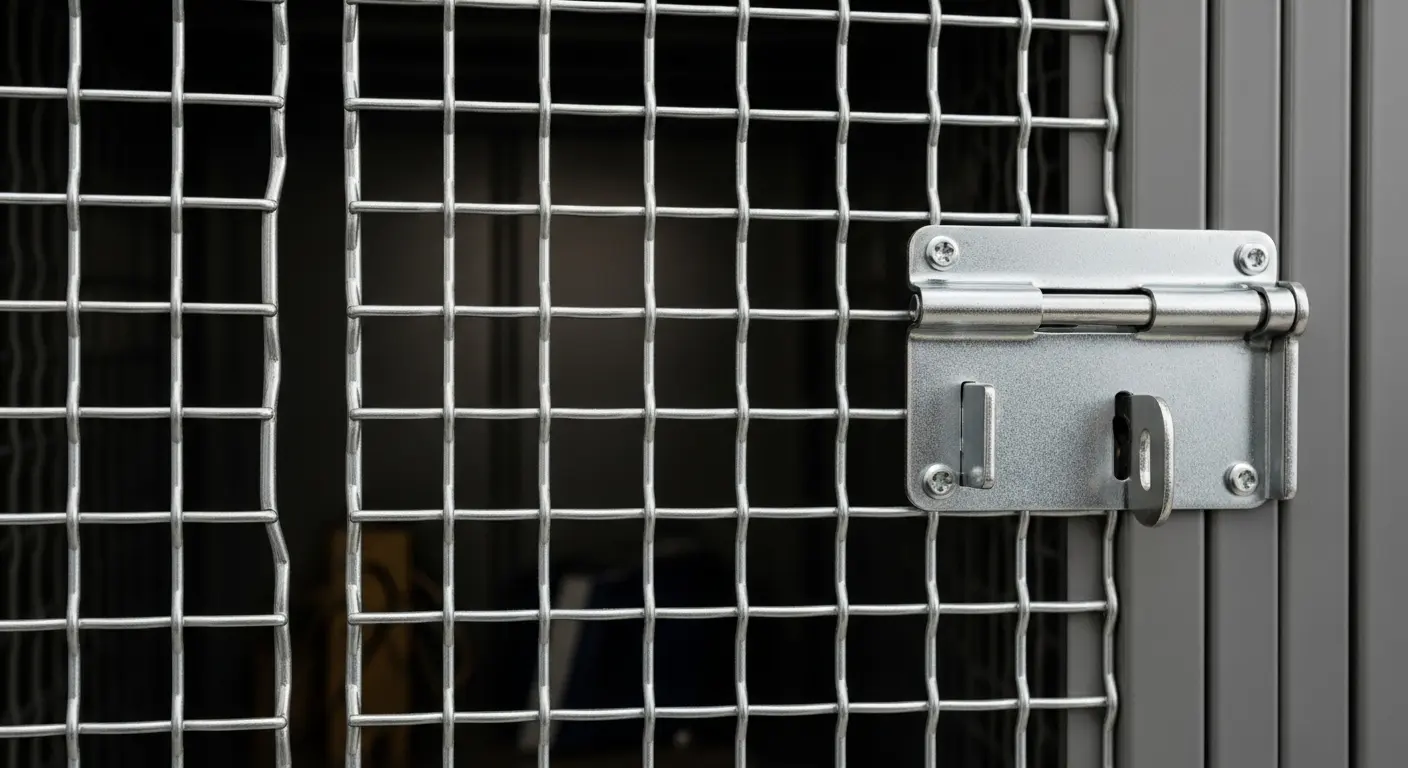
- Lower Labor Costs: No need to open doors for cleaning.
- Easier Audits: No need to manage master keys for safety checks.
- Fewer Repairs: Wire frames handle the "slam test" better than hinges on sheet metal.
Which industries benefit most from mesh lockers over solid alternatives?
Industries requiring high security, rapid gear drying, or strict safety compliance benefit most from mesh lockers. This includes warehouses, emergency services, and fitness centers. Solid lockers remain popular in corporate offices or primary schools where total privacy and a sleek, colorful appearance are the primary goals of the design.
If you are following a tenant storage lockers wire mesh guide, you know that residential basements need mesh. It prevents the "basement smell" from ruining tenant belongings.
Industrial and Warehouse
These sites need the transparency of mesh to prevent theft. They also need the durability to handle forklifts and heavy tools.
Fitness and Athletic Clubs
Sweaty gym clothes are a biological hazard. Mesh allows them to dry, preventing the growth of fungi and bacteria.
Schools and Offices
Solid lockers provide students and staff with a private space for personal items. They also offer more color options to match school branding or office decor.
How do you decide which locker fits your specific needs?
Deciding between mesh and solid storage requires evaluating your priority between privacy and performance. If you need to dry gear and audit contents, choose mesh. If you need a private space for sensitive documents or personal clothes, choose solid. Many facilities use a hybrid approach, placing mesh in work zones and solid in changing rooms.
- Choose Mesh if: You have high-theft risks or damp equipment.
- Choose Solid if: You need total privacy or a specific aesthetic.
- Choose Hybrid if: You want the best of both worlds.
I always tell my clients to look at their "failure points." If your current lockers smell or are getting dented, mesh is the upgrade you need. If you want a clean, hidden look for a corporate lobby, solid is the winner.
Frequently Asked Questions
Are mesh lockers less secure because you can see through them?
No. In many cases, they are more secure. Visibility prevents theft because thieves cannot hide stolen items. The physical strength of the welded wire is equal to or greater than sheet metal.
Do mesh lockers rust faster than solid ones?
Actually, the opposite is true. Mesh lockers don't trap moisture against the metal. If they are zinc-plated or powder-coated, they resist rust much better than painted solid units.
Can I get mesh lockers in different colors?
Yes. While silver is the standard, many manufacturers offer powder coating in various colors. This gives you the benefits of mesh with the aesthetic appeal of solid units.
Are mesh lockers more expensive?
The initial cost is often comparable. However, the total cost of ownership is lower for mesh due to reduced maintenance and replacement needs.
Which is easier to install?
Both are similar. However, mesh units are often lighter than their solid steel counterparts. This makes them easier to move and anchor to the wall.
Summary: Making the Final Choice
The mesh lockers vs solid lockers decision comes down to your facility’s core goals. If you prioritize hygiene, security via transparency, and long-term durability, mesh is the clear winner. It solves the problems of mold and theft that plague solid units. However, solid lockers still hold the crown for total privacy and a classic, sleek appearance.
By understanding these differences, you can invest in a solution that protects your gear and your budget. Don't let your storage be an afterthought. Choose the material that supports your team’s daily needs and your facility’s safety requirements.
