
Mesh Locker Weight Capacity: A Guide to Load Limits and Durability
The average mesh locker weight capacity for industrial-grade units typically ranges from 50 to 100 pounds per shelf tier. This limit relies heavily on the use of 13-gauge steel and a "Uniform Distributed Load" (UDL) placement strategy. Selecting the correct capacity is essential for facility managers who must store heavy power tools, tactical gear, or industrial equipment safely.
In many storage environments, users mistake "ventilated" for "light-duty." However, modern mesh engineering allows for significant weight-bearing potential without sacrificing airflow. This guide provides a technical breakdown of how wire gauge, frame construction, and load types influence the total weight your lockers can handle. We will compare 13-gauge vs. 16-gauge steel to help you make a data-driven purchase for your facility.
What is the typical weight capacity of a mesh locker?
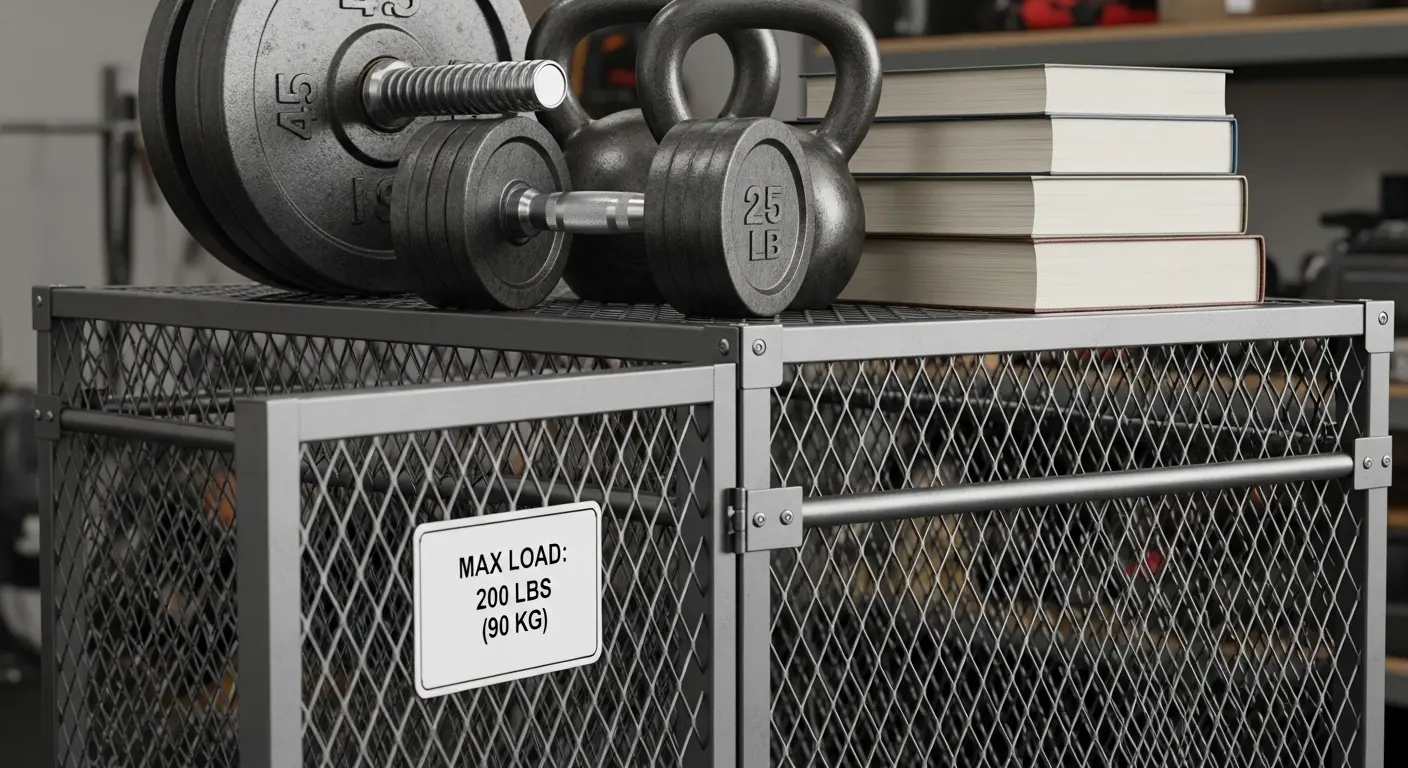
Standard industrial mesh lockers support between 50 and 75 pounds per shelf under uniform load conditions. Heavy-duty configurations utilizing 13-gauge expanded metal can often exceed 100 pounds per tier without visible deflection or sagging.
Understanding these limits requires looking at the industry standards for heavy-duty shelving. For example, the Scientific Equipment and Furniture Association (SEFA) suggests that industrial-grade shelving should support a minimum of 40-50 pounds per square foot. Our experience with high-traffic installations shows that the frame's rigidity is just as important as the mesh itself.
Standard Capacity by Material Type
| Material Configuration | Est. Weight Capacity (Per Tier) | Best Use Case |
| 16-Gauge Welded Wire | 25–40 lbs | Gym Bags, Light PPE |
| 14-Gauge Perforated Steel | 45–60 lbs | Employee Personal Effects |
| 13-Gauge Expanded Metal | 75–120 lbs | Power Tools, Tactical Gear |
Most mesh lockers are built to accommodate standard athletic or worker needs. However, if your team stores heavy equipment, you must verify the gauge before procurement. Light-duty 16-gauge wire will eventually sag under the weight of heavy tool belts or specialized machinery.
Distributed Load vs. Point Load: Why It Matters
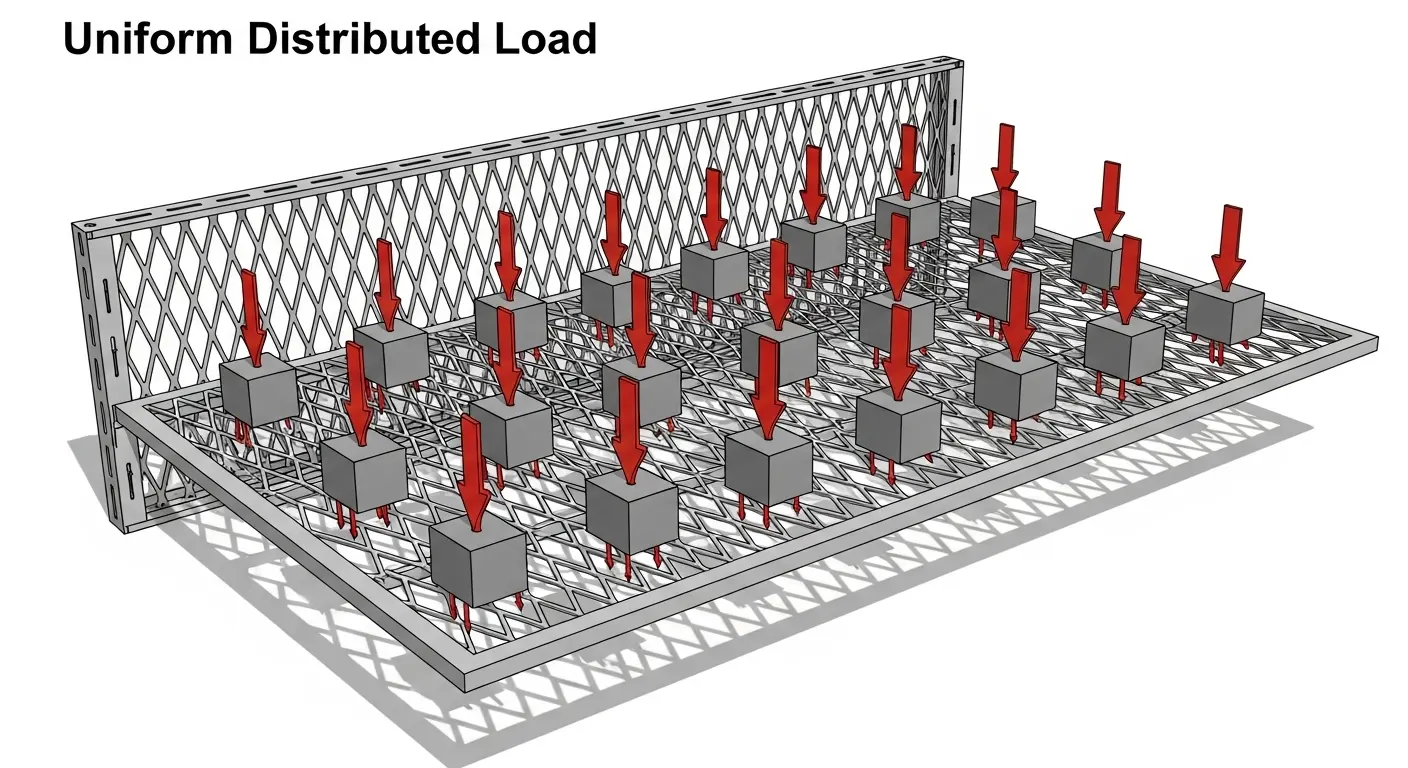
The way weight is placed inside a locker is the most critical factor in preventing structural failure. Mesh locker weight capacity ratings almost always refer to "Uniform Distributed Load" (UDL). This means the weight is spread evenly across the entire surface area of the mesh shelf.
If you place a heavy 50-pound object directly in the center of a shelf, you are creating a "Point Load." In our structural analysis, point loads are roughly 25% more likely to cause shelf deflection than distributed loads of the same weight. This is because the stress is focused on a few specific weld points or strands of expanded metal.
Risks of Point Load Failure
Focusing all weight in the center of a mesh shelf can lead to "permanent set." This is a condition where the steel is stretched beyond its elastic limit and will not return to its original flat shape. Over time, this sagging weakens the overall frame of the locker.
As a result, the door may become misaligned. If the shelf sags even half an inch, it can interfere with the latching mechanism. Therefore, teaching your staff to spread their gear across the shelf is a vital maintenance step.
Uniform Distribution Best Practices
To maximize your locker's lifespan, place the heaviest items at the corners of the shelf where the mesh meets the frame. This transfers the weight directly to the vertical support posts rather than the center of the mesh.
Additionally, consider using a solid shelf liner for exceptionally heavy point-load items. This simple addition can redistribute the force across more surface area of the wire grid. This strategy is particularly effective for topless wire partition mesh lockers where heavy gear is common.
The Impact of Steel Gauge on Mesh Capacity
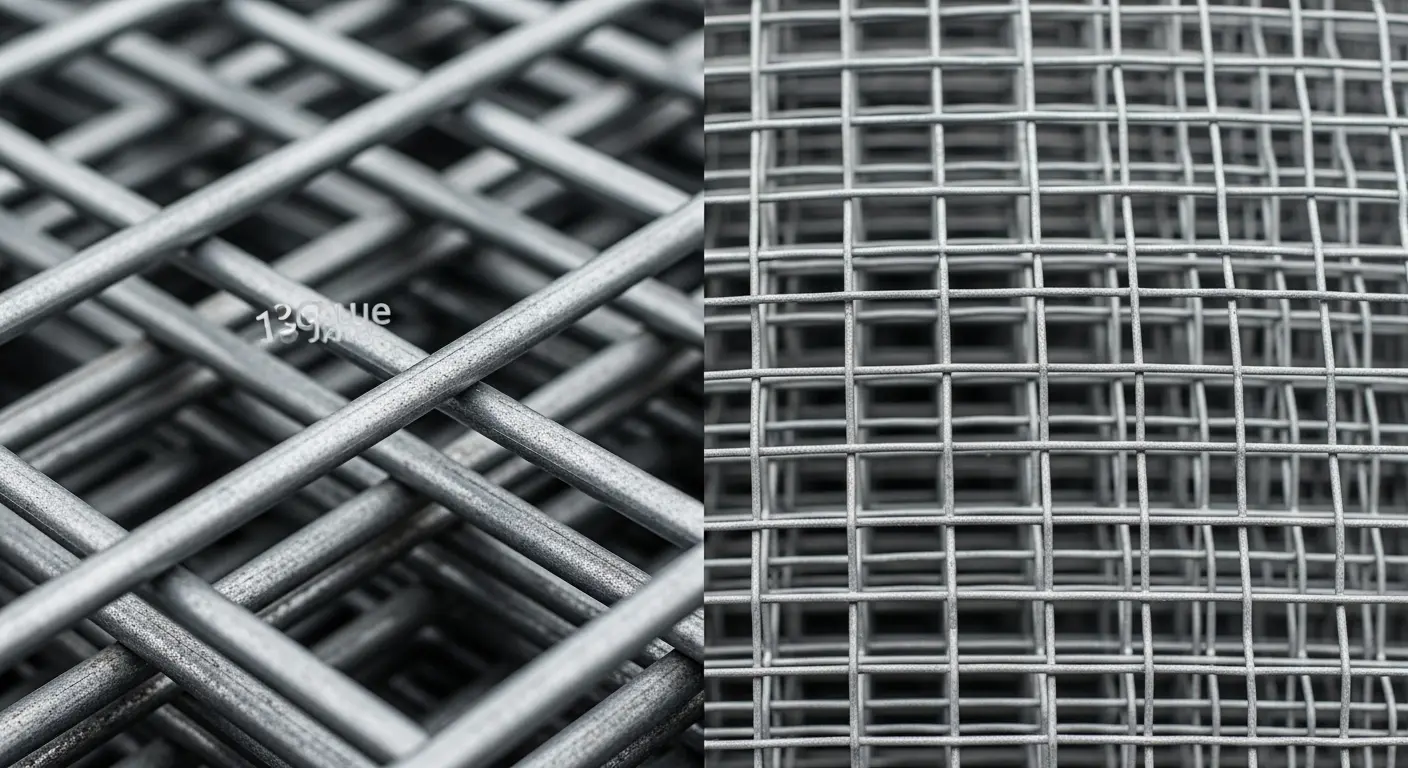
The gauge of the steel is the single biggest technical indicator of weight capacity. In the world of metal fabrication, a lower gauge number means the steel is thicker and stronger. Most standard lockers use 16-gauge steel, which is suitable for light-duty office or gym use.
However, industrial facilities require something more robust. We recommend 13-gauge steel for any environment where durability is a non-negotiable requirement. According to data from ASTM International, 13-gauge steel is approximately 50% stronger in tensile strength tests than 16-gauge steel.
The 13-Gauge Advantage for Industrial Use
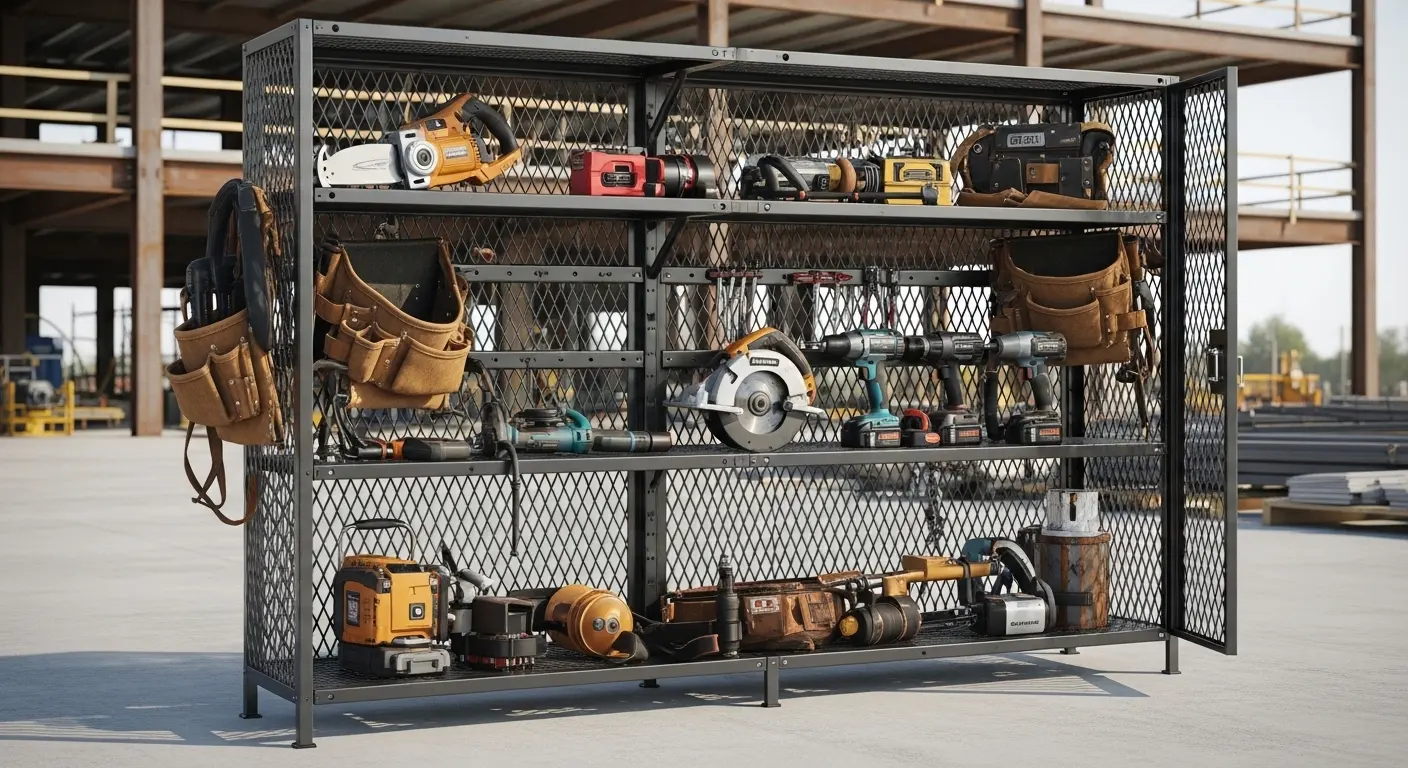
Thicker 13-gauge expanded metal provides the rigidity needed for mesh lockers for construction sites. On a busy job site, workers often throw heavy drills or impact wrenches into their lockers with force.
Thin mesh will dent or tear under these high-impact conditions. In contrast, 13-gauge mesh maintains its shape. Additionally, the thicker wire provides more surface area for the weld points, making them significantly harder to break under pressure.
16-Gauge for Light-Duty Applications
While 16-gauge mesh is lighter and more affordable, it has its limits. It is perfectly adequate for phenolic gym lockers or employee break rooms where the primary contents are coats and bags.
However, if you are unsure about your future storage needs, investing in a heavier gauge is always safer. It prevents the need for costly replacements in three to five years. Therefore, we suggest assessing your heaviest piece of equipment before choosing a model.
Structural Engineering: All-Welded vs. Bolt-Together
A locker's weight capacity isn't just about the shelf; it's about the entire skeletal structure. There are two primary ways lockers are assembled: all-welded and bolt-together. This distinction has a profound impact on how the unit handles a heavy load.
All-welded lockers are fused into a single unit at the factory. This creates a rigid "box" where the shelves are integrated into the sides and back. This design allows the weight of the shelves to be shared across the entire structure of the locker.
The Superiority of All-Welded Frames
In our experience, all-welded lockers have a much higher resistance to "racking" or leaning. When a locker is loaded to its maximum capacity, any shift in the floor can cause a bolted locker to twist. This twisting puts uneven stress on the mesh, leading to premature failure.
All-welded construction is the standard for industrial mesh lockers Bay Area projects where high-security and high-capacity are required. The solid frame ensures that the mesh locker weight capacity remains consistent throughout the life of the product.
Bolt-Together Limitations
Bolt-together lockers are easier to ship but require frequent maintenance. Over time, the nuts and bolts can vibrate loose, especially in environments with heavy machinery. As the joints loosen, the weight capacity of the individual shelves drops significantly.
If you choose bolt-together units, you must implement a quarterly inspection schedule. Tightening the hardware ensures that the shelves remain level and the weight is properly supported. For most industrial users, the upfront cost of all-welded units is justified by the reduced maintenance.
Factors That Can Lower Your Locker’s Weight Limit
Even the strongest locker can lose its load-bearing potential over time. Environmental factors and poor maintenance are the leading causes of reduced weight capacity. Understanding these risks helps you protect your investment.
The most common enemy of mesh weight capacity is corrosion. Because mesh has so much surface area, it is particularly susceptible to rust in high-moisture environments. Rust eats away at the thickness of the steel, effectively turning 13-gauge strength into 16-gauge weakness.
Corrosion and Weld Integrity
Rust often starts at the weld points. These are the "knuckles" where the wire mesh is joined to the frame. Once the weld is compromised by rust, the mesh can pull away from the frame even under a light load.
To prevent this, ensure your lockers have a high-quality powder-coated finish. This finish acts as a barrier against moisture. For coastal or outdoor sites, consider zinc-plating or stainless steel mesh to ensure the mesh locker weight capacity doesn't degrade over time.
Impact Damage and Deflection
Physical abuse is the second factor that lowers capacity. If a worker hits a mesh shelf with a heavy object, it can create a permanent dent. This dent changes the geometry of the shelf, making it more prone to sagging under future loads.
A dented shelf no longer distributes weight correctly. Instead, the force is focused on the area surrounding the dent. As a result, even a "safe" load can cause the shelf to buckle further. We recommend replacing any shelves that show visible signs of structural deformation.
Frequently Asked Questions
Can I store heavy power tools in a mesh locker?
Yes, you can store heavy power tools in a mesh locker if it is constructed from 13-gauge or 14-gauge expanded metal. These heavy-duty materials are designed to handle the point-load stress of drills and batteries. For the best results, ensure the lockers are all-welded units.
How do I know if my locker is overloaded?
You can identify an overloaded locker by looking for visible deflection or "sagging" in the center of the mesh shelf. If the shelf is no longer perfectly level, or if the door has become difficult to close, you have exceeded the safe weight limit. You should remove items immediately to prevent permanent damage.
Does the lock type affect weight capacity?
No, the lock type does not directly affect weight capacity. The load-bearing potential is determined by the steel gauge, the frame construction, and the weld integrity. However, an overloaded locker can warp the frame, making it difficult for the locking mechanism to align and engage properly.
Are mesh lockers stronger than solid steel lockers?
Mesh lockers can be just as strong as solid steel lockers if they use a heavy 13-gauge expanded metal. In fact, expanded metal is often more rigid than the thin sheet metal used in standard school lockers. The primary difference is ventilation and visibility, not necessarily a loss of strength.
What is the Safe Distributed Load (SDL)?
The Safe Distributed Load (SDL) is the maximum weight a shelf can hold when that weight is spread evenly across the surface. For most industrial mesh lockers, the SDL is between 50 and 75 pounds. Exceeding this limit increases the risk of the mesh tearing or the frame buckling.
Choosing the Right Capacity for Your Facility
Selecting the correct mesh locker weight capacity is a balance of engineering and environment. If you are storing light athletic gear, a standard 16-gauge wire locker is a cost-effective choice. However, for industrial, military, or construction settings, the 13-gauge expanded metal standard is the only way to ensure long-term durability.
Remember to prioritize "Uniform Distributed Load" practices to extend the life of your storage units. By understanding the physics of steel gauge and frame construction, you can avoid the common pitfalls of locker room sagging and frame warping. This ensures your facility remains safe and organized for years to come.
If you need specific load-bearing data for a large-scale project, our technical team can help. We provide custom quotes for heavy-duty industrial mesh lockers tailored to your specific weight requirements.
