
Mesh Locker Accessories: The Definitive Guide to Storage Optimization
Mesh locker accessories transform standard wire storage into a high-performance organizational system tailored to specific professional needs. These add-ons are the "Swiss Army knife" of the storage world, allowing you to turn a simple cage into a specialized gear hub.
By strategically selecting the right shelves, hooks, and security features, facility managers can significantly improve operational efficiency. Whether you are managing a high-pressure precinct or a luxury hotel, the right accessories ensure that every cubic inch of your mesh lockers serves a purpose.
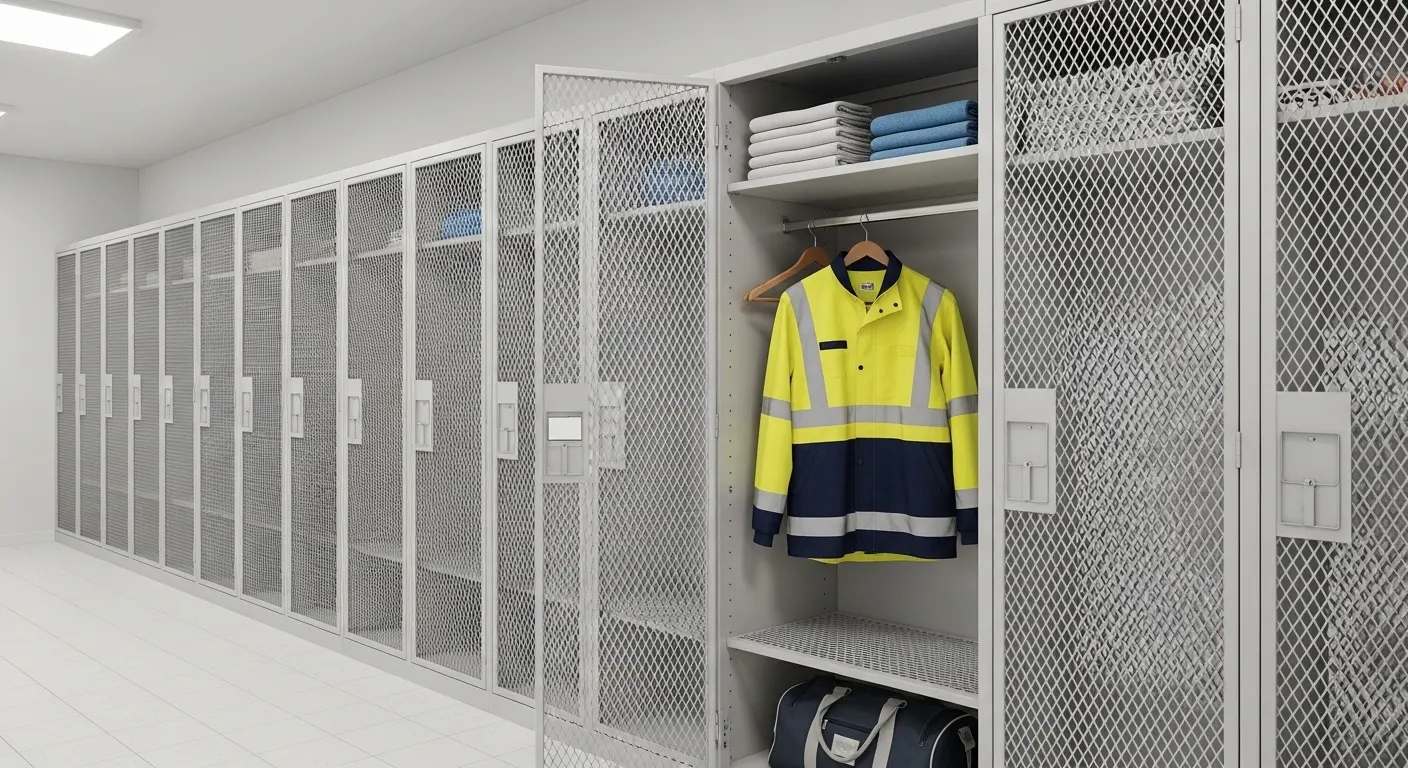
This guide dives deep into the hardware that makes modern storage work harder for your team.
What are the most common mesh locker accessories?
The most common mesh locker accessories include internal shelves, coat hooks, garment rails, and sloping tops. These additions are designed to maximize vertical space, improve visibility, and enhance hygiene. By customizing a base unit with these tools, facility managers can tailor storage for specific items like PPE, uniforms, or personal electronics.
Standard lockers often become "black holes" where gear is piled at the bottom, leading to damage and frustration. I once consulted for a manufacturing plant where workers spent an average of five minutes per shift just digging through their lockers to find safety goggles. By adding simple internal shelving, we reduced that time to seconds.
Accessories are generally categorized into three zones:
- Organizational Hardware: Shelves, dividers, and bins.
- Structural Enhancements: Sloping tops, plinths, and legs.
- Utility Add-ons: Garment rails, hooks, and internal charging ports.
Using these tools doesn't just organize the locker; it extends the life of the stored assets. When items have a designated "home," they are less likely to be stepped on, crushed, or lost.
How can internal shelving improve factory storage efficiency?
Internal shelving improves efficiency by creating distinct zones for different types of equipment, such as heavy tools and delicate electronics. This prevents damage and reduces search time for employees. In environments like best mesh lockers for factory storage, multi-tier shelves allow for high-density organization within a single footprint.
In a factory setting, the "one size fits all" approach to storage fails quickly. You might have an employee who needs to store a heavy torque wrench alongside a clean laptop. Without shelving, the heavy tool inevitably ends up on top of the fragile electronics.
Pro Tip: Look for adjustable shelving. The ability to move a shelf up or down by 50mm can be the difference between fitting a specialized tool case and having it sit on the floor.
- Fixed Shelves: Best for high-weight items (up to 50kg capacity).
- Adjustable Shelves: Best for dynamic teams with changing gear requirements.
- Perforated Shelves: Ideal for maintaining the maximum airflow that mesh is known for.
Why should you use sloping tops on your mesh lockers?
Sloping tops are essential accessories that prevent the accumulation of dust, debris, and prohibited items on top of locker units. By creating an angled surface, they force items to slide off, making cleaning easier and improving the aesthetic of the room. They are particularly vital in high-hygiene areas like hotel staff mesh lockers.
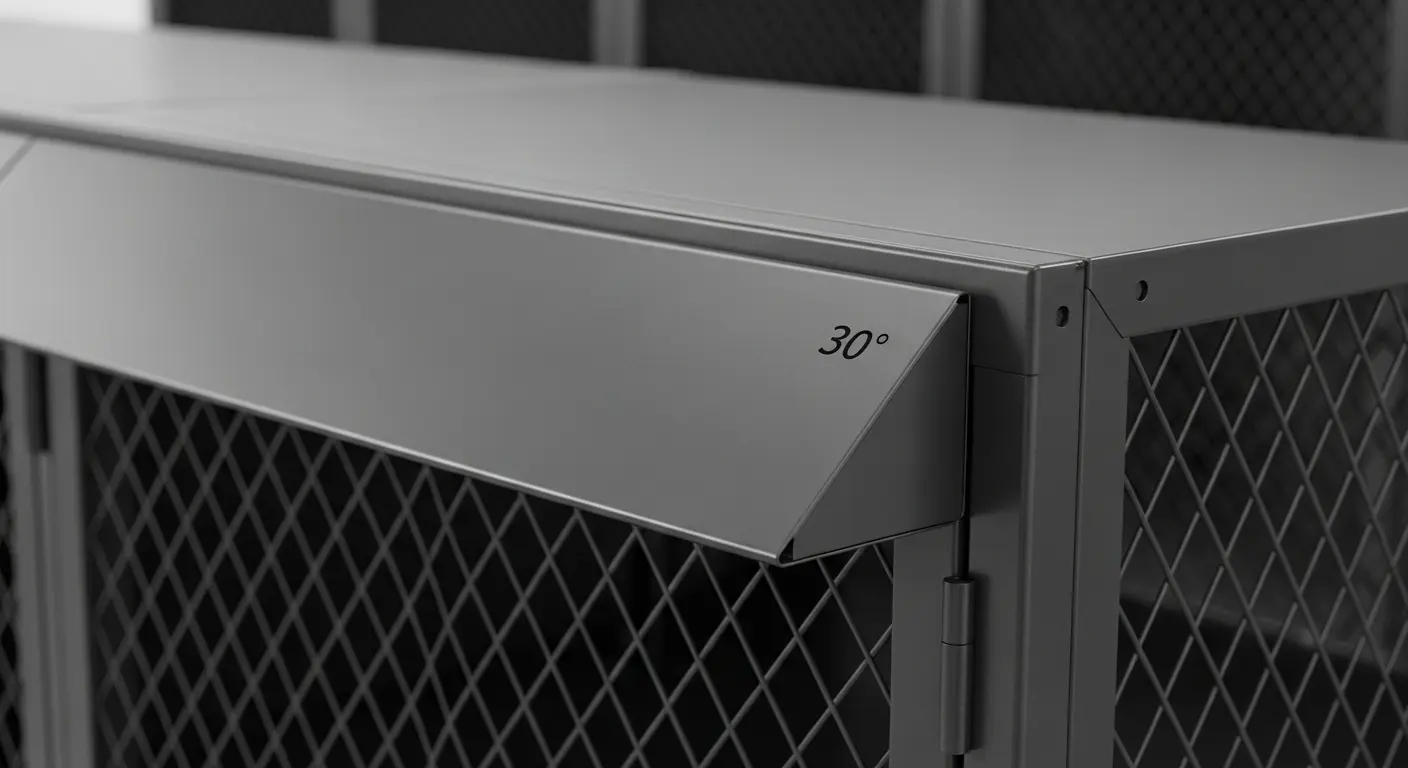
I’ve walked into dozens of staff rooms where the tops of the lockers were used as a "secondary shelf" for old newspapers, coffee cups, and even forgotten gym bags. This is a nightmare for fire safety and pest control. A sloping top removes the flat surface entirely.
Beyond cleanliness, sloping tops serve a critical safety function. In buildings with overhead sprinklers, flat-top lockers can block water distribution if items are piled high. An angled top ensures the clearance remains open, keeping your facility compliant with local fire codes.
Which locking accessories offer the best security for public safety?
For public safety mesh lockers, the best locking accessories include heavy-duty padlock hasps, digital keypad locks, and biometric scanners. These systems provide a robust physical barrier while allowing for quick access during emergencies. Visual transparency combined with high-grade locking mechanisms ensures that gear is both secure and ready for immediate deployment.
In a police or fire station, seconds matter. A locking mechanism that is fiddly or prone to jamming can be a major liability. I often recommend "dual-lock" accessories for high-value gear. This might include a standard hasp for the door and an internal lockable compartment for firearms or sensitive documents.
| Lock Type | Benefit | Maintenance Level |
| Padlock Hasp | Simple, user-provided security | Very Low |
| Key Cam Lock | Professional, master-key capable | Moderate |
| Digital Keypad | Keyless entry, multiple users | High (Battery checks) |
| Biometric | Absolute audit trail | Expert |
In my experience, the padlock hasp remains the "gold standard" for reliability. It is almost impossible to break, and if a key is lost, you only have to cut a $10 padlock rather than replacing a $100 internal mechanism.
Can casters and wheels make mesh lockers mobile?
Yes, casters are highly effective accessories that turn static sfs metal mesh locker units into mobile storage solutions. Equipped with locking brakes, these wheels allow for easy facility reconfiguration and floor cleaning. They are ideal for dynamic environments where storage needs to be moved frequently across the workshop or warehouse floor.
Mobility is a trend I see increasing in "lean" manufacturing environments. If your production line moves, your storage should too. When adding casters, you must consider the "dynamic load" (the weight the wheels can carry while moving) versus the "static load."
- Swivel Casters: Allow for 360-degree movement in tight spaces.
- Fixed Casters: Provide stability for long-distance straight-line moves.
- Locking Casters: Essential to prevent the locker from rolling during daily use.
Warning: Never stack mobile lockers more than two units high. The higher the center of gravity, the more likely a tipping accident becomes during movement.
How do garment rails benefit a mesh wardrobe locker?
Garment rails in a mesh wardrobe locker provide a designated space for hanging long coats, uniforms, or safety suits. This keeps clothing wrinkle-free and improves airflow around the fabric, which is essential for drying damp gear. These rails are a standard accessory for change room lockers in industrial and hospitality settings.
I’ve seen too many high-end hotel uniforms ruined because they were folded into a small cubby. A garment rail allows the fabric to "breathe." This is especially important for the hospitality sector, where staff need to look impeccable from the start of their shift to the end.
When installing a rail, ensure it is set at a height that allows for "long-drop" items like coats. Pairing a garment rail with a top shelf for hats and a bottom shelf for shoes creates a complete individual wardrobe within a single mesh unit.
How do nameplates and numbering systems improve organization?
Nameplates and numbering systems are critical accessories for managing large-scale locker installations and tracking employee assignments. These small additions prevent confusion, reduce disputes over locker ownership, and allow management to perform faster security audits. They can be as simple as adhesive labels or as durable as engraved stainless steel plates.
The "lost locker" epidemic is real. In a facility with 500 units, finding "Locker 402" is much easier than finding "the one near the blue wall."
- Engraved Plates: Best for permanent assignments in high-traffic zones.
- Card Holders: Best for high-turnover industries like seasonal retail or hotels.
- Color-Coded Labels: Excellent for categorizing different teams (e.g., Red for Maintenance, Blue for Logistics).
What are the best accessories for wet room environments?
For wet room environments, the best accessories are plastic-coated wire shelves, stainless steel hardware, and raised locker legs (plinth bases). These items prevent rust and keep stored items away from standing water or floor-level humidity. Using these accessories is essential for maintaining hygiene in gyms and industrial change rooms.
Standing water is the enemy of metal. Even with high-quality powder coating, the "feet" of a locker are prone to rust if they sit on a wet floor all day.
- Plinth Bases: These raise the entire locker bank 100mm to 150mm off the ground.
- Stainless Steel Hinges: Prevent the "squeak and seize" common in humid locker rooms.
- Drainage Shelves: Allow water to drip through the mesh, preventing puddles inside the unit.
I always recommend that clients in the gym industry invest in plinth bases. It makes mopping the floor much easier and prevents the bottom of the lockers from becoming a breeding ground for mold.
How do accessories differ for hotel staff vs. factory storage?
Hotel staff accessories focus on garment care and professional aesthetics, while factory storage accessories prioritize heavy-duty tool management and high-density organization. Hotels often require full-length garment rails and shoe dividers, whereas factories benefit from reinforced shelving and specialized tool hooks.
In a hotel, the locker room is a transition space between personal life and "stage" life. The accessories should reflect that. Staff need a place for a clean shirt, a spot for their phone, and a separate area for their street shoes.
In a factory, the locker is a workstation extension. The focus is on safety. You need a hook that can hold a heavy leather apron and a shelf that can support 30kg of hand tools. The sfs metal mesh locker is often the base unit of choice here, customized with rugged, industrial-grade shelving.
How to install accessories without damaging the wire mesh?
To install accessories without damaging the mesh, use specialized "clip-on" or "bolt-through" hardware designed for the specific wire gauge and aperture of your unit. Avoid welding accessories onto existing lockers as this destroys the protective powder coating or zinc finish. Using the manufacturer's approved mounting brackets ensures a secure fit without compromising structural integrity.
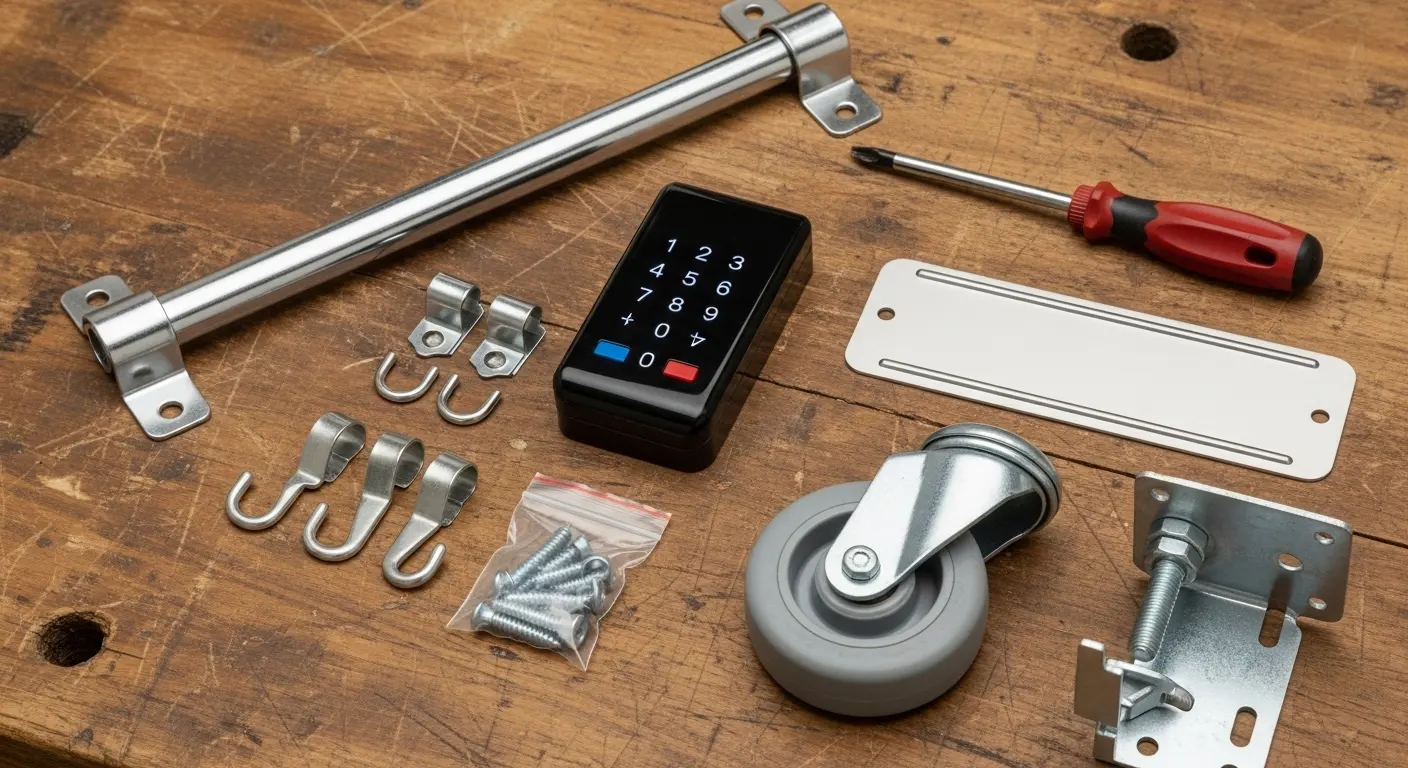
Most modern mesh locker accessories are designed for "no-tool" or "low-tool" installation. This is a huge benefit if you need to reconfigure your storage on the fly.
Tip: If you must use bolts, always use nylon-insert lock nuts. The vibrations in a factory can cause standard nuts to vibrate loose over time, potentially causing a shelf to collapse.
- Alignment: Ensure the accessory is level with the wire grid.
- Pressure: Tighten bolts enough to stop movement, but not enough to crush the wire.
- Finish Care: If you scratch the finish during installation, apply a zinc-rich touch-up paint immediately.
Frequently Asked Questions
Can I add shelves to my mesh lockers later?
Yes. Most mesh lockers are designed with a modular grid, allowing you to add or remove shelves as your needs change. Just ensure the shelves match the width and depth of your specific unit.
Are plastic bins better than mesh shelves?
Plastic bins are great for small parts (nuts, bolts, or stationery) that might fall through the mesh. For larger items, mesh shelves are better because they maintain airflow and visibility.
Do I need a professional to install sloping tops?
Not usually. Most sloping tops are "retrofit" items that simply sit on top of the locker bank and are secured with a few self-tapping screws or clips. It is a simple DIY task for most maintenance teams.
What is the weight limit for a garment rail?
A standard industrial-grade rail can usually hold 15kg to 20kg. However, this depends on how the rail is supported. Always distribute the weight evenly rather than hanging all heavy items at one end.
Are digital locks worth the investment for staff lockers?
If you have a high turnover of staff or lose keys frequently, yes. The cost of calling a locksmith once a month often outweighs the initial investment in a digital keypad system.
Summary: Designing the Perfect Storage Solution
Investing in the right mesh locker accessories is the difference between having a "box" and having a "system." By focusing on the specific pain points of your facility—whether that is hygiene, security, or spatial density—you can create a storage environment that supports your team's daily workflow.
From the simple utility of a coat hook to the high-tech security of a biometric lock, every accessory adds value to your facility. Don't let your change room lockers be an afterthought. Customize them, optimize them, and turn your storage into a strategic asset.
