
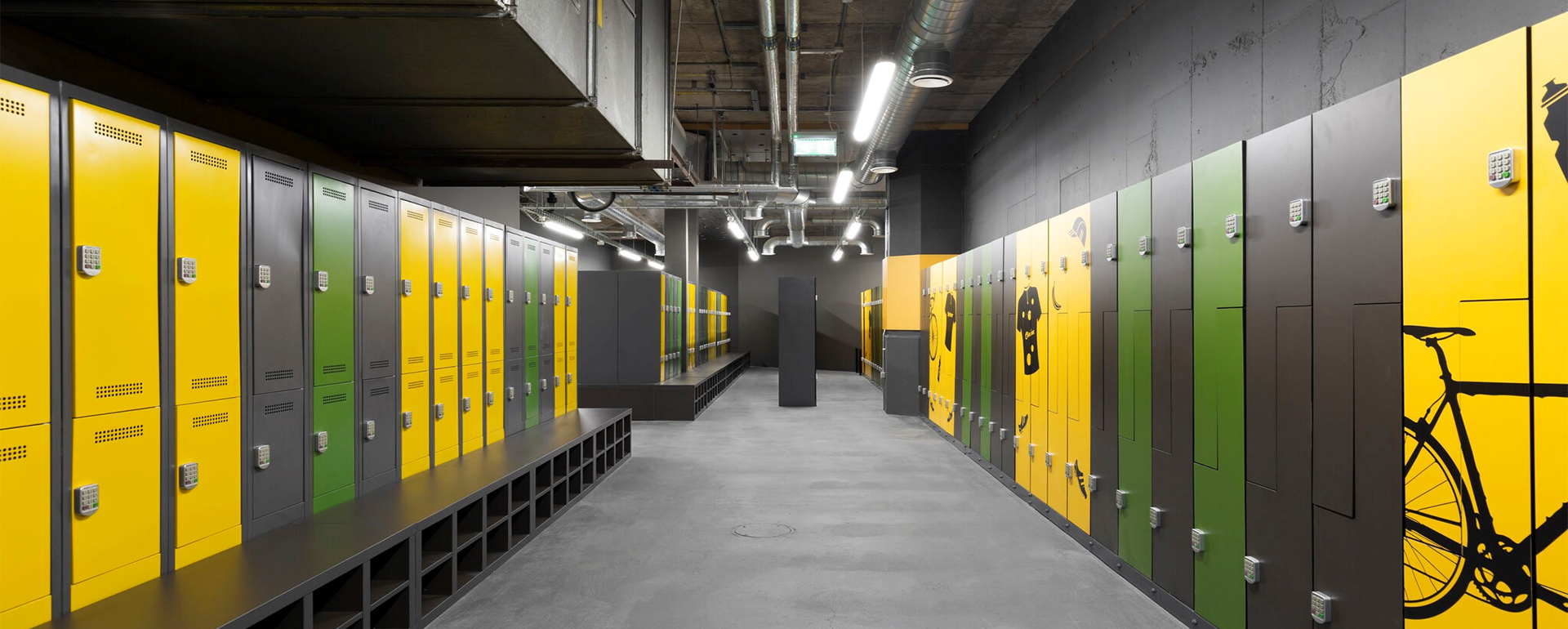
Mesh Cage Lockers: Types, Specs & How to Choose the Right One
Mesh cage lockers are one of the most practical and versatile storage solutions available for warehouses, apartment buildings, gyms, and industrial facilities. Built with welded wire mesh panels on a steel frame, they combine strong security with open-air ventilation and full visibility of contents. If you're sourcing mesh cage lockers for a commercial, industrial, or residential project, this guide walks you through every key decision — types, wire gauges, dimensions, industry applications, and how to get the right fit for your space.
What Are Mesh Cage Lockers?
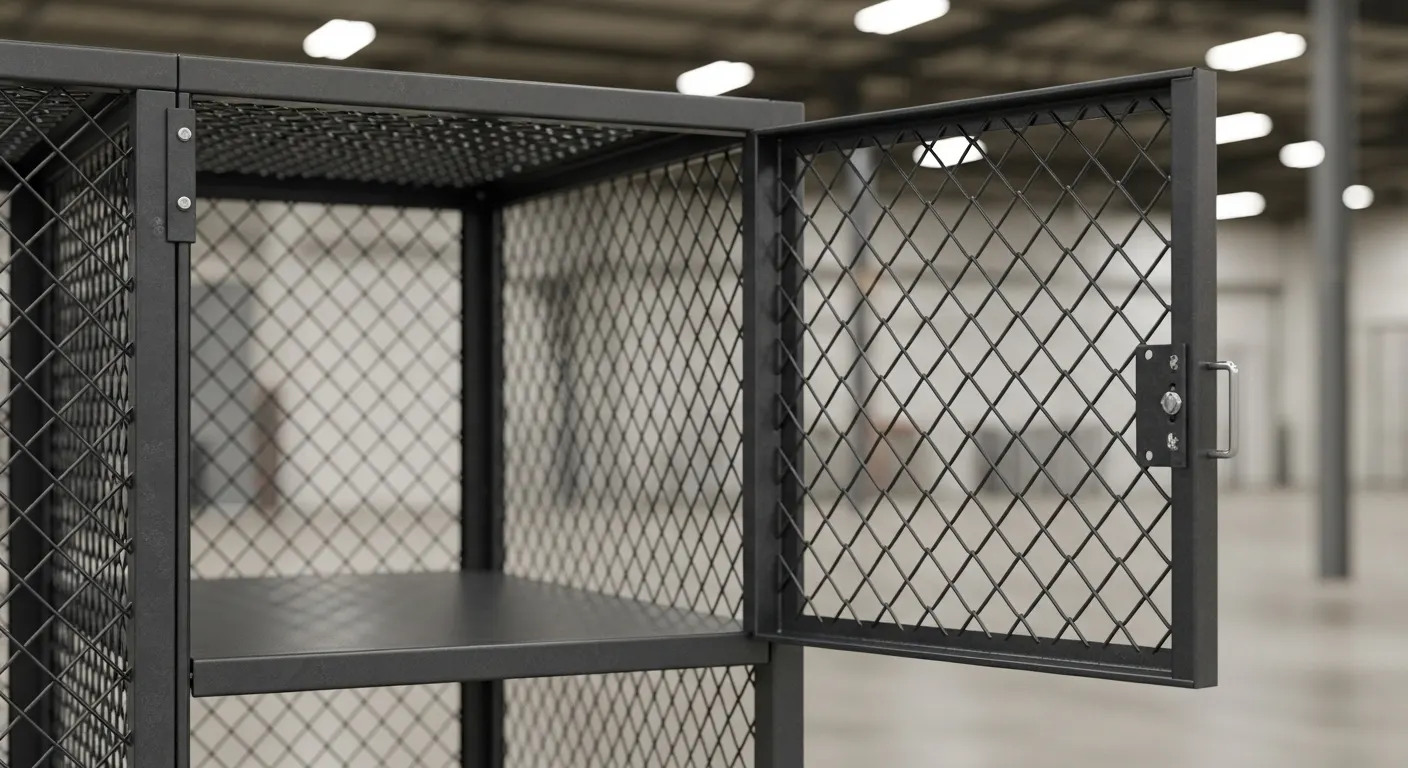
A mesh cage locker is a storage unit constructed with a steel tube or angle-iron frame and wire mesh panels on all four sides. Unlike a solid steel locker, the open mesh design allows air to circulate freely through the unit. You can also see the contents at a glance — without opening the door — which is a genuine security advantage in shared storage rooms and industrial facilities.
The name "cage locker" comes directly from the open structure. Because the sides are wire mesh rather than solid sheet metal, the unit resembles a cage. As a result, these lockers are widely used in warehouses, tenant storage rooms, military depots, gyms, and laboratory environments.
Furthermore, many fire safety regulations specifically allow mesh cage lockers in buildings where solid lockers are restricted. The reason is straightforward: sprinkler water passes directly through the mesh during a fire suppression event, so the locker does not block fire protection coverage — unlike sealed metal units.
The 4 Main Types of Mesh Cage Lockers
Not all mesh cage lockers are built the same way. The right type depends on your available space, the items being stored, and how many users share the unit. Here are the four main configurations you'll encounter.
1. Single-Tier Mesh Cage Lockers
Single-tier mesh cage lockers are full-height units — typically 6 to 7 feet tall — that give each user one large, undivided compartment. These work best for bulky items: PPE gear, tool sets, sports bags, or coats. In warehouses, for example, single-tier mesh cage lockers are the standard choice for tool cribs and parts storage stations.
2. Double and Triple-Tier Mesh Cage Lockers
Double-tier and triple-tier units divide the same vertical height into two or three stacked compartments. Therefore, they are significantly more space-efficient — particularly when you need more storage positions within a fixed floor footprint. Schools, offices, and gyms frequently choose multi-tier mesh cage lockers to serve more users per row without expanding the storage room.
3. Walk-In Mesh Cage Storage Units
Walk-in mesh cage units are full-room enclosures built from modular wire mesh panels. They are used in warehouses and industrial facilities to create secure, ventilated storage zones within a larger open floor plan. In fact, many businesses use walk-in cage enclosures to partition off high-value inventory, server equipment, or restricted tools from general floor access.
4. Tenant Storage Mesh Cage Lockers
Tenant storage lockers are specifically designed for apartment buildings, condominiums, and self-storage facilities. Each unit assigns a private, locked cage to an individual tenant or resident. Moreover, property developers can often recover the full installation cost within 12 months simply by charging tenants a modest monthly storage rental fee.
Key Benefits of Mesh Cage Lockers Over Solid Steel Units
Many buyers assume solid steel lockers are always the stronger choice. However, mesh cage lockers outperform solid lockers in several important ways — especially in commercial and industrial environments.
- Ventilation: Open mesh allows constant airflow, which prevents moisture, mold, and odor buildup. This is critical in gyms, changing rooms, and food-service environments where damp items are regularly stored.
- Visibility: Contents are identifiable at a glance, with no need to open the door for a spot check. Security staff and warehouse supervisors find this invaluable during compliance audits.
- Fire safety compatibility: Sprinkler water passes through the mesh freely, so mesh cage lockers comply in fire-suppression-regulated buildings where sealed lockers may not.
- Lower shipping weight: Wire mesh panels weigh significantly less than solid sheet steel, which reduces freight costs — especially important for large-scale international orders.
- Full customization: Mesh cage lockers can be manufactured to any dimension, any wire gauge, and any powder-coat color. Solid lockers are far more constrained in non-standard sizing.
On the other hand, solid steel lockers offer stronger privacy and better noise insulation. So, if privacy is the primary requirement — for example, in a hospital changing room — solid lockers may be the more appropriate fit.
For a full overview of all open-mesh storage configurations available, browse the complete selection on our mesh lockers product page.
Where Are Mesh Cage Lockers Used? (Industry Applications)
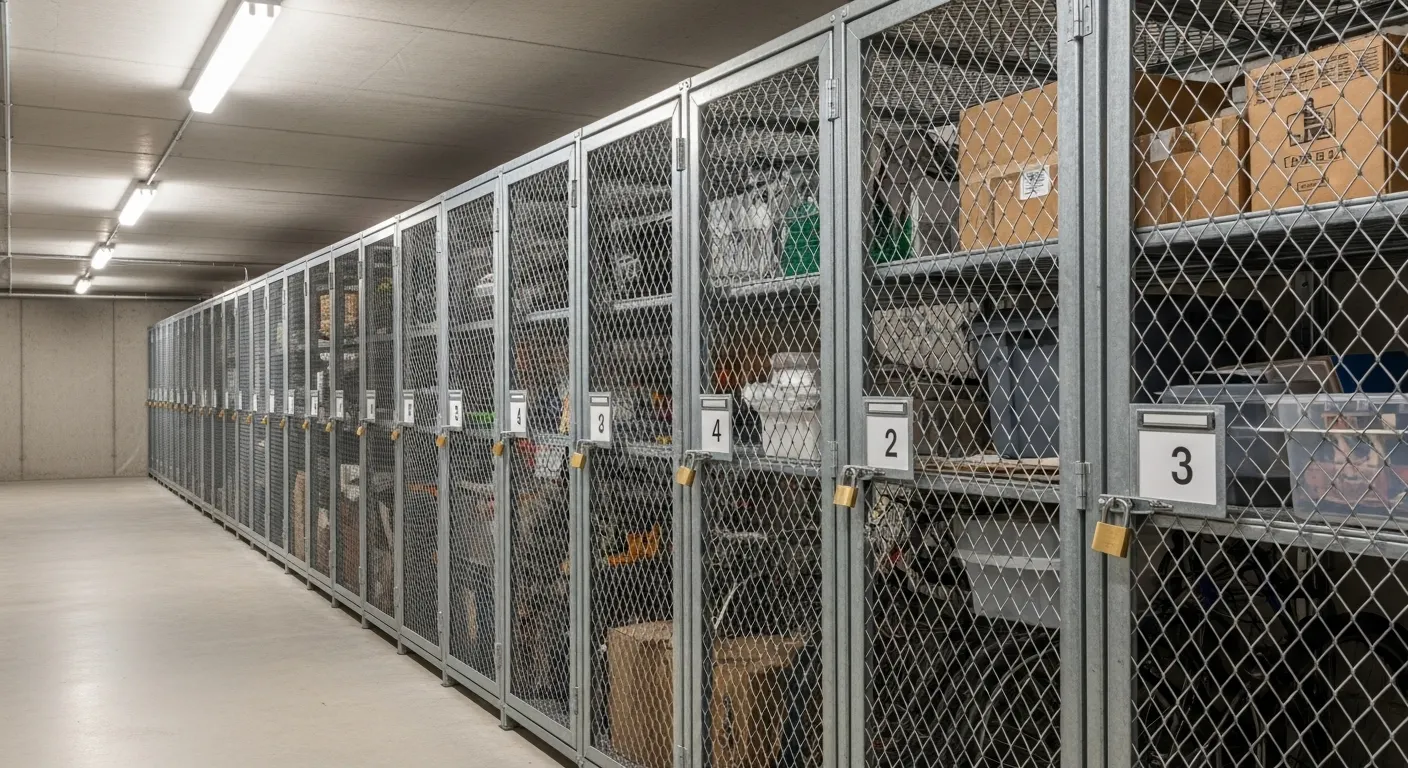
Mesh cage lockers appear across more industries than most buyers expect. Here is a breakdown of the most common real-world applications.
Warehouses and Industrial Facilities
Tool cribs, parts rooms, and employee storage areas all commonly use mesh cage lockers. The visibility of the mesh design makes inventory management faster and significantly reduces tool loss or misplacement.
Apartment and Condo Buildings
Tenant storage rooms are one of the fastest-growing applications for mesh cage lockers. Developers install cage units in basement or parking-level storage areas, where each resident receives a private, lockable compartment.
Gyms and Fitness Centers
Sports bags, shoes, and wet equipment need to breathe after use. Mesh cage lockers handle moisture and odor far better than fully sealed steel units — which makes them the preferred choice for high-traffic fitness environments.
Military and Government Facilities
High-security mesh cage lockers are used in armories, evidence storage rooms, and DEA-regulated drug storage areas. The combination of visibility and lockability makes compliance audits faster and more straightforward.
Schools and Universities
Student storage in changing rooms, science labs, and corridor areas frequently uses mesh cage lockers. They keep belongings secure while remaining easy for staff to monitor for prohibited items.
Hospitals and Laboratories
Equipment storage enclosures and staff locker rooms in healthcare settings benefit directly from the open mesh design, which supports ventilation requirements and hygiene protocols.
Technical Specifications: What to Check Before You Buy Mesh Cage Lockers
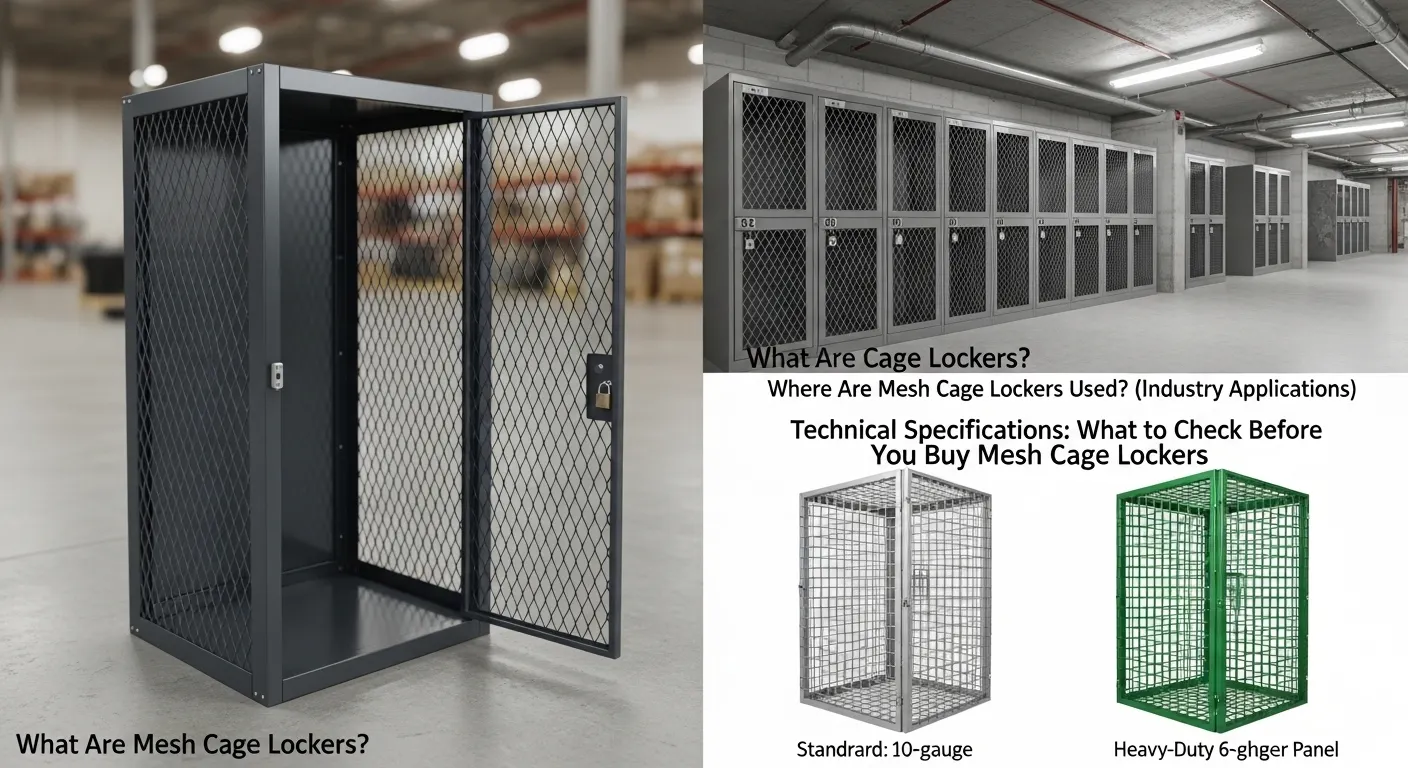
Before placing an order, you need to understand the core technical specifications. These numbers determine structural strength, security level, and long-term durability.
| Specification | Standard Option | Heavy-Duty Option |
|---|---|---|
| Wire gauge | 10G (standard commercial) | 6G (industrial / high-security) |
| Mesh opening | 2″ × 2″ | 1″ × 2″ or 1″ × 1″ (tighter) |
| Frame material | Q235 mild steel | Galvanized or stainless steel |
| Frame profile | 40×40×1.5mm tube | 50×50×2.0mm tube |
| Standard heights | 6ft / 7ft / 8ft | Custom to any height |
| Standard widths | 36″ / 48″ | Custom to any width |
| Standard depths | 24″ / 36″ / 48″ / 60″ | Custom to any depth |
| Surface finish | Powder coat (gray / green / blue) | Custom RAL color |
| Lock type | Padlock hasp | Keyed cylinder / digital keypad |
| Assembly | Knock-down flat-pack | Pre-assembled on request |
In general, 10-gauge wire mesh is sufficient for apartments, offices, and gyms. However, if you're sourcing mesh cage lockers for a warehouse, military depot, or industrial facility, 6-gauge wire provides noticeably higher resistance to bending, impact, and forced entry.
How to Choose the Right Mesh Cage Locker for Your Project
Choosing the right mesh cage locker comes down to three key decisions.
Step 1 — Match the security level to the load.
Are users storing lightweight personal belongings, or heavy tools and high-value industrial equipment? Heavier and higher-security applications require a thicker gauge wire and a heavier frame profile. For tenant storage in apartments, standard 10G is typically sufficient. For warehouses and military applications, go straight to 6G heavy-duty.
Step 2 — Choose the tier configuration based on your space.
Single-tier mesh cage lockers suit taller items and users who need a large individual compartment. Multi-tier units give you more storage positions in a smaller footprint — which is especially valuable when floor space is limited or expensive.
Step 3 — Decide between standard sizes and custom dimensions.
Standard locker sizes work for most projects. However, if your storage room has non-standard ceiling heights, curved walls, or specific column spacing to work around, custom-dimensioned mesh cage lockers solve the fit problem completely. As a factory-direct manufacturer, GoodLockers builds mesh cage lockers to any width, depth, or height at no additional tooling cost.
Also, consider the assembly method. A knock-down (flat-pack) design keeps international shipping costs low. Pre-assembled units speed up on-site installation when labor costs are the bigger constraint.
If you're also evaluating other locker types for your facility, our mesh lockers collection includes ventilated wardrobe units, bulk industrial cages, and modular tenant storage configurations in one place.
Mesh Cage Locker Maintenance: Simple Habits That Extend Lifespan
Mesh cage lockers are low-maintenance by nature. However, a few consistent habits extend their service life significantly.
First, inspect the powder-coat finish and welds every six months. Small chips in the coating allow rust to develop — particularly in humid or coastal environments. Touch up early with a matching spray before surface rust spreads.
Next, check door hinges and lock mechanisms once a year. Apply a light machine oil to hinges to prevent squeaking and corrosion. If the lock cylinder becomes stiff or intermittent, replace it before it fails completely.
Finally, wipe down the mesh panels monthly using a damp cloth and mild detergent. Avoid abrasive cleaners — these scratch the powder-coat surface and accelerate wear. For stainless steel mesh cage lockers used in food-service or medical environments, use a food-safe stainless cleaner instead.
Frequently Asked Questions About Mesh Cage Lockers
What is the difference between a mesh cage locker and a wire partition?
A mesh cage locker is a self-contained, lockable unit with four mesh sides, a base frame, and a door. A wire partition is a panel system used to divide a larger room — it does not have its own independent door or locking mechanism unless specifically configured. Both use wire mesh construction, but they serve fundamentally different purposes.
What wire gauge should I choose for industrial mesh cage lockers?
For light commercial and residential applications, 10-gauge wire mesh is the standard. For warehouses, military facilities, and high-security industrial environments, 6-gauge wire offers significantly stronger resistance to bending and forced entry. When in doubt, go heavier — the price difference is small relative to the security improvement.
Are mesh cage lockers compatible with fire suppression systems?
Yes, in most cases. The open mesh design allows sprinkler water to pass directly through the panels without obstruction, so mesh cage lockers generally comply with fire suppression regulations where sealed metal lockers may not. However, always verify compliance with your local fire code or building inspector before installation, as requirements vary by jurisdiction.
Can I order mesh cage lockers in a non-standard size?
Absolutely. GoodLockers manufactures mesh cage lockers to any custom width, depth, or height. Custom powder-coat colors (any RAL code) are also available for OEM and large-volume orders. Simply send your dimensions and we'll prepare a detailed factory quote.
What is the minimum order quantity for custom mesh cage lockers?
For standard stock dimensions, we supply from as little as 1 unit. For fully custom mesh cage lockers — non-standard dimensions, custom colors, or OEM branding — the minimum order is typically 20 to 50 units depending on configuration. Contact our team with your project specifications for an exact MOQ.
Order Custom Mesh Cage Lockers Direct from the Factory
GoodLockers is a factory-direct steel locker manufacturer with 18+ years of production experience. We export to the USA, UK, Canada, Australia, and Singapore — without middlemen, so pricing is consistently sharper than domestic resellers.
Our mesh cage lockers are built from Q235 steel frames with welded wire mesh panels, powder-coated in your choice of color. Every unit ships flat-pack for cost-efficient freight, and full assembly hardware is included. We offer:
- Single-tier, double-tier, triple-tier, and walk-in configurations
- 10G standard and 6G heavy-duty wire gauge options
- Lock options: padlock hasp, keyed cylinder, or digital keypad
- Custom sizing: any width, depth, or height
- Custom RAL powder-coat colors for OEM orders
- Full specification sheets and installation guides included with every order
For the complete range of open-mesh storage solutions — including ventilated wardrobe lockers, industrial bulk cage units, and modular bike storage lockers — browse everything on our mesh lockers collection page.
Ready to get a price? Send us your dimensions, tier configuration, and required quantity — and we'll have a factory-direct quote back to you within 24 hours.
