
Industrial Mesh Lockers: Types, Specs, and Buying Guide
Industrial mesh lockers are welded or woven steel wire storage units built for warehouses, factories, fire stations, and heavy-use workplaces. They offer full ventilation, tamper-resistant security, and clear visibility without unlocking. This guide covers types, key specs to verify, common use cases, and what to confirm before placing an order.
Industrial mesh lockers are standard equipment in facilities where ventilation, visibility, and durability all matter at once. A solid steel door traps heat and moisture. A wire mesh panel does neither.
That's why procurement teams across warehouses, manufacturing plants, and government facilities turn to mesh-style units for both personal and bulk storage. This guide covers the main types, specifications to verify before ordering, and how to choose the right configuration for your project.
What Makes Industrial Mesh Lockers Different From Solid Lockers?
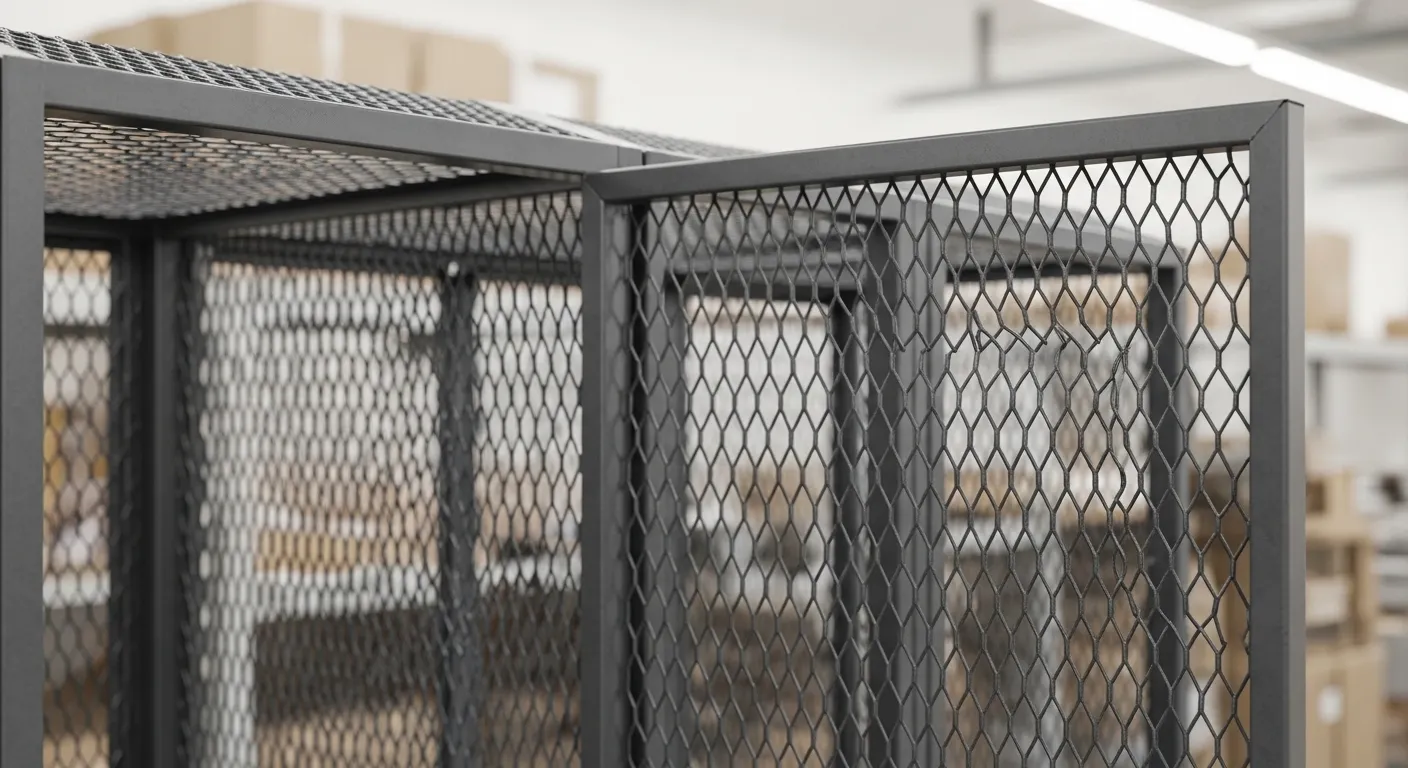
Industrial mesh lockers use welded or woven steel wire panels instead of solid metal doors. This allows full airflow, line-of-sight inspection without unlocking, and faster drying of damp gear — without reducing structural strength or tamper resistance.
The mesh format solves real operational problems.
Wet workwear and safety gear dry faster between shifts. Supervisors can verify contents visually during routine checks. In food processing facilities and chemical storage environments, full ventilation also reduces compliance risk that solid-door lockers can create.
Most industrial-grade units use a frame made from 14- to 16-gauge steel tubing, with a welded wire mesh aperture of 1" x 2" or 2" x 4" depending on the security requirement.
Types of Industrial Mesh Lockers
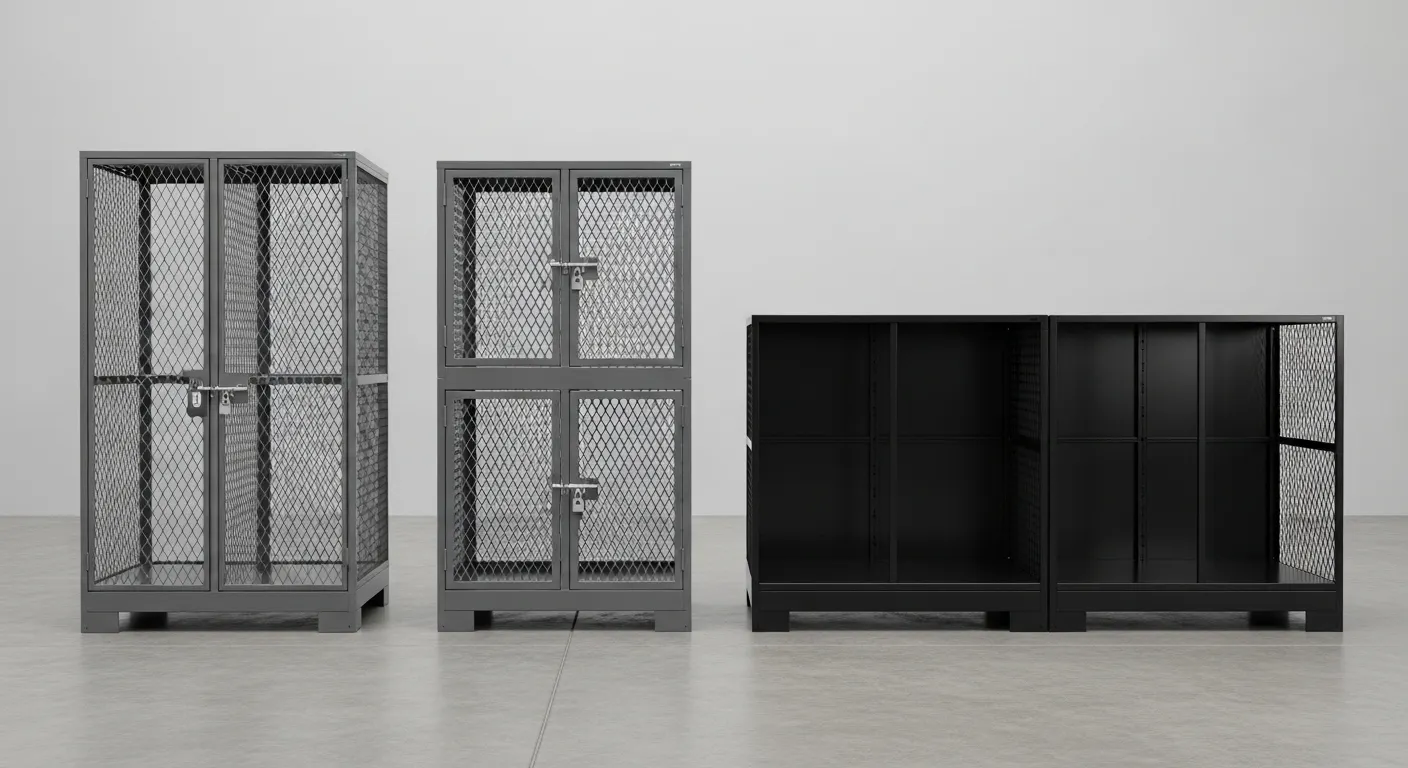
Choosing the right configuration starts with understanding what each type is actually built for.
Single-Tier Units
Single-tier mesh lockers run the full height of the cabinet, typically 72" to 78". They suit environments where employees store full-length gear, tools, or oversized personal equipment that would not fit in a stacked compartment.
Double-Tier Units
Double-tier units stack two compartments vertically in the same floor footprint. They work well in high-density warehouses or locker rooms where space is limited and individual storage loads are lighter. Many bulk orders for shift-based facilities specify double-tier units for this reason.
Personal Effect Mesh Lockers
Smaller compartment units — typically 12" to 15" wide — are designed for one user per door. They are standard in gyms, transit terminals, construction sites, and change rooms. See our full range of personal effect mesh lockers for dimension options and tier configurations.
Bulk Storage and Equipment Mesh Lockers
Wider and deeper than personal-use units, these store shared tools, PPE kits, or staging equipment. They are common in warehouse receiving areas and outdoor staging zones. Our warehouse equipment mesh lockers cover several configurations with full spec details.
What Specs Should You Verify Before Ordering?
Answer capsule: Before ordering industrial mesh lockers, confirm wire gauge, mesh aperture, frame tube size, surface finish, load capacity, and lock type. These specs directly affect security, longevity, and suitability for your facility.
Not all mesh lockers are built to the same standard. This comparison covers the most critical specs to check with any supplier before committing.
| Spec | Recommended Range | Why It Matters |
|---|---|---|
| Wire gauge | 10–14 gauge for industrial use | Thicker gauge (lower number) = higher tamper resistance |
| Mesh aperture | 1"×2" or 2"×4" | Smaller aperture = harder to reach through |
| Frame tube diameter | 1.2"–1.5" minimum | Affects structural rigidity under heavy loads |
| Surface finish | Powder coat (recommended) | Resists corrosion and handles heavy daily use better than paint |
| Load capacity per compartment | 150–500 lbs | Varies by frame design; always request manufacturer's stated rating |
| Lock compatibility | Padlock hasp, coin-op, keyed, RFID | Match to your access control policy |
| Tier configuration | Single, double, triple, or custom | Determines floor space efficiency per unit |
According to product specifications from industrial storage suppliers, heavy-duty mesh lockers built for tool and equipment storage commonly carry between 300 and 500 lbs per compartment. Personal effect units typically fall in the 150 to 200 lbs range.
Which Industries Use Industrial Mesh Lockers?
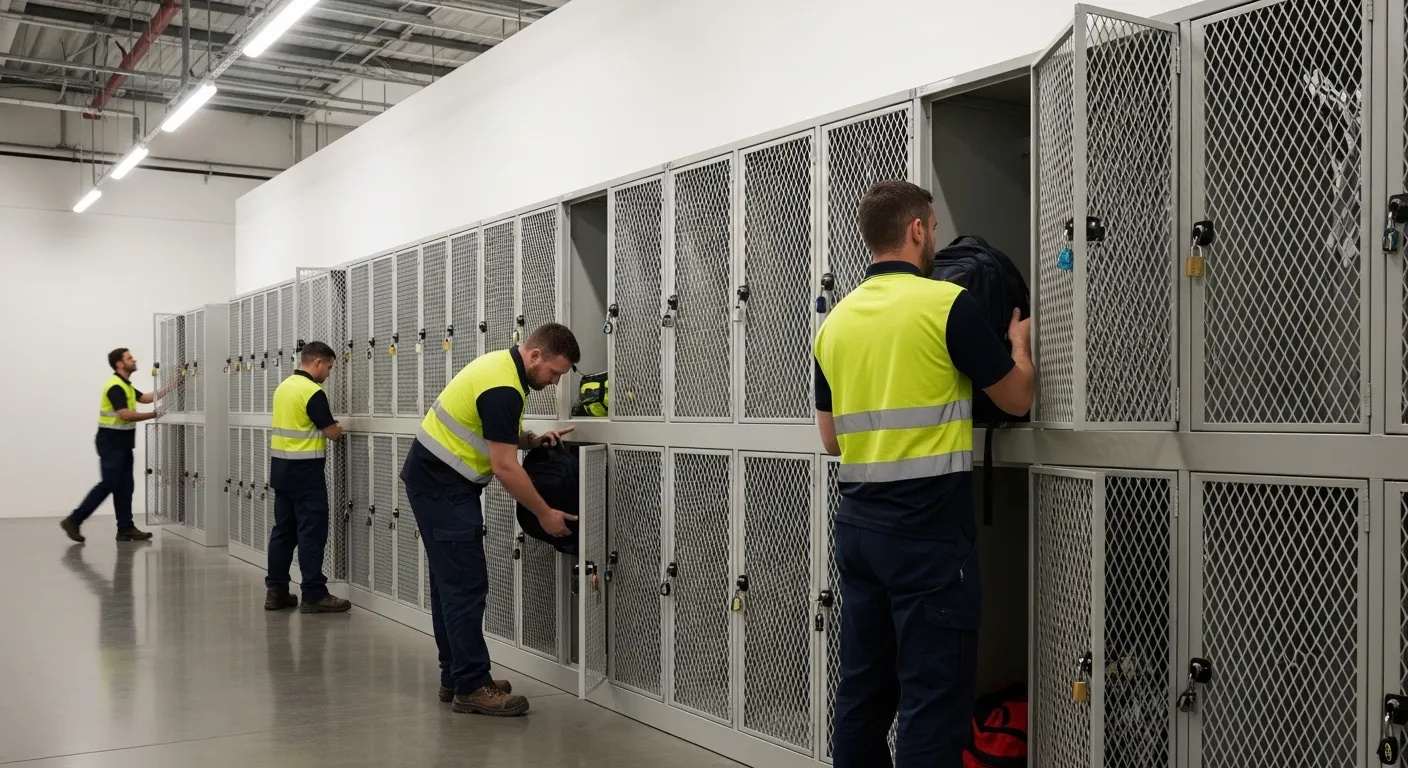
The short answer: any facility where employees or contractors need secure, ventilated personal or shared storage.
Common applications:
- Warehouses and distribution centers: PPE storage, personal effect lockers near entry points, shared tool staging areas
- Manufacturing plants: Shift-change locker rooms, compliance storage for PPE and chemical handling gear
- Fire stations and emergency services: Gear drying lockers, equipment staging and inspection storage
- Military and government facilities: High-security compartment storage with padlock or RFID integration
- Schools, universities, and sports facilities: Hallway student storage, team gear rooms, technical workshop areas
- Construction and field sites: Modular mesh lockers for job site personal storage
The ventilated format is particularly suited to facilities where gear needs to dry between uses, or where supervisors need to verify contents without opening individual compartments. Wire mesh lockers are widely used in fire stations and emergency services for exactly this reason.
Industrial Mesh Lockers vs. Solid Steel Lockers
Answer capsule: Mesh lockers outperform solid steel where ventilation, visibility, or moisture control is a priority. Solid steel offers more privacy and weather resistance. The right choice depends on what is being stored, where, and what your compliance requirements are.
| Feature | Industrial Mesh Lockers | Solid Steel Lockers |
|---|---|---|
| Ventilation | Full airflow through panels | Minimal, unless louvered vents added |
| Visibility | Full line-of-sight from outside | No visibility without opening |
| Security level | High (welded wire frame) | Higher (fully concealed contents) |
| Best for | Wet gear, tools, PPE, shared equipment | Valuables, private personal storage |
| Weight | Lighter | Heavier |
| Typical price point | Generally lower | Generally higher |
| Corrosion resistance | Good with powder coat finish | Good with powder coat finish |
For facilities managing damp protective gear or uniform storage, solid doors create moisture and odor problems quickly. Mesh construction prevents this by design. Solid steel units still make sense in environments with privacy requirements or high-value item storage.
How to Choose the Right Industrial Mesh Locker for Your Facility
Step 1: Define the Storage Purpose
Clarify whether employees are storing personal items, shared tools, or safety equipment. The answer determines the right compartment size, tier configuration, and lock type before anything else.
Step 2: Measure Your Available Space
Confirm available floor area and ceiling height before specifying dimensions. Double-tier units are worth considering in most facilities with standard 8-foot ceilings because they double storage density without expanding the footprint.
Step 3: Confirm Wire Gauge and Frame Specifications
For warehouses with forklift traffic or high daily use, specify a minimum 14-gauge welded wire panel with a 1.2" frame tube. For lighter-use environments, 16-gauge may be acceptable.
Step 4: Select the Right Surface Finish
Powder coat is the standard for most indoor industrial environments. For semi-outdoor or covered outdoor placement, request hot-dip galvanized wire or a heavy-grade powder coat specification to prevent long-term corrosion.
Step 5: Match Lock Type to Your Access Policy
Padlock hasps work for basic security. Coin-operated locks suit shared or public facilities. RFID and digital keypad locks fit environments where you need an access audit trail or managed entry.
Step 6: Ask About Custom Sizing
Standard dimensions work for the majority of facilities. Older buildings with non-standard ceiling heights or compact floor plans often benefit from custom-dimensioned units. This is where sourcing directly from a manufacturer, rather than a distributor, makes a measurable difference in lead time and cost.
For project-specific guidance on Bay Area or West Coast USA installations, see our industrial mesh lockers for the Bay Area page for local delivery and logistics details.
Why Source Industrial Mesh Lockers Directly from a Manufacturer?
Buying through a reseller adds lead time, limits customization, and inflates per-unit cost.
A direct manufacturer relationship gives you:
- Custom dimensions built to your floor plan, not the nearest standard size
- OEM powder coat colors for brand or safety color consistency
- Volume pricing without distributor markup
- Engineering support for complex configurations before production begins
- Direct quality control contact if specs need adjustment mid-order
Global Industrial and other large distributors offer convenience for standard off-the-shelf units. For custom projects, bulk orders above 50 units, or configurations that require non-standard dimensions, going direct to the factory is almost always the better commercial decision.
Browse the full mesh locker range to see available configurations, tier options, and customization details.
Expert Tip: Before confirming a bulk order, always request a sample unit or a full written spec sheet showing wire gauge, aperture size, frame tube diameter, and powder coat thickness. From 18 years of manufacturing experience across 20+ countries, most specification mismatches in large orders come from assuming standard dimensions match the actual site. Confirm every critical spec in writing before production starts.
Frequently Asked Questions
What wire gauge should industrial mesh lockers use?
For most industrial environments, 10 to 14 gauge welded wire is the appropriate range. Thicker wire (lower gauge number) provides higher tamper resistance. Sixteen-gauge may be acceptable for light personal-use applications but is not recommended for tool storage or high-traffic warehouse environments.
What is the typical load capacity of an industrial mesh locker?
Heavy-duty industrial mesh lockers generally support between 150 and 500 lbs per compartment depending on frame construction and shelf design. Always request the manufacturer's stated load rating for the specific model before ordering for tool or equipment storage applications.
Can industrial mesh lockers be ordered in custom sizes?
Yes. Most direct manufacturers offer custom sizing for non-standard ceiling heights, floor plans, or specific project requirements. Custom orders typically require a minimum quantity and a slightly longer production lead time than standard catalog sizes.
What is the difference between welded wire and woven wire mesh panels?
Welded wire panels are fused at each grid intersection, creating a rigid, tamper-resistant structure. Woven wire interlocks without welding, offering slight flexibility. For security-grade and industrial applications, welded wire construction is the more common and generally recommended choice.
What lock types are compatible with industrial mesh lockers?
Standard options include padlock hasps, coin-operated locks, keyed cylinder locks, and RFID or digital keypad systems. The right choice depends on your access policy, the number of users per compartment, and whether an access audit trail is required.
Are industrial mesh lockers suitable for semi-outdoor installation?
Yes, with the right surface treatment. Specify a hot-dip galvanized frame or a heavy-grade powder coat for covered outdoor or semi-outdoor placement. Fully exposed outdoor installation in high-moisture environments requires additional weatherproofing and is not recommended for standard powder-coated units.
Ready to Order Industrial Mesh Lockers?
Tell us your dimensions, tier configuration, lock preference, quantity, and any custom requirements. Our team will send a detailed spec sheet and factory-direct quote within one business day.
Request a Custom Quote or email us at sales@steelfurnituresupply.com.
