
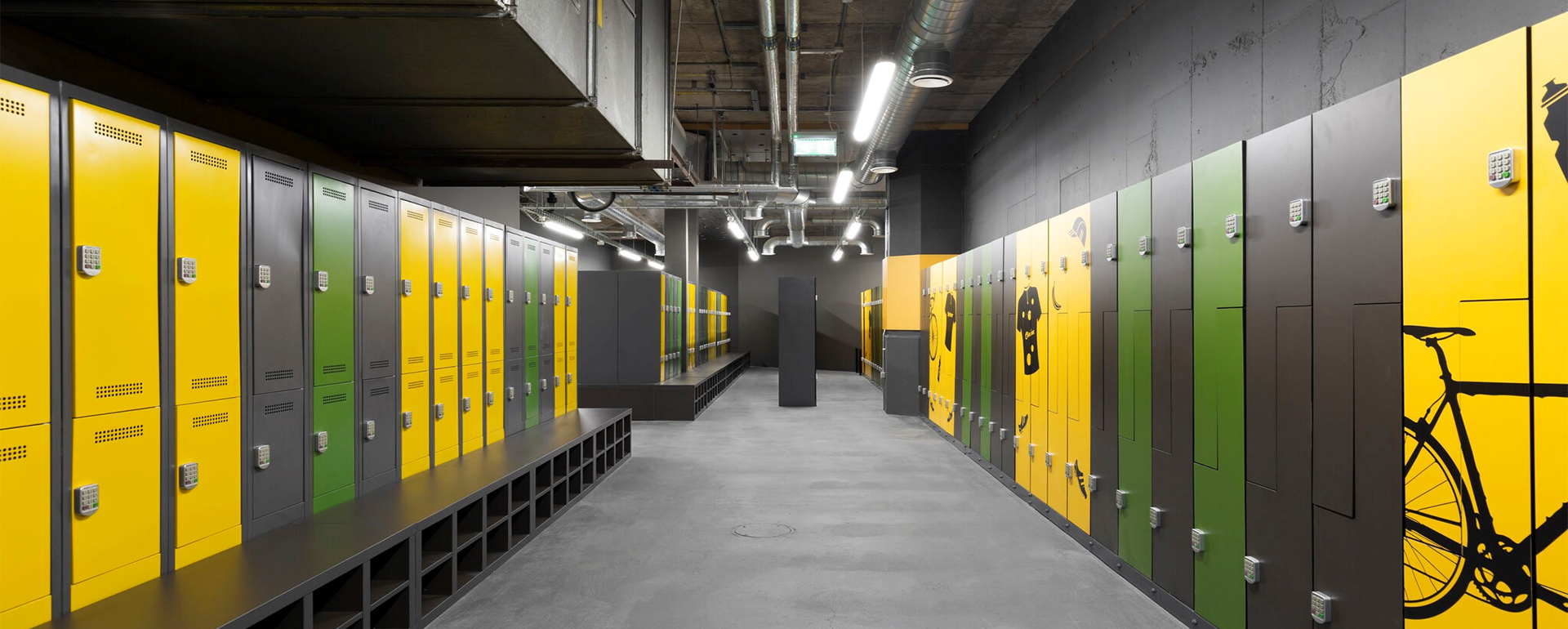
Top 10 Fire-Resistant Locker Manufacturers in Europe
Finding the top fire-resistant locker manufacturers in Europe is a critical task for building safety. Standard lockers are not designed to stop or slow a fire. In public buildings, this is a major risk. Fire-resistant lockers are engineered and certified to meet strict safety standards. They help protect property and ensure safe building evacuation.
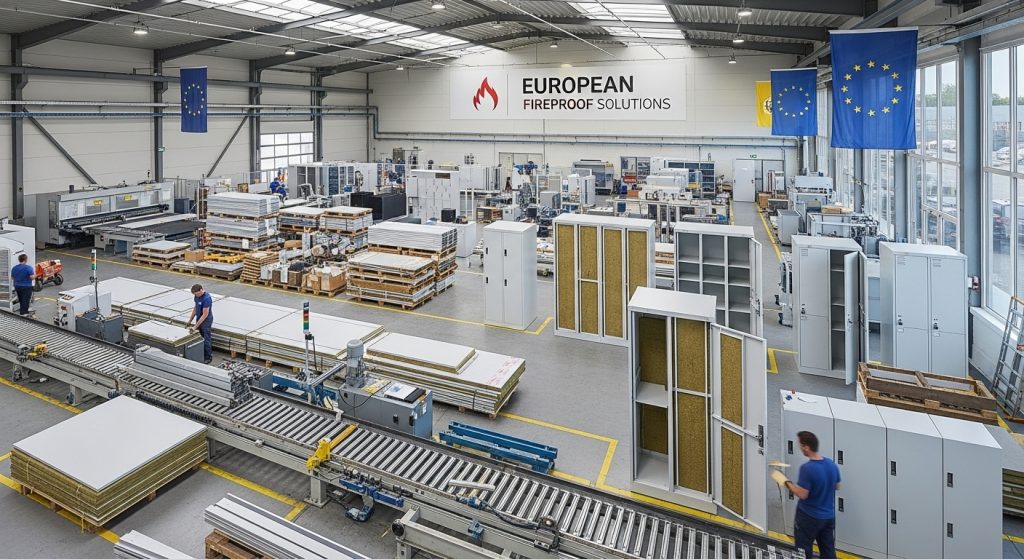
This guide provides a detailed overview of the leading manufacturer types. We will explore the materials they use, the certifications they hold, and their specific areas of expertise. Understanding these profiles is essential for sourcing compliant, high-performance lockers. We will cover both non-combustible steel and fire-retardant laminate solutions.
What Are Fire-Resistant Lockers?
Fire-resistant lockers are storage units built from materials with a certified low flammability. Their purpose is to limit the spread of fire. They must not contribute significantly to a fire's growth. This is especially important in high-risk areas.
Defining Fire Resistance in Lockers
Fire resistance in lockers is about material performance. It is defined by how a material reacts to fire. This includes its contribution to the fire, its smoke production, and its tendency to create flaming droplets.
A locker's structure and all its main components must pass rigorous tests. This includes doors, side panels, and internal shelves. The goal is to contain a fire or, at a minimum, not add fuel to it.
Fire-Resistant vs. Fireproof: A Key Distinction
The terms "fire-resistant" and "fireproof" are often confused. "Fireproof" implies a material is immune to fire, which is inaccurate. No locker provides complete immunity to fire.
"Fire-resistant" is the correct term. It means the locker has been tested. It will resist a fire for a specific duration or to a certain standard. This provides valuable time for evacuation and response. All reputable manufacturers use the term "fire-resistant."
European Fire Safety Standards (EN 13501-1)
In Europe, the reaction to fire of construction products is classified by the standard EN 13501-1. This is the single most important document for fire-resistant lockers.
Understanding Reaction to Fire Classifications
EN 13501-1 assigns a "Euroclass" rating to materials. This rating has three parts.
- Main Class (A1 to F): This shows how much a material contributes to a fire. A1 is non-combustible. F is highly flammable.
- Smoke Production (s1 to s3): This measures smoke emission. s1 means very little smoke. s3 means high smoke.
- Flaming Droplets (d0 to d2): This measures flaming droplets. d0 means no droplets. d2 means high droplets.
For a locker to be considered fire-resistant, it must achieve a high rating.
What Class A1 Means (Non-Combustible)
Class A1 is the highest possible rating. It is reserved for materials that will not contribute to a fire at any stage. These materials are non-combustible.
Uncoated steel is a classic A1 material. This makes steel lockers the most common and straightforward fire-resistant solution. They simply do not burn.
What Class B-s1, d0 Means (Limited Combustibility)
Class B-s1, d0 is the highest rating for materials that are technically combustible, but perform exceptionally well.
- B: The material has a very limited contribution to fire.
- s1: Smoke production is little or non-existent.
- d0: No flaming droplets or particles are produced.
This rating is critical for high-performance lockers. It is often required for materials used in protected escape routes and public corridors.
The Importance of Certification
A manufacturer's claim of fire resistance is not enough. They must provide official certificates from an accredited testing body. These certificates must clearly state the EN 13501-1 classification for the specific locker product.
The Primary Material: Fire-Rated Steel
Steel is the foundation of the fire-resistant locker market. Its inherent properties make it the default choice for safety and compliance.
Why Steel is Inherently Non-Combustible
Steel is an A1-rated, non-combustible material. It has a melting point of over 1,370°C (2,500°F). In a standard building fire, steel will not burn, melt, or add any fuel to the blaze. Its structure will remain stable for a long time.
This means that a basic steel locker already meets the primary requirement. It will not contribute to the fire's spread.
The Role of Powder-Coat Finishes
Steel lockers are almost always painted or powder-coated. This coating is combustible. However, the coating is extremely thin. Its contribution to a fire is minimal.
A steel locker's core safety comes from its A1-rated steel structure. The finish is a minor factor. Most steel lockers are considered non-combustible as a complete unit.
Welded vs. Riveted Steel Construction
For fire resistance, construction matters. A fully welded steel locker offers greater structural integrity. The seams are fused, creating a more robust box.
Riveted or "bolt-together" lockers can have small gaps. In a fire, these gaps could allow heat and flames to pass through more easily. Top-tier steel manufacturers often offer a fully welded, heavy-gauge product for high-risk applications.
The Advanced Material: Fire-Retardant Compact Laminate
While steel is non-combustible, some applications require the durability of laminate. Standard laminate is a wood-based product and will burn. This has led to the development of fire-retardant (FR) grades.
How Standard Laminate Becomes Fire-Resistant
Standard phenolic locker manufacturers in europe create panels from paper and resin. These panels are strong but are typically Euroclass C or D.
To create an FR-grade panel, special fire-retardant resins are added. These chemicals are integrated into the panel's core during the high-pressure pressing process. These additives are designed to slow ignition. They also suppress the chemical reactions of a fire.
Achieving the B-s1, d0 Rating
The goal for FR laminate is to achieve the B-s1, d0 classification. When the panel is exposed to flame, the retardant chemicals activate. They create a char layer on the surface. This layer insulates the material underneath.
This process stops the panel from contributing to the fire. It also prevents the production of smoke and flaming droplets. Only manufacturers with this specific certification can be considered.
Benefits of FR Laminate over Steel
If steel is A1, why use FR laminate?
- Durability: FR laminate is extremely resistant to impact, scratches, and graffiti. Steel lockers can be dented and scratched.
- Waterproof: These panels are completely waterproof. This makes them the only choice for a fire-resistant locker in a wet area.
- Aesthetics: FR laminates are available in many colors and woodgrain finishes. Steel is typically limited to solid paint colors.
This material is produced by specialist compact laminate locker manufacturers in europe.
Top 10 Fire-Resistant Locker Manufacturers in Europe
This list does not rank specific companies. Instead, it profiles the 10 key archetypes of specialist manufacturers. This helps you identify the right partner for your needs.
1. The A1-Rated Steel Specialist
This manufacturer focuses exclusively on non-combustible steel lockers. Their entire product line is built around the A1 classification. They offer heavy-gauge, fully welded lockers. Their marketing is simple: their products do not burn. They are a top choice for industrial sites and utility rooms.
2. The Certified FR-Laminate Fabricator
This specialist works with B-s1, d0 compact laminate. They are experts in fabricating this advanced material. They offer the highest level of certified fire resistance in a non-metal product. We are ideal for high-end projects, public corridors, and wet areas.
3. The Public Sector & School Supplier
This manufacturer understands compliance for public buildings. They offer a range of products certified for schools, hospitals, and transit hubs. We often provide both A1 steel and B-s1, d0 laminate options. They are experts in meeting public tender requirements.
4. The High-Security & Data Protection Manufacturer
This manufacturer builds lockers to protect high-value assets. Fire resistance is one of several security features. Their lockers may also include advanced locks and reinforced steel. They supply to data centres, police, and military clients.
5. The Industrial & Chemical Storage Expert
This specialist produces lockers for hazardous materials. Fire resistance is linked to chemical containment. Their lockers often feature welded seams to contain spills. They also have specific ventilation systems. They must comply with industrial storage regulations.
6. The Bespoke Architectural Fabricator
This manufacturer works with architects on high-design projects. They can integrate B-s1, d0 laminate into custom joinery. They create fire-resistant storage that is invisible. It blends seamlessly with wall paneling in luxury hotels or corporate HQs.
7. The Hybrid Construction Innovator
This manufacturer offers a cost-effective compromise. They build lockers with a non-combustible steel body (carcass). They then fit a fire-retardant B-s1, d0 laminate door. This puts the durable, aesthetic material on the front. It saves cost by using steel for the main structure.
8. The Compliance-Focused Healthcare Supplier
This specialist serves the healthcare market. Their lockers must be both fire-resistant and hygienic. They often use FR laminate for its non-porous, antibacterial surface. Their products are designed for hospital corridors, which are key escape routes.
9. The Specialist in Fire-Rated Doors & Components
This company may not make complete lockers. They specialize in manufacturing the core B-s1, d0 laminate panels. They supply these certified panels to other locker fabricators. We are a critical part of the supply chain for many locker manufacturers europe.
10. The Full-Service General Manufacturer
This is a large-scale manufacturer with a vast catalog. Alongside their standard lockers, they offer one or two product lines that are certified fire-resistant. They are a good choice for large, mixed-use projects. They can supply all a building's lockers, from standard to FR-rated.
Applications for Fire-Resistant Lockers
Fire-resistant lockers are not needed everywhere. They are specified for areas where a fire could spread quickly or block an exit.
Corridors and Public Escape Routes
This is the most critical application. Lockers placed in a main corridor must not add fuel to a fire. They must not produce thick smoke that blocks visibility for people trying to escape. This is where the B-s1, d0 rating is mandatory.
Schools and Universities
School corridors are often lined with lockers. A fire starting in one locker could spread rapidly. Using certified fire-resistant lockers contains the fire to a single unit. This prevents a small fire from becoming a large disaster.
Hospitals and Healthcare Facilities
Hospitals have many vulnerable occupants. Maintaining clear escape routes is essential. Fire-resistant lockers in corridors and staff rooms are a key part of the building's fire strategy.
Data Centres and Server Rooms
Lockers in or near data centres store tools and manuals. A fire in this area would be catastrophic. Non-combustible A1 steel lockers are the standard choice here. They ensure storage does not add to the fire risk.
Industrial Plants and Chemical Storage
In industrial settings, lockers may be near ignition sources. They might also store oily rags or flammable materials. A fire-resistant locker can contain a fire caused by spontaneous combustion. This prevents it from spreading to the wider facility.
What to Look for in a Fire-Resistant Manufacturer
When sourcing these products, you must be precise in your questions.
Demanding Test Certificates (EN 13501-1)
This is the only thing that matters. Ask for the certificate. Do not accept a data sheet that just mentions the standard. The certificate must be from a third-party, accredited test lab. It must list the exact product you are buying.
Construction and Build Quality
Look at how the locker is built.
- For Steel: Are the bodies welded or riveted? Welded is stronger.
- For Laminate: What is the panel thickness? 10mm or 13mm is standard. How is the hardware fixed?
- Gaps and Fit: Doors should fit snugly. Large gaps can allow flames and smoke to pass through.
Locking Mechanisms and Hardware
The lock itself is a point of failure. In high heat, a plastic or low-grade metal lock can melt or fail. Top manufacturers use high-quality steel locking mechanisms. These will remain functional even at high temperatures.
Ventilation and Cabinet Design
All lockers need ventilation. However, ventilation slots can also let fire in or out. Manufacturers have specific designs for this. They may use baffled or rear-venting systems. These allow air to circulate but make it difficult for fire to spread.
Other Locker Types and Their Fire Properties
Not all lockers are designed for fire resistance. It is useful to compare them.
How Do Mesh Locker Manufacturers in Europe Compare?
Mesh locker manufacturers in europe build lockers from steel wire. Like solid steel, this wire is a Class A1 non-combustible material. The locker will not burn.
However, the mesh design offers zero containment. Fire, smoke, and heat will pass right through it. A mesh locker is non-combustible, but it is not fire-resistant in the sense of containing a fire.
Storage for Personal Protective Equipment
Many ppe workwear wire mesh lockers europe are mesh. This is to ventilate the gear. If the PPE itself is flammable, a mesh locker offers no protection. A solid steel locker would be a safer choice to contain a fire.
Considerations for Mesh Lockers Schools Gyms Europe
In a gym, mesh lockers schools gyms europe are popular. They are non-combustible (A1). This makes them a safe choice for a changing room. They do not add any fuel load to the room.
Electronic and Parcel locker Systems
Many electronic and Parcel locker systems are built from steel. This makes them inherently non-combustible. The main fire risk comes from the electronics inside. The power supplies and charging ports must be CE-certified. They must be protected against short-circuiting.
Summary: Selecting the Right Certified Supplier
Choosing from the top fire-resistant locker manufacturers in Europe is a serious decision. It is a matter of building safety and compliance.
The first step is to identify your material. For pure non-combustibility, A1-rated steel is the standard. For a high-performance, aesthetic, or waterproof solution, B-s1, d0-rated compact laminate is the advanced choice.
Always demand to see the EN 13501-1 certificate. By matching a certified manufacturer to your specific application, you ensure a safe, compliant, and durable installation.
