
School Athletic Mesh Lockers for Team Storage
GoodLockers manufactures custom school athletic mesh lockers for team rooms, locker rooms, gym facilities, training areas, and school sports storage projects. Schools can request mesh locker configurations based on team size, available space, compartment layout, material preference, lock system, finish color, numbering, and bulk project requirements.
For athletic departments, mesh lockers solve a practical storage problem: players need secure space for uniforms, shoes, bags, helmets, training gear, and personal items, while coaches and facility staff need airflow, visibility, and organized supervision. Open mesh or wire mesh locker designs help wet or used gear breathe better than fully enclosed storage, while still giving each student-athlete a defined compartment.
This page is for school administrators, athletic directors, facility managers, contractors, and project buyers planning locker storage for sports teams, PE areas, changing rooms, or multi-team athletic facilities.
Built for School Team Rooms and Athletic Gear Storage
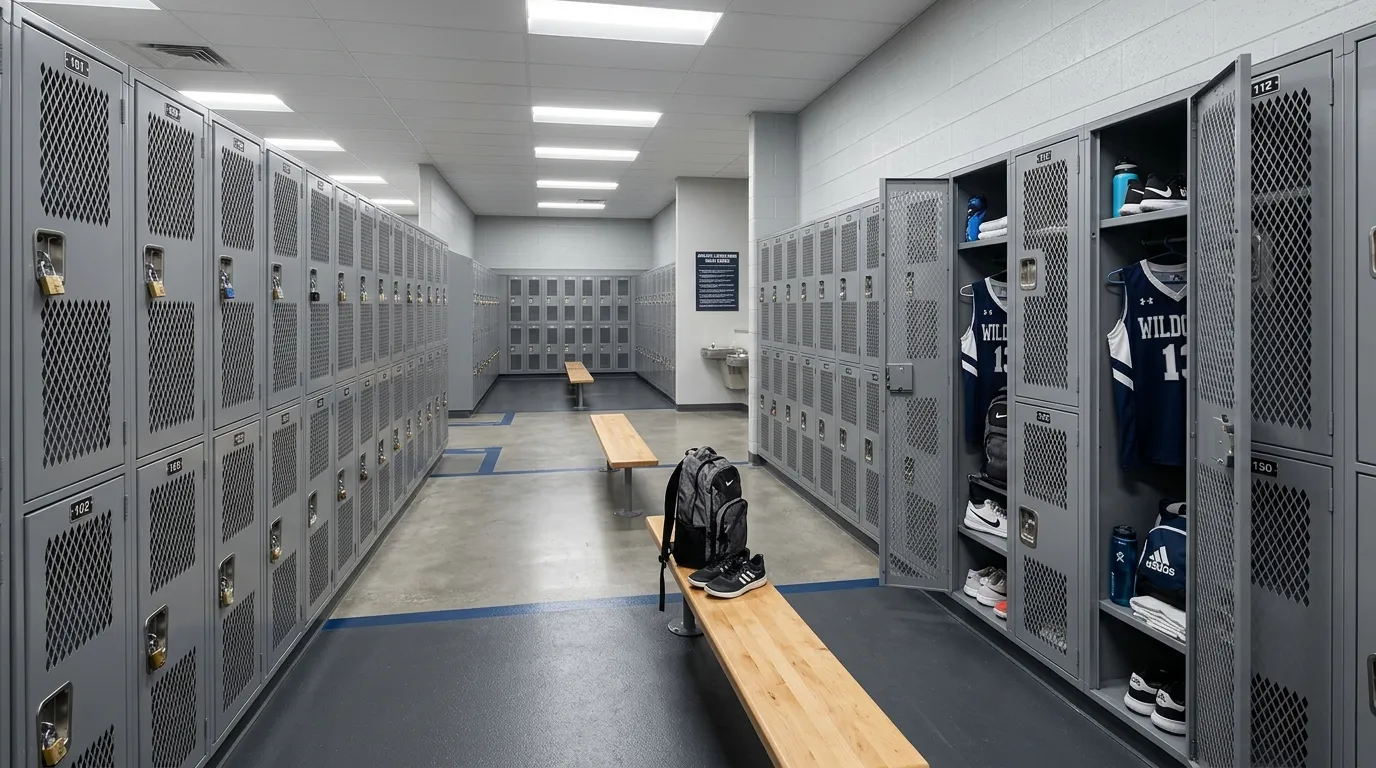
School athletic storage is different from standard hallway locker storage. Team gear is bulkier, shoes and uniforms need ventilation, and coaches often need a layout that keeps equipment organized by player, sport, or season.
GoodLockers can support project-based locker planning for:
- Middle school and high school athletic locker rooms
- Team rooms for football, basketball, soccer, baseball, volleyball, wrestling, and other sports
- PE changing areas and sports training facilities
- School gym storage areas
- Shared equipment rooms
- Renovation and new-build school projects
- Bulk locker orders for multiple teams or campuses
Mesh lockers are especially useful where airflow and visibility matter. The open design allows staff to see whether compartments are occupied, whether gear is stored properly, and whether items need to be removed after practice or games.
For broader mesh locker categories, buyers can also review GoodLockers’ main mesh lockers page.
Why Mesh Lockers Work Well for Athletic Programs
Athletic environments create heavy daily use. Students may store damp uniforms, cleats, training shoes, bags, towels, protective gear, and personal belongings in the same area. A solid enclosed locker can work in some facilities, but mesh doors and panels are often better for team storage because they improve airflow and make management easier.
School athletic mesh lockers help buyers address four common facility needs:
- Airflow: Mesh panels allow uniforms, shoes, and gear to ventilate between practices.
- Visibility: Coaches and staff can supervise storage areas without opening every compartment.
- Durability: Metal mesh and steel locker frames can be specified for repeated athletic use.
- Organization: Compartments, shelves, hooks, numbering, and labels help assign storage by athlete or team.
For schools that manage multiple sports seasons, custom locker layouts can also help separate varsity, junior varsity, visiting team, PE, or equipment storage zones.
Locker Configurations for School Sports Facilities
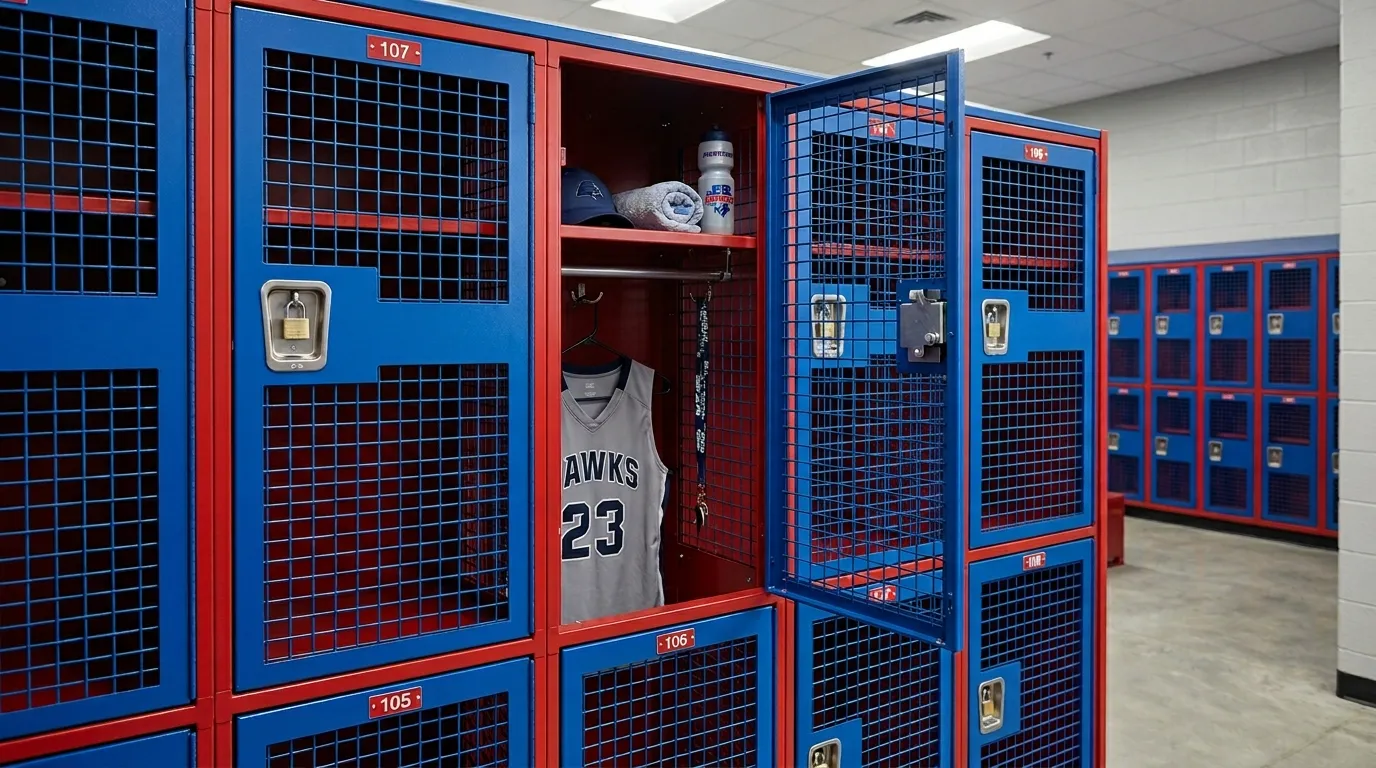
GoodLockers can help buyers plan locker configurations based on how the space will be used. A football team room may need larger compartments for helmets and pads, while a basketball or volleyball locker area may prioritize uniforms, shoes, and personal bags. PE changing rooms may need smaller compartments for higher user counts.
Common configuration options include:
- Single-tier lockers for larger gear and full-height storage
- Double-tier lockers for more users in a limited footprint
- Multi-compartment mesh lockers for PE or shared-use areas
- Open-front or mesh-door styles depending on supervision and security needs
- Shelf, hook, and hanging space options
- Number plates, labels, or team-based identification
- Freestanding locker rows or wall-aligned installations
- Custom dimensions for renovation projects or room constraints
The right layout depends on the number of athletes, sport type, room dimensions, circulation space, and whether lockers are assigned permanently or shared by period, team, or season.
Specification Options to Plan Before Ordering
A clear specification helps avoid ordering lockers that are too small, too difficult to supervise, or not suitable for daily athletic use.
| Buyer decision | Common options to consider | Why it matters |
|---|---|---|
| User capacity | Single team, multiple teams, PE classes, visiting teams | Determines quantity and compartment count |
| Locker size | Tall compartments, half-height compartments, custom sizes | Matches gear volume and available room space |
| Door style | Mesh doors, open mesh panels, partial visibility designs | Balances airflow, supervision, and security |
| Material | Steel, metal mesh, other project-suitable locker materials | Supports durability and facility conditions |
| Lock system | Padlock hasp, key lock, combination lock, digital lock options | Controls access method and user management |
| Layout | Wall rows, back-to-back rows, room zones, numbered banks | Improves team organization and traffic flow |
| Finish | Standard colors, custom colors, school colors, numbering | Supports identification and facility design |
| Project order | Bulk quantity, drawings, delivery location, installation plan | Helps prepare an accurate quote |
Material and Construction Considerations
For school athletic use, material selection should focus on durability, ventilation, cleaning access, and long-term appearance. Mesh locker designs typically use metal frames with mesh panels or mesh doors. Buyers may also request other materials or finishes depending on the project requirements.
GoodLockers can discuss options such as:
- Metal locker frames for school and institutional use
- Wire mesh or perforated-style ventilation features
- Custom colors or finishes to match school interiors
- Numbered compartments for assigned athlete storage
- Reinforced layouts for higher-use athletic areas
- Locker banks planned for bulk school orders
Because each school project may have different room conditions and usage levels, buyers should confirm the preferred material, finish, size, and access requirements before requesting pricing.
What Lock Type Should Schools Choose?
Lock selection affects user convenience, security management, and daily supervision. Athletic programs often need a simple system that works for students, coaches, and facility staff.
Common lock and access options may include:
- Padlock hasps for student-supplied locks
- Key locks for assigned compartments
- Combination locks for school-managed access
- Digital lock options where keyless access is preferred
- Master access planning where facility staff need management control
For team rooms, many schools prefer lock systems that are easy to reset, manage, or supervise. For PE spaces, the best lock type may depend on whether lockers are assigned long term or used temporarily during class periods.
Planning the Locker Room Layout
Locker layout should support movement, supervision, and team routines. A good design is not only about fitting the maximum number of compartments into a room. It should also allow athletes to change, store gear, and move through the space without crowding.
Before finalizing a layout, consider:
- Number of athletes per team or class
- Whether lockers are assigned or shared
- Type and volume of gear stored
- Aisle width and room circulation
- Bench placement or changing space
- Visibility from coach or staff areas
- Separate zones for different teams or sports
- Wall dimensions, door swings, columns, and obstructions
For schools with adjacent gym or fitness areas, GoodLockers’ gym mesh storage lockers page may also be useful for comparing athletic and general fitness storage needs.
Custom Options for School Identity and Daily Use
School athletic lockers often need more than standard sizing. A team room may need school colors, player numbering, equipment shelves, hooks, or different compartment sizes for different sports.
GoodLockers can support custom locker planning for:
- Bulk school locker projects
- Custom sizes and compartment layouts
- Mesh door or mesh panel configurations
- Color and finish preferences
- Locker numbering and labels
- Team, department, or room-based organization
- Lock system selection
- Storage-only or special-function locker requirements
- Project drawings or specifications when available
Custom manufacturing support is useful when a school is renovating an older locker room, matching an existing facility design, or planning storage for multiple teams with different gear requirements.
What Information Is Needed for a Quote?
A complete quote request helps the supplier understand the locker function, quantity, and facility conditions. Buyers do not need every detail finalized before contacting GoodLockers, but the more information provided, the easier it is to recommend a suitable configuration.
Send the following details when requesting a quote:
- Required quantity or estimated number of users
- Sport or facility type
- Preferred compartment count and locker size
- Mesh door, open mesh, or other door preference
- Material or finish preference
- Lock type or access control requirement
- Color, numbering, label, or branding needs
- Mounting or installation style preference
- Charging requirement, if any
- Room dimensions, drawings, photos, or layout plans
- Delivery location
- Project timeline or purchasing stage, if available
For school projects, it is also helpful to mention whether the lockers are for a new facility, replacement project, renovation, or multi-campus purchase.
Why Choose GoodLockers for School Athletic Mesh Locker Projects?
GoodLockers works with commercial, school, gym, office, industrial, public facility, government, institutional, and bulk project buyers. For school athletic storage, our role is to help buyers move from a general need—team gear storage—to a practical locker specification.
Buyers can request support with product configuration, material selection, lock options, compartment planning, custom sizing, colors, and bulk order requirements. Instead of choosing only from a fixed retail product listing, schools can discuss a locker solution that fits the room, the team, and the purchasing process.
That makes GoodLockers suitable for buyers who need more than a single off-the-shelf locker. If the project involves multiple teams, custom room dimensions, school colors, or a formal quote process, a manufacturer-supported approach can help define the right locker package before purchase.
Frequently Asked Questions
Are mesh lockers suitable for school athletic gear?
Yes. Mesh lockers are well suited for uniforms, shoes, bags, and team gear because they allow airflow and make stored items easier to supervise.
Can school athletic mesh lockers be customized?
Yes. Buyers can request custom sizes, compartment layouts, lock systems, colors, numbering, labels, and other project-specific details for school or team storage.
What lock options are available?
Common options include padlock hasps, key locks, combination locks, and digital lock options. The best choice depends on student access and staff management needs.
Are these lockers only for team rooms?
No. They can also be used in PE changing areas, gym storage rooms, training facilities, equipment rooms, and shared school athletic spaces.
How many lockers should a school order?
The quantity should match the number of athletes, teams, class users, or assigned storage positions. Include extra capacity if teams rotate or the program is growing.
What should we send for a project quote?
Send quantity, size needs, compartment layout, lock type, material preference, color, delivery location, and any drawings, photos, or specifications available.
Request a Custom School Athletic Mesh Locker Quote
GoodLockers can help your school plan a practical mesh locker solution for team gear, uniforms, shoes, bags, and athletic storage areas. To request a quote, send your required quantity, compartment count, material preference, lock type, mounting style, charging requirement if relevant, color or branding requirement, delivery location, and any drawing, photo, or specification for the room.
