
Are Outdoor Cell Phone Lockers Weatherproof and Secure?
Yes, outdoor cell phone lockers are both weatherproof and secure, provided they meet specific industrial standards like IP65 ingress protection and are constructed from corrosion-resistant materials like 5052 aluminum. To ensure 100% protection in 2026, facilities must look beyond "water-resistant" labels and verify the mechanical sealing and thermal regulation of the unit.
By the end of this guide, you will be able to:
- Identify the exact IP rating required for your specific outdoor environment.
- Compare material durability (Aluminum vs. Stainless Steel) for coastal or industrial sites.
- Evaluate anti-theft security features against modern physical tampering.
- Implement a maintenance schedule to extend the life of your storage investment.
The Difference Between "Water-Resistant" and "Weatherproof"
In the storage industry, these terms are often used interchangeably, but they represent vastly different levels of protection. The key is the IP (Ingress Protection) Rating.
- Water-Resistant (IP54): These units can handle light splashes and dust. They are suitable for covered areas, like a stadium concourse or a school porch, but will fail if exposed to direct, heavy rainfall.
- Weatherproof (IP65 or Higher): An IP65 rating means the locker is "dust-tight" and protected against water projected from a nozzle. For extreme environments, such as marine docks or areas with high-pressure cleaning, an IP66 or IP67 rating is necessary to prevent internal moisture.
Example: If you are installing cell phone lockers in an open-air construction site, an IP54 unit will eventually allow humidity to seep into the compartments, potentially damaging user devices. You need a minimum of IP65.
Common Mistakes to Avoid:
- Assuming all "outdoor" lockers are waterproof; many are only meant for sheltered outdoor use.
- Ignoring the "first digit" (solids) in the IP rating; dust and grit can jam locks just as easily as water.
Material Matters: Aluminum vs. Plastic vs. Stainless Steel
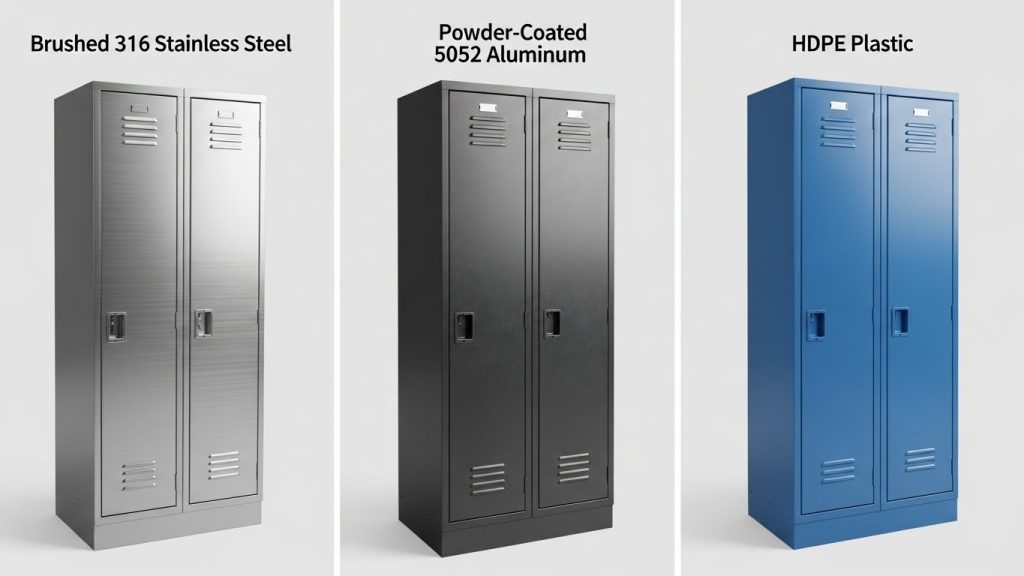
The material of your locker determines how it handles UV exposure, salt air, and physical impact.
Marine-Grade Aluminum (5052 or 6061)
Aluminum is the gold standard for outdoor lockers in 2026. It is naturally "rust-proof" because it forms a stable oxide layer that prevents further corrosion. It is roughly one-third the weight of steel, making it easier to mount on various surfaces.
Stainless Steel (304 vs. 316)
While 304 stainless steel is common, it can develop "tea staining" (brown streaks) in coastal areas. For 100% saltwater resistance, Grade 316 is required. It is heavier and more expensive than aluminum but offers superior impact resistance against vandalism.
High-Density Polyethylene (HDPE) Plastic
Plastic lockers are immune to rust and corrosion. However, they are susceptible to UV degradation (fading and cracking) if they aren't treated with UV stabilizers. They are best for poolside or high-humidity indoor environments.
| Feature | Aluminum (5052) | Stainless Steel (316) | HDPE Plastic |
| Rust Resistance | Excellent | Superior | Total |
| Weight | Lightweight | Heavy | Moderate |
| Security | High | Maximum | Moderate |
| Best Use | General Outdoor | Coastal/Industrial | Pools/Gyms |
Can Electronics (Charging Ports) Stay Dry Outside?
The biggest concern with outdoor lockers is the integration of power. Water and lithium batteries do not mix. To keep charging ports dry, manufacturers use sealed gaskets and internal drainage channels.
These channels ensure that even if a small amount of water enters the door frame, it is diverted away from the electronics and out through the bottom of the unit. Furthermore, you must consider the thermal limits of the devices. Most smartphones begin to throttle or shut down at temperatures exceeding 95°F (35°C).
If your lockers are in direct sunlight, they act as "heat boxes." For more on keeping devices operational in these conditions, read our guide: Are Charging Phone Lockers Safe for Lithium Batteries?
Checklist for Outdoor Charging:
- [ ] Verify the unit has a "Drip Loop" for the main power cable.
- [ ] Ensure each compartment has a rubber-sealed gasket.
- [ ] Look for "over-temperature" sensors that cut power if internal heat spikes.
Security Beyond the Rain: Anti-Theft Features
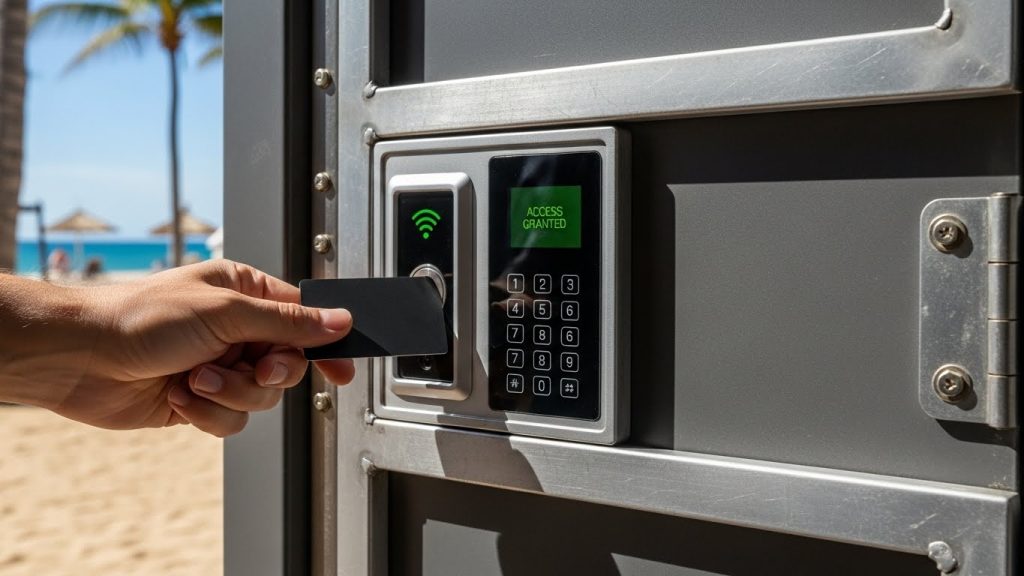
A weatherproof locker is useless if it isn't secure. In 2026, security is categorized into physical and digital layers.
Physical Layer: High-security outdoor units should use at least 14-gauge steel or reinforced aluminum. Doors should be "pry-resistant," meaning there are no gaps for a screwdriver or crowbar to gain leverage.
Digital Layer:
Smart locks are now the standard. Features like NFC (Near Field Communication) and RFID allow users to tap their own phones or badges to unlock. These systems provide a digital audit trail, showing exactly who accessed which locker and when.
Installation Pitfall:
The most common security failure isn't the locker itself, but the mounting. Outdoor lockers must be bolted to a concrete pad or a load-bearing wall. If they aren't, the entire unit can be tipped or hauled away.
Maintenance Tips for 2026: Keeping Them Weather-Tight
Even the best weatherproof locker requires upkeep. Environmental factors like acid rain, salt spray, and UV rays will eventually wear down protective coatings and seals.
- Gasket Inspection: Check the rubber seals around the doors every 6 months. If they are brittle or cracked, they must be replaced immediately to maintain the IP rating.
- Hinge Lubrication: Use a marine-grade silicone lubricant on hinges to prevent sticking from grit or salt.
- Surface Cleaning: Rinse the exterior with fresh water to remove salt deposits. For detailed instructions, see: What Maintenance Do Charging Phone Lockers Require?
If your lockers are part of a high-end facility, you might be concerned about aesthetics over time. Many facilities choose to apply custom powder coatings to match their environment. You can learn more about these options here: Can Phone Lockers Be Customized With Branding and Colors?
Frequently Asked Questions (FAQ)
Marine-grade aluminum (5052) is the best overall choice because it is naturally rust-proof, lightweight, and handles temperature fluctuations better than plastic or standard steel.
Yes, if the locker has an IP65 rating or higher. This rating ensures the unit is sealed against water jets and heavy rain from any direction.
Potentially. Metal lockers in direct sunlight can exceed 100°F (38°C) quickly. It is recommended to install lockers in a shaded area or choose units with reflective coatings and ventilation.
Lockers should be floor-mounted to a concrete base using high-strength anchor bolts or wall-mounted to a structural support to prevent the unit from being moved.
Yes, outdoor charging lockers require GFCI (Ground Fault Circuit Interrupter) outlets and weatherproof power conduits to meet safety standards.
Smart locks are generally better because they eliminate the risk of lost or bent keys and provide an audit trail, though they require battery management or hardwired power.
Conclusion
Outdoor cell phone lockers are a vital investment for modern facilities that prioritize both user convenience and device safety. By selecting a unit with an IP65 rating, utilizing marine-grade materials, and ensuring a professional installation, you can provide a storage solution that survives the harshest 2026 environments.
