
Mining Mesh Lockers: Specifications, Configurations, and How to Order
Mining mesh lockers are heavy-duty wire mesh storage units built for mine site changerooms. Constructed from welded steel tube frames and ventilated mesh panels, they meet MSHA storage requirements and withstand harsh mining conditions. Key selection factors include frame gauge, mesh size, door configuration, and lock type. Factory-direct manufacturers can customize any dimension, color, or layout to your site plan.
Mining sites need more than a standard locker. Between wet PPE, heavy boots, and strict compliance requirements, the storage solution has to hold up and meet regulations.
This page covers what to look for in mining mesh lockers, how to choose the right configuration for your site, and what the ordering process looks like from a factory-direct manufacturer.
Why Mining Sites Choose Mesh Lockers Over Solid-Door Alternatives
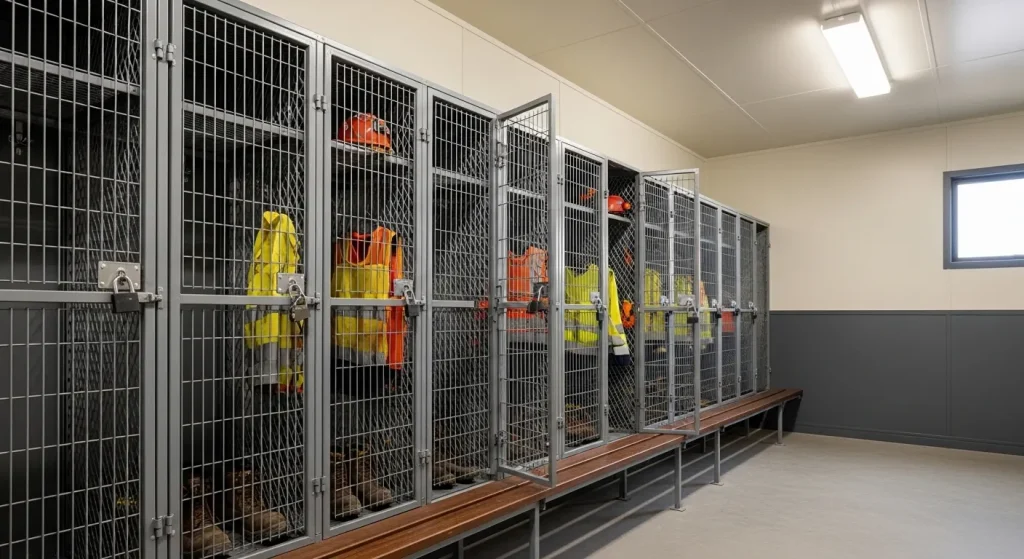
Ventilation is the primary reason. Mining environments are wet, dusty, and humid. Gear comes off shift damp, and it needs airflow to dry between shifts.
Solid-door lockers trap moisture. That leads to odor buildup, corrosion, and deterioration over time.
Mesh panels solve this problem. They allow air to circulate continuously around stored gear.
MSHA Locker Requirements at a Glance
Under 30 CFR §71.402(c)(3)(i), mine operators are legally required to provide individual storage containers or lockers for each miner's clothing and personal belongings during and between shifts. Change rooms must accommodate all miners changing before and after each shift.
This is a regulatory requirement, not a preference.
Why Mesh Construction Suits Mining Environments
Mesh panels also allow visual security inspections without unlocking each door. For site security compliance, that capability matters.
For underground and washdown applications, MSHA Part 56/57 safety standards require that all mine facilities withstand operational conditions. Heavy-gauge mesh lockers meet this standard in a way that lighter commercial lockers do not.
What Specifications Should Mining Mesh Lockers Have?
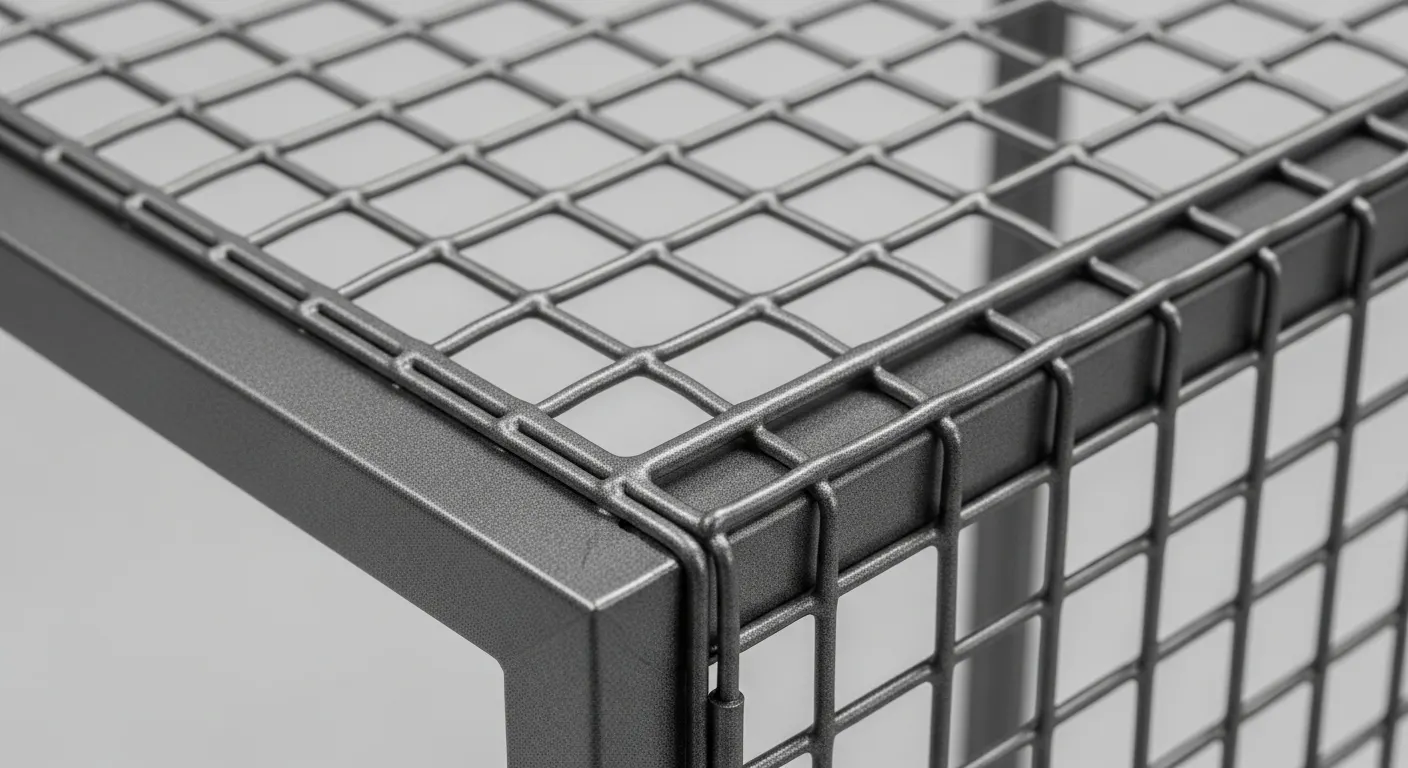
Mining mesh lockers are typically built from 25×25mm RHS steel tube frames with 50×50mm welded wire mesh panels at 3.0mm–4.0mm wire thickness. Standard heights range from 1800mm to 2200mm. Powder-coated finishes provide corrosion resistance. For underground or washdown environments, heavier gauge frames and galvanized mesh are recommended.
Frame and Mesh
The frame is where quality differences show up first.
Standard mining mesh lockers use a 25×25×T1.2mm rectangular hollow section (RHS) steel tube frame. For extreme-duty applications, 40×40mm frames provide additional structural integrity.
Mesh panels come in two aperture sizes:
- 50×50mm square aperture — standard airflow, good visibility
- 25×25mm square aperture — tighter security, more restricted access
Wire thickness matters too. Industrial-grade lockers use heavier 4-gauge wire mesh, which is significantly more durable than 8-gauge commercial grade. For most mining sites, 3.0mm wire handles day-to-day use. 4.0mm wire is better for high-traffic or high-security areas.
Surface finish options:
- Powder coating — standard for most mine sites; corrosion-resistant, available in any RAL color
- Galvanized finish — recommended for underground or constant-washdown environments
Standard Dimensions
| Dimension | Standard Range | Notes |
|---|---|---|
| Width per column | 300mm – 600mm | 400mm is most common |
| Depth | 450mm – 500mm | 500mm better for bulky PPE |
| Height (single tier) | 1800mm – 2200mm | US market: 84"–90" |
| Height (double tier) | 1800mm (two compartments) | Saves floor space per miner |
US-market mining lockers are typically 15"–24" wide, 18"–24" deep, and 84"–90" tall.
Door Configuration and Lock Options
Single-tier doors run full height. These suit long hi-vis jackets, harnesses, and bulky PPE.
Double-tier doors split each column into two compartments. These fit more miners into the same wall run.
Lock options include:
- Padlock hasp (most common for mine sites)
- Digital or electronic lock
- Built-in key lock
- Coin-operated lock
For a full look at standard and custom options, browse our complete mesh locker range.
How Do You Choose the Right Mining Mesh Locker Configuration?
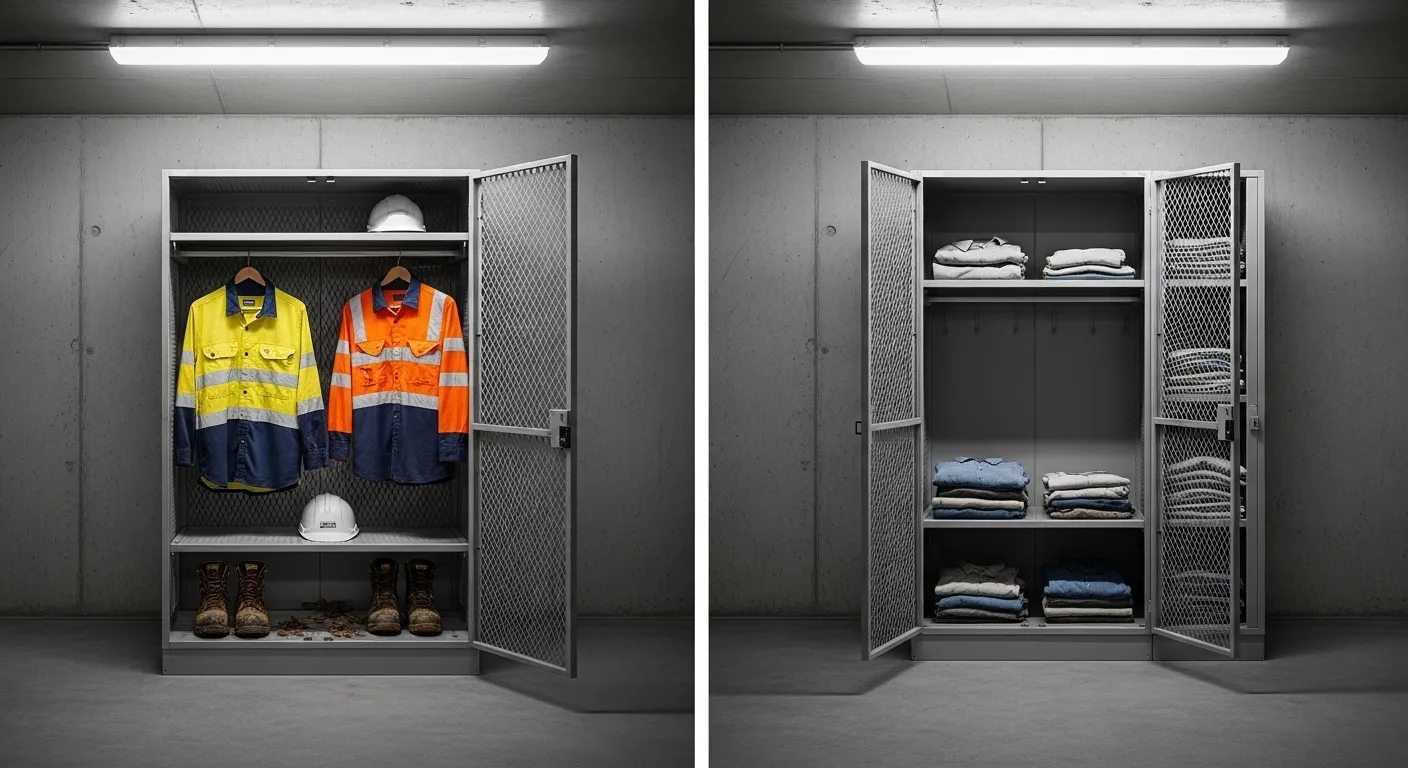
The right configuration depends on three factors: miner count per shift, available floor space, and the gear being stored. Single-tier suits full PPE; double-tier works for standard clothing. Integrated bench seats optimize sit-down gear changes. A factory-direct manufacturer can produce a layout to fit any changeroom plan.
Step 1 — Calculate capacity.
MSHA regulations require one locker compartment per miner per shift. Count your peak shift size, then add 10–15% for growth.
Step 2 — Assess gear type.
Bulky PPE — helmets, harnesses, hi-vis jackets, steel-capped boots — needs full-height single-tier doors. Standard clothing and smaller items fit comfortably in a double-tier layout.
Step 3 — Map your floor plan.
Modular units bolt together and can run the full length of a changeroom wall. Width, depth, and column count are all adjustable to your available space.
Step 4 — Add accessories where needed.
Slope tops prevent dust and debris accumulation on top of units. Coat bars and hooks inside each compartment keep gear organized. Integrated bench seat lockers pair directly with locker runs to keep the floor clear and reduce slip hazards.
SFS Mining Mesh Lockers: What's Included and What Can Be Customized
Our standard mining mesh locker is built for site durability from the first delivery.
Standard construction:
- Frame: 25×25×T1.2mm RHS steel tube
- Mesh panel: 50×50×3.0mm welded wire
- Surface: powder-coated, any RAL color
- Door: hinged with industrial-grade continuous hinge
- Lock: handle padlock hasp (digital lock available on request)
- Material: 90% recycled steel
Standard size: W1600 × D500 × H1800mm (4-door, single-tier). Every dimension is adjustable from signed drawings.
Everything can be specified to your site requirements:
- Frame gauge and mesh aperture size
- Custom width, depth, and height
- Number of doors per unit
- Integrated bench seat
- Internal shelf, rod, or hook configuration
- Color (any RAL code)
- Compliance spec sheets and signed CAD drawings for site HSE approval
With 17+ years of manufacturing experience and completed projects for mining operations in Australia, the USA, the UK, and Canada, our team works directly from your site plan. No reseller. No intermediary.
Browse our full range of personal effects mesh lockers and changing room mesh lockers for mining-specific variants.
Mesh Lockers vs. Solid-Door Lockers for Mining: Which Should You Choose?
For most mining changerooms, mesh lockers are preferred because they allow continuous airflow — critical for damp gear and PPE — and allow visual security inspections without unlocking. Solid-door lockers offer greater privacy and suit items requiring secure or concealed storage. Many mine sites use both types depending on the locker room zone.
| Feature | Mesh Lockers | Solid-Door Lockers |
|---|---|---|
| Ventilation | Excellent — prevents moisture and odor | Limited |
| Visibility / security checks | Inspect without opening | Must unlock to inspect |
| Privacy | Moderate | Full |
| Drying time for wet gear | Faster | Slower |
| Weight | Lighter | Heavier |
| MSHA compliance | Both comply | Both comply |
| Best for | Changerooms, PPE, wet gear | Valuables, secure personal items |
Most mine sites use mesh lockers for the main changeroom and solid-door options where full privacy is needed. A combined locker configuration can be customized to meet both requirements within the same layout.
What Should You Expect When Ordering Custom Mining Mesh Lockers?
Custom mining mesh locker orders follow a four-step process: share requirements, review CAD drawings, confirm sample if needed, then move to production. Lead times typically run 3–5 weeks. Compliance spec sheets and signed drawings are available before production for site HSE approval.
Step 1 — Share your requirements.
Provide your site plan, miner count, preferred dimensions, and any HSE documentation needs. The more detail upfront, the faster the drawings come back.
Step 2 — Review the CAD drawing.
We produce a full CAD drawing and 3D render before production starts. You confirm dimensions, configuration, color, and lock type.
Step 3 — Sample approval.
For large mine site fitouts, a physical sample confirms construction quality before bulk production. This is standard practice and avoids installation issues on-site.
Step 4 — Production and shipping.
Standard lead time is 3–5 weeks depending on configuration and volume. Units are packed flat for international shipping and assembled on-site. We ship to mining operations across Australia, the USA, Canada, the UK, and 20+ countries.
Minimum order starts at one unit. Request a custom quote for pricing based on your exact site specification.
Expert Tip: Before finalizing your locker order, confirm your site's HSE documentation requirements. Many mine site commissioning teams require signed drawings and a materials spec sheet before installation approval is granted. Requesting these before production starts — not after — is what prevents delays on busy fitout schedules. With 17+ years of factory experience across international mining projects, our team builds this into every order by default.
Frequently Asked Questions
What are mining mesh lockers used for?
Mining mesh lockers store miners' clothing, PPE, boots, and personal belongings in mine site changerooms and crib rooms. MSHA regulations require individual storage for each miner between shifts. The mesh construction allows airflow to dry wet gear and enables visual security checks without unlocking.
What is the standard size for a mining mesh locker?
Standard mining locker heights range from 1800mm to 2200mm (84"–90" in the US market). Width per column is typically 300mm–600mm, with 400mm being most common. Depth is usually 450mm–500mm. Custom sizes are available from any factory-direct manufacturer.
Are mining mesh lockers MSHA compliant?
30 CFR §71.402 requires individual locker storage for every miner's personal belongings. Both mesh and solid-door steel lockers can meet this requirement. Compliance documentation, including signed drawings and materials spec sheets, should be confirmed with your site HSE officer before placing an order.
Can mining mesh lockers be customized?
Yes. Factory-direct manufacturers adjust width, depth, height, mesh aperture, wire gauge, frame thickness, color, lock type, and internal fittings to any site specification. Custom configurations are produced from signed CAD drawings, which also serve as HSE approval documentation.
How long do mining mesh lockers last?
A well-constructed mining mesh locker with a 1.2mm+ frame, 3.0mm+ welded wire mesh, and powder-coated finish typically lasts 10–20 years in standard mine site conditions. Service life depends on exposure. Underground or high-moisture environments benefit from galvanized finishes for extended protection.
Ready to spec your mine site locker fitout? Request a custom quote and our team will provide CAD drawings, a full spec sheet, and pricing based on your exact requirements.
