
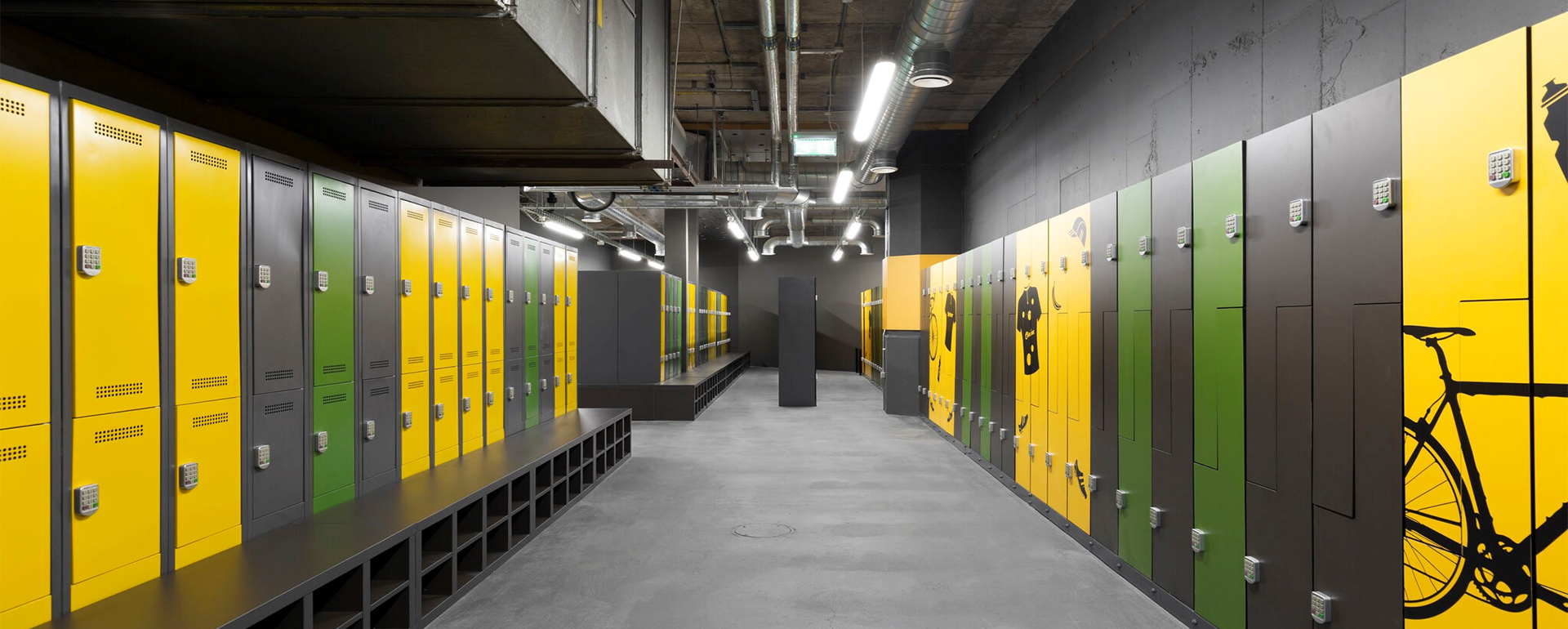
How Do Cell Phone Lockers Work? A Simple Walkthrough
By The GoodLockers Team | Updated January 10, 2026
How Do Cell Phone Lockers Work?
Cell phone lockers secure devices using either mechanical latches (keys/hasps) or digital systems (RFID/PIN solenoids). When locked, a steel bolt or magnetic latch engages the door frame to prevent unauthorized access. Advanced models like our SFSMSL series integrate PCB circuit boards to regulate charging voltage (5V-20V) and utilize galvanized steel shells to reduce signal interference while managing heat dissipation through ventilation slots.
Cell phone lockers are no longer just metal boxes; they are sophisticated infrastructure. Whether you are a facility manager at a high-security government building or a school administrator trying to curb classroom distractions, you need to understand the mechanics behind the metal.
At GoodLockers (Steel Furniture Co., Ltd.), we have spent over 17 years manufacturing and installing these systems—from 30-door units in corporate lobbies to massive 50-door charging stations. We don't just sell them; we weld the 1.0mm galvanized steel and program the circuit boards ourselves.
This guide moves beyond the sales brochure to explain exactly what happens inside the locker when that door clicks shut.
The Core Mechanism: Physical vs. Digital Locks
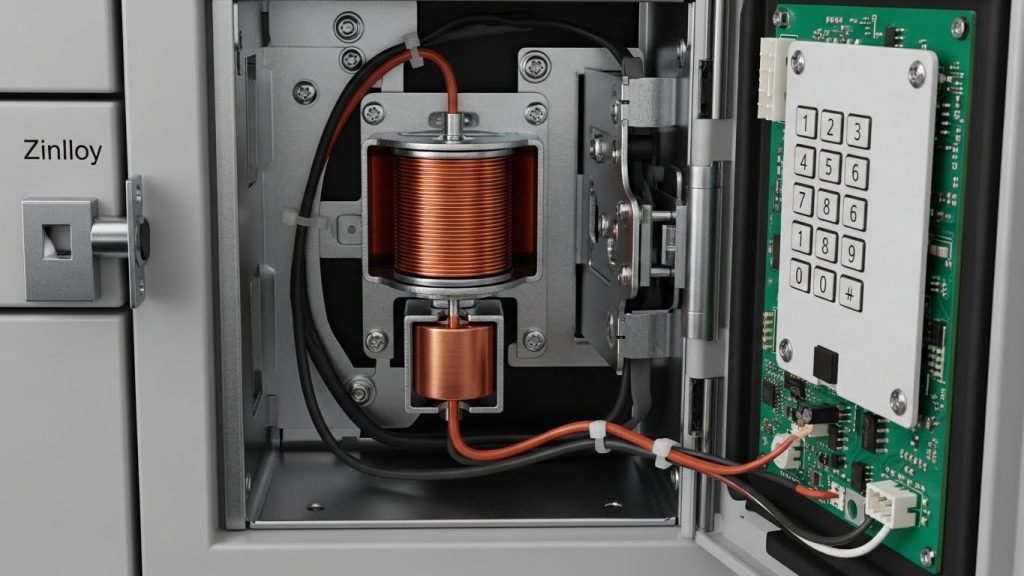
How do different cell phone locker locks actually function?
Quick Fact: Mechanical locks rely on a rotating cam cylinder that physically hooks behind the door frame when a key is turned. Digital locks use an electric solenoid—a coil of wire that becomes magnetic when energized by a correct PIN or RFID scan—to pull the latch back and release the door.
Mechanical Systems (Key & Hasp)
These are the "workhorses" of the industry. In our manufacturing facility in Huizhou, we craft these using zinc alloy cylinders.
- The "Cam" Motion: When you turn the key 90 degrees, a metal tongue (the cam) rotates behind the locker frame. It’s simple physics—if the cam is vertical, the door is locked.
- Master Key Hierarchy: A common fear is losing keys. We engineer our cylinders with a "Control Key" core. This allows a facility manager to remove the entire lock cylinder if a key is lost, rather than drilling out the door.
Electronic Systems (PIN & RFID)
This is where 2026 technology shines.
- The Solenoid Trigger: Inside our digital locks, there is no physical keyway to pick. When a user enters a 4-digit code, the circuit board sends a 12V impulse to the solenoid. This pulls the locking pin back for 3-5 seconds, allowing the door to pop open.
- The "Audit Trail": Unlike a metal key, our digital systems track data. The onboard chip records who opened the locker and when. This is critical for evidence in high-security zones.
How Charging Lockers Regulate Power
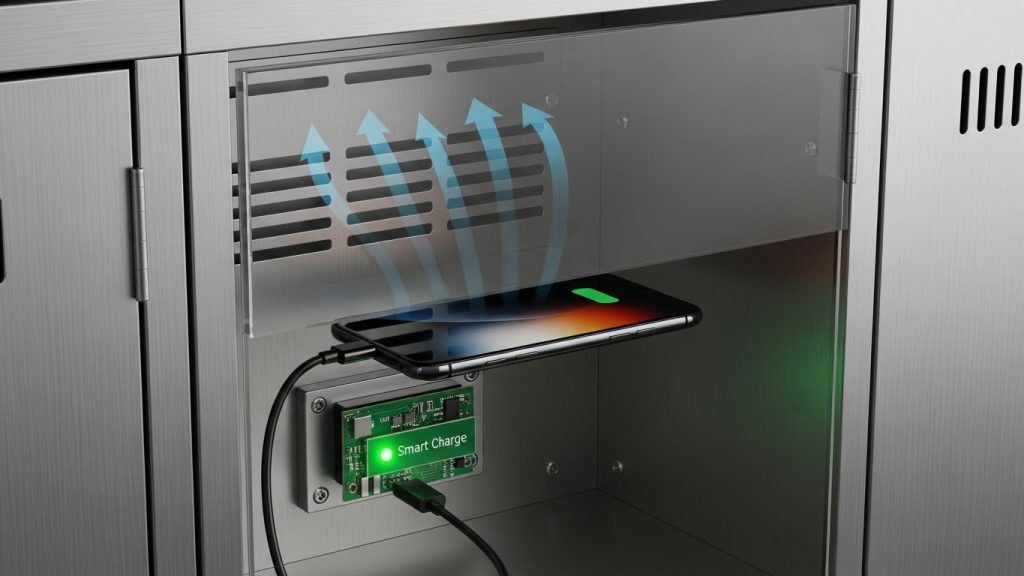
How do cell phone lockers charge phones without damaging the battery?
Quick Fact: Charging lockers use smart PCBs (Printed Circuit Boards) that act as intermediaries between the building's power and the phone. These boards negotiate the Power Delivery (PD) protocol, adjusting amperage (typically 2.4A max) to match the device's capacity, ensuring the phone charges quickly without overheating inside the enclosed space.
If you have ever worried about a phone cooking inside a metal box, you are right to be concerned. That is why "dumb" outlets are dangerous.
Heat Dissipation & Safety
In our SFSMSL-001 models, we don't just drill holes; we engineer ventilation.
- Thermal Management: We use galvanized steel (1.0mm thickness) which naturally dissipates heat better than plastic.
- Smart Switching: Our charging modules detect when a battery hits 100% and cut the voltage down to a trickle charge (0.5A). This prevents the "thermal runaway" that causes battery swelling.
| Feature | Standard Outlet | GoodLockers Smart Module |
| Voltage Control | Fixed (Risk of Overload) | Variable (Smart Negotiation) |
| Heat Safety | None | Auto-Shutoff at 100% |
| Compatibility | Requires User Adapter | USB-A, USB-C, & Lightning Built-in |
Signal Blocking: The Faraday Cage Effect
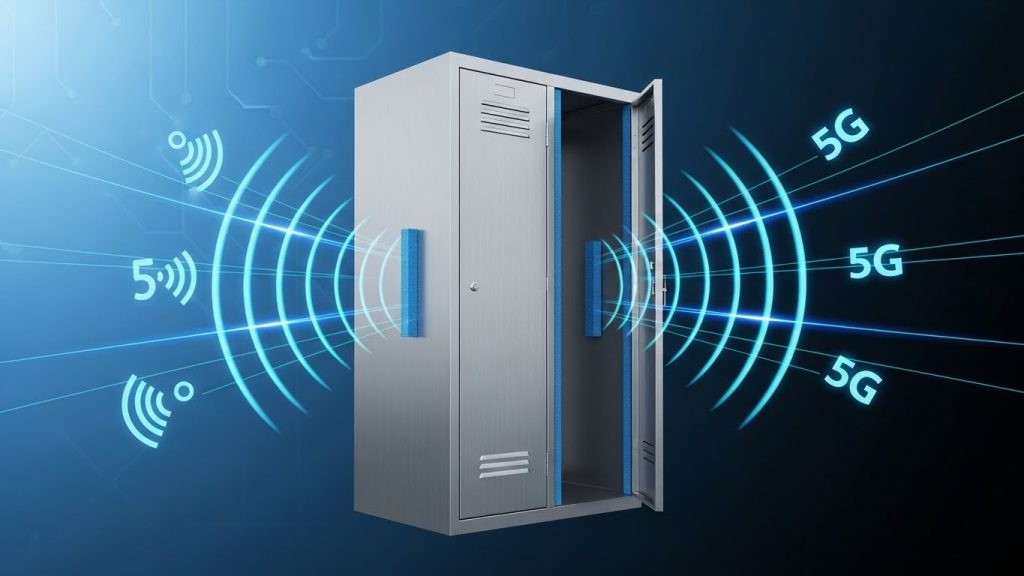
Do cell phone lockers block signals like 5G and Wi-Fi?
Quick Fact: Standard steel lockers attenuate (weaken) signals but do not fully block them. True signal blocking requires a Faraday Cage design, using continuous conductive materials like copper-lined gaskets and nickel mesh to absorb Radio Frequency (RF) waves. Without these specific seals, signals will leak through the door gaps.
Our Testing Reality
We often see competitors claim their standard lockers are "signal proof." In our experience, this is rarely true.
- The Leak: A standard steel door has a 1-2mm gap around the edge. To a 5G signal, that gap is an open highway.
- The Fix: For clients requiring total silence (like military changing rooms we've outfitted), we install conductive foam gaskets that bridge that gap, completing the electrical circuit around the device.
Emergency Protocols: What Happens When Things Go Wrong?
How do you open a cell phone locker if the power goes out or the code is lost?
Quick Fact: Digital lockers are designed with "Fail-Secure" protocols, meaning they remain locked during a power outage to protect the devices. Access is restored via a mechanical Master Override Key that bypasses the solenoid, or an external battery pack that plugs into the lock's faceplate to temporarily power the keypad.
Scenario A: The Forgotten PIN
This is the #1 support call we get.
- The Solution: Every GoodLockers digital system comes with a Master Admin PIN. This code overrides any user code.
- The Backup: If the Admin PIN is also lost, we provide a specialized "Hardware Reset Key" that physically resets the tumbler inside the electronic lock.
Scenario B: Power Outage
- Fail-Safe vs. Fail-Secure: We default to Fail-Secure (stays locked). Imagine if the power cut out and all 50 locker doors popped open instantly—theft would be rampant.
- Retrieval: Our systems have a mechanical keyhole hidden behind the keypad or logo plate for manual retrieval during blackouts.
Installation & Infrastructure Requirements
How are cell phone lockers installed and powered?
Quick Fact: Non-charging units can be wall-mounted or freestanding using floor anchors to prevent tipping. Charging units require a hardwired connection to a 110V/220V dedicated circuit or a standard wall plug, with internal transformers stepping the voltage down to safe levels (5V-12V) before it reaches the individual locker bays.
Safety First: Anchoring
We’ve seen 50-door units (Model SFSMSL-001) weigh over 100kg when full.
- Wall Anchoring: We recommend using heavy-duty toggle bolts for drywall or wedge anchors for concrete.
- Floor Stands: Our dedicated stands feature pre-drilled holes. We always advise bolting these to the concrete slab to prevent "toppling" if a user leans on the open top door.
Frequently Asked Questions (FAQ)
Can cell phone lockers damage my phone's battery?
No, provided the locker uses smart charging technology. High-quality lockers use regulated circuit boards that stop supplying high current once the battery is full, preventing overheating and battery degradation.
Are cell phone lockers legally compliant for schools?
Yes, schools generally have the legal right to ban specific items on campus. However, the lockers must be used in accordance with student privacy laws; administrators usually cannot search the contents of a phone without cause, even if they hold the master key to the locker.
How much electricity does a charging locker use?
Very little. Even with 50 phones charging simultaneously, the power draw is comparable to a few laptops running at once. When empty, our systems enter a "Vampire Draw" mode that consumes less than 5 watts to keep the LED indicators lit.
Can I install a cell phone locker outside?
Only if it is rated IP65 or higher. Most standard lockers are powder-coated steel (like our indoor models), which will rust if exposed to direct rain. Outdoor lockers require stainless steel construction and waterproof gaskets on the door seals.
Related Resources:
